This recipe came from a horse racing journalist, Dominic Prince, who embarked on a mission to loose 5 stone to see if he could pull on a pair of jodpers to become a jockey himself. It is high in fibre, so filling you up, good for protein also helping you to feel full up and to aid muscle repair and growth, and it’s choc a block full of nutrients – vitamins, minerals and antioxidants.
4 servings
100g oats
50g flaxseeds
4 tbsp sunflower seeds and/or pumpkin seeds
4 tbsp raisins
4 dried figs/dates/apricots, chopped
200ml milk (or apple juice)
100ml yoghurt
1 tbsp runny honey
2 apples, grated
Milk or yogurt to serve
Preheat the oven to 190C/375F/Gas Mark 5. Spread the oats out on a baking tray, place in the oven and toast for 20 minutes. Leave to cool. (The oatmeal can be toasted well in advance and stored in an airtight jar).
Combine all the dry ingredients with the milk or apple juice, yoghurt and honey, eat immediately, or leave to soak for an hour/overnight if you prefer the oats a bit softer. Stir in the grated apple; it will be quite thick at this stage. Serve with extra milk or yogurt.
There are hundreds of potential ‘super foods’ out there, and they’re not what you think they are. They can be every day basic foods, such as fruit, vegetables, oats, fish, nuts, seeds, yogurt, eggs…….and the more variety of these you can get, the better.
Chia seeds are a terrific source of fibre and a good source of omega-3 fats which are essential for a healthy brain. People with neurological conditions such as ADHD tend to have low levels of omega-3s, so increasing dietary intake can help with brain function.
Chia Seeds – worth the hype?
Here are some of the health claims:
Gluten free – true, so good for people with Coeliac Disease or non-coeliac gluten sensitivity.
High in Omega-3 fats – true, but not the ‘best’ kind. Chia seeds contain alpha-linolenic acid, the omega-3 fatty acid found primarily in plants. This is not the same as the very beneficial omega-3 fats that are found in oily fish. Our bodies cannot use the chia seed version of the omega-3 very well, so won’t have the same potency as the fish oil or supplements.
High in Protein – false. Chia seeds are 16% protein and do have a good range of essential amino acids (the building blocks of protein). However, they are not high in protein per se. To obtain a decent amount of protein from chia seeds, you would need to eat a lot of them. One portion of chia, about 30g dry weight, only has about 5g of protein.
High in Fibre – true, there’s no disputing the excellent fibre content. A whopping 13g per portion. The seeds absorb a high volume of liquid, and become quite gelatinous (just like flaxseeds), so fabulous for helping with constipation, and they are low in fermentable carbohydrates so shouldn’t cause bloating.
Chia Seed Banana Breakfast
Ingredients
300ml vanilla soya milk
1 banana, ripe
1/2 tsp Cinnamon
1/4 cup Chia Seeds
Instructions
In a medium size bowl mash or slice the banana.
Add the remainder of the ingredients and stir until combined.
Cover and put in the fridge overnight – or at least 2 hours
My middle daughter, Evie (7), has serious issues with gluten (and oats!). She’s tested negative for coeliac disease, but if she has even a small amount food of bread, cake or pasta she will be doubled up in pain a few hours later. As for many people with gut issues, stress and worry are also a major factor in making the problem worse. She desperately misses London since we had to move to N. Ireland 8 months ago: our
house, her school, her friends, and most of all her Dad who still lives there.
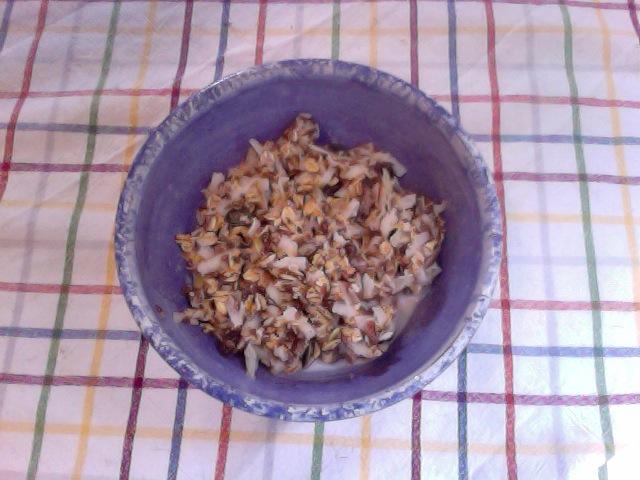
It’s lucky that I’m a dietitian, as I’m well used to managing patients with coeliac disease and non-coeliac gluten sensitivity, but practically it can be tough to avoid gluten. Birthday parties are notoriously difficult to negotiate (what kid can’t resist a tiny bit of cake!). The availability of gluten free foods is a million times better than 10 years ago, but they can be expensive and often loaded with sugar. I like making as much of my family’s food as possible, and this bread is fab for her……….the flaxseed is brilliant for gut health and constipation, and the eggs and almonds provide terrific sources of protein. And very importantly, it’s so easy.
If you are watching your carbohydrate intake, needing gluten free, or simply want a highly nutritious healthy bread, then I highly recommend this very easy ecipe. For anyone who has tried Irish wheaten bread, this has a very similar texture.
Flaxseeds for dietary fiber, manganese, vitamin B1, and omega-3 healthy fats. Almonds are a source of vitamin E, copper, magnesium, and high quality protein, fiber, and phytosterols. Eggs are a very good source of high quality protein, vitamin B2, selenium, B6, B12 and minerals such as zinc, iron and copper, fat soluble vitamins A, D, E and K.
There is about 1000 kcal, 54g protein, 5g carbs in the whole loaf. So if you cut 6 slices, that’s about 170kcal per slice.
Ingredients:
Ground flaxseed – 1 cup
Ground almonds – 1/2 cup
Eggs – 4
Baking powder – 1 teaspoon
Method:
1) Beat together eggs & 3 tablespoons of water
2) Mix dry ingredients in a separate bowl: 1 cup ground flaxseed, 1 teaspoon baking powder, 1/2 cup ground almonds
3) Add wet ingredients to the dry ingredients, mix well. Put in a loaf tin, cook for 20 minutes at 200 degrees C.
New low FODMAP diet for IBS: 75% see significant improvement
If you were to tell me 15 years ago, when I was a newly qualified dietitian at St George’s Hospital in London, that I would specialise in treating IBS, I would have thought you were crazy. Back then we just didn’t have good answers for people suffering with Irritable Bowel Syndrome.
Irritable Bowel Syndrome is a disorder where the bowel looks normal, but it doesn’t function properly. It is incredibly common, affecting about 1 in 5 people in the UK. The diagnosis of IBS is usually made when other conditions such as coeliac disease, Crohn’s Disease, colitis, have been ruled out. Symptoms include bloating, wind, diarrhoea, constipation, acid reflux, nausea and abdominal pain.
The Low FODMAP Diet has been published in international medical journals and is now accepted and recommended as one of the most effective dietary therapies for IBS and other digestive conditions. In February 2015 it was added to the National Institute of Clinical Excellence’s IBS treatment guidelines. Elimination phase: high FODMAP foods eliminated for 2-4 weeks Reintroduction phase: high FODMAP foods systematically reintroduced to identify your problem foods (not everyone reacts to the same FODMAPs) It is important to have the advice of an experienced dietitian to help guide you along your low FODMAP journey
Here some great information all about the low FODMAP Diet: FODMAPs
And here is what some of my patients say:
Miss VG, IBS, marathon training (April 2016) The low FODMAPs is going very well, it has helped a lot with my symptoms. I was quite surprised how well it has worked!
Mr RD, IBS (March, 2016): Hi Sarah. Hope you’re well; I came to see you a year ago to help with IBS issues which have improved dramatically. I very rarely suffer any of the symptoms I used to – brain fog, stomach cramps etc and find I’ve been able to reintroduce a lot of foods that did give me problems previously, so thanks again!
Miss J, IBS (February, 2016): This week is my 4th week on the FODMAP diet and so far so good. I’m actually really enjoying it and have discovered some lovely new recipes. It’s made a very noticeable difference in terms of bloating, cramping and wind which is fantastic. My skin has also improved too.
An astonishing 1 in 5 people suffer with digestion issues such as bloating, abdominal pain, constipation or diarrhoea, excessive wind, heartburn and nausea. Usually the diagnosis is irritable bowel syndrome (IBS).
When a doctor or gastroenterologist has diagnosed IBS (you should not diagnose yourself) this is good news, as it means your symptoms are not due to anything more serious, such as Coeliac Disease or bowel cancer. However, coping with and managing the symptoms can be challenging. Unfortunately there is no pill or supplement that is a magic fix.
The good news? IBS CAN BE TREATED EFFECTIVELY with a low FODMAP diet. It has been so successful and popular with my clients that it has become my speciality. I have been inundated with requests for help, and even see clients via Skype if they can’t travel in person to the clinic. The vast majority have a major improvement, which make me a very, very happy dietitian!
The low FODMAP diet is relatively new. It is a rigourously scientifically tested dietary treatment that produces a significant reduction in symptoms for 75-80% of people. The FODMAP Diet was originally developed at Monash University, Australia; and recently more research has been carried out at King’s College, London. The low FODMAP diet is increasingly being used by gastroenterologists and dieticians to successfully manage the tummy problems.
What are FODMAPs?
FODMAP stands for Fermentable Oligosaccharides, Disaccharides, Monosaccharides and Polyols. Quite a mouthful (excuse the pun)! These foods have one thing in common: they are all carbohydrates that the gut poorly absorbs and are quickly fermented by the bacteria causing the bloating, wind, diarrhoea or constipation and pain. There is quite a long list of foods that are high in FODMAPs, and not everyone with IBS reacts to the same foods.
What foods are high FODMAP?
You may be surprised that many foods considered good for digestion are high FODMAP, and therefore can aggravate IBS. These include wheat, onions, garlic, apples and pears, lactose found in dairy products, beans and lentils.
Sourced from Monash University (2015)
The FODMAP Diet
The FODMAP diet is not a diet for life. It is a ‘learning diet’, where all high FODMAP foods are removed for approximately 2-4 weeks. Many people see improvements within a few days. After this elimination phase, foods are reintroduced in a systematic way to identify which foods you react to. This stage is extremely important so that you are not excluding foods unnecessarily.
IBS and FODMAPs can be confusing, with a lot of conflicting advice on the internet. When
done well, the low FODMAP diet can be very effective. If you want to try see if it helps you, it is advised that you seek guidance from a Registered Dietitian with experience in the Low FODMAP Diet. Your GP can refer you within the NHS, or a list of private dietitians in your area can be found on the Freelance Dietitian’s website.
Miss J, IBS (February, 2016): This week is my 4th week on the FODMAP diet and so far so good. I’m actually really enjoying it and have discovered some lovely new recipes. It’s made a very noticeable difference in terms of bloating, cramping and wind which is fantastic. My skin has also improved too.
Miss R, France, diarrhoea predominant Irritable Bowel Syndrome (December, 2015) Hope you’re well I just thought I would drop you an email to let you know how I am doing. I have been on fodmap for a week now. After three days I could see a big difference to the way my tum felt and my digestive symptoms I feel great!
Mrs H, ulcerative colitis. (November, 2105): Your advice has given me some hope that I can manage my health much better and, who knows, hopefully avoid an operation. I think my gut is already beginning to improve, less gurgling, bloating and twinges, so I’m very pleased so far. (January 2016): I am so happy that you have helped me to help myself, I just wish that I had done something like this before, still better late as they say.



 y middle daughter, Evie (7), has serious issues with gluten (and oats!). She’s tested negative for coeliac disease, but if she has even a small amount food of bread, cake or pasta she will be doubled up in pain a few hours later. As for many people with gut issues, stress and worry are also a major factor in making the problem worse. She desperately misses London since we had to move to N. Ireland 8 months ago: our

 crazy. Back then we just didn’t have good answers for people suffering with Irritable Bowel Syndrome.
 The Low FODMAP Diet has been published in international medical journals and is now accepted and recommended as one of the most effective dietary therapies for IBS and other digestive conditions. In February 2015 it was added to the National Institute of Clinical Excellence’s IBS treatment guidelines.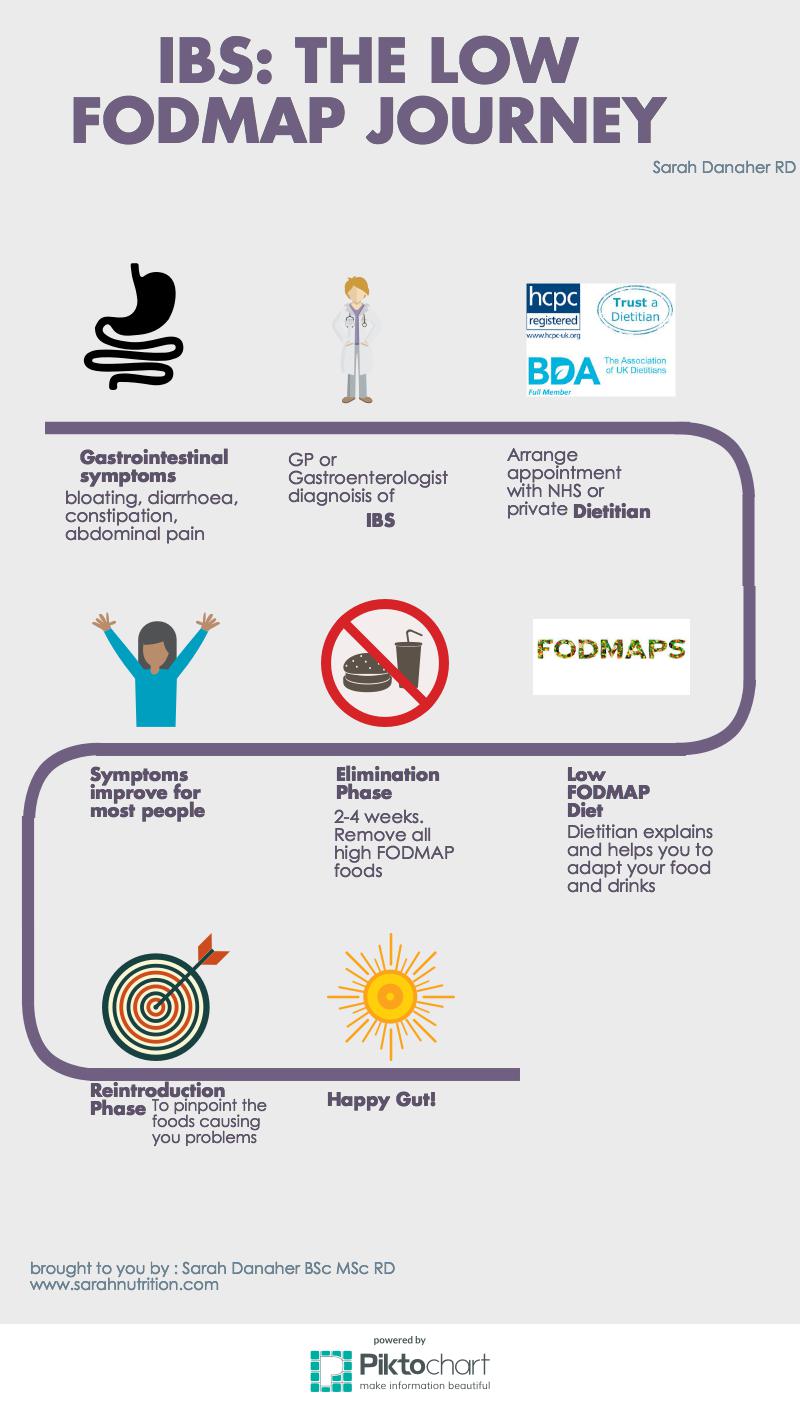

 reduction in symptoms for 75-80% of people. The FODMAP Diet was originally developed at Monash University, Australia; and recently more research has been carried out at King’s College, London. The low FODMAP diet is increasingly being used by gastroenterologists and dieticians to successfully manage the tummy problems.

 sarahdietitian.com