Why are premenopausal and menopausal women more likely to get a UTI? Oestrogen plays a crucial role in keeping the tissues of the vagina and urethra elastic and well-moisturised. During your 40s and 50s when levels start to drop, these tissues can become thinner, drier, and more prone to irritation, creating conditions that are conducive to developing urinary tract infections.
Drops in oestrogen also reduces the level of healthy bacteria that normally live in your vagina and bladder. Healthy bacteria help fight off infection-causing bacteria, meaning you are less able to prevent infections.
The standard treatment for urinary tract infections is a short course of antibiotics (NHS guidance), however, there are other research based treatments that can be effective.
Effective non-antibiotic treatments
1. Creams/tablets: For post menopausal women, who have not had a period for a year, oestrogen creams or tablets can be very effective. These are placed internally, where they release small amounts of oestrogen into nearby tissues. It takes about 6 to 12 weeks to get full benefits. Over time, it’s estimated that vaginal oestrogen can reduce your risk of UTIs by more than 75 percent.
Vaginal oestrogen is only available on prescription, except the brand Gina (vaginal tablets) which has recently become available to buy from pharmacies.
Newson Health Menopause Society chair Dr Louise Newson said: ‘This is a certainly a step in the right direction that women will be able to buy this treatment to improve their localised symptoms.
‘It is known that the majority of menopausal women experience symptoms related to vaginal dryness and urinary symptoms yet only the minority receive treatment.
‘However, it is going to cost around £30 for one packet which will last around three months which clearly is expensive.’
2. Cranberry Extract: In 2023, researchers analysed all of the available research to assess whether cranberry products help reduce urinary tract infections (UTIs). This included 50 clinical studies involving 8,857 participants.They compared the effectiveness of cranberry products with placebo (a fake treatment) or no treatment at all.
For women with recurrent UTIs, cranberry juice or syrup may have little to no effect in preventing UTIs.
However, cranberry tablets or powders, which are more concentrated, may reduce the risk of UTIs. The ideal dosage isn’t clear yet, but a daily dose of a high-strength capsule (at least 200 mg of cranberry extract) is likely more effective than drinking cranberry juice.
3. Probiotic: Although controversial, there is growing research regarding the use of probiotics, as treatment for UTIs. Specific probiotics increase the level of healthy bacteria that exist in the urinary tract, which protect against the harmful bacteria which cause UTIs. However, selecting the correct probiotic can be confusing, and research shows that only specific strains of healthy bacteria may help. Jarrow Formulas Femdophilus contains the well researched probiotic strains L. rhamnosus GR-1 and L. reuteri RC14.
References
Rahn DD, Carberry C, Sanses TV, Mamik MM, Ward RM, Meriwether KV, Olivera CK, Abed H, Balk EM, Murphy M; Society of Gynecologic Surgeons Systematic Review Group. Vaginal estrogen for genitourinary syndrome of menopause: a systematic review. Obstetrics Gynecology. 2014 Dec;124(6):1147-1156.
Cochrane review 2023 – Cranberries for preventing urinary tract infections (Review) Williams G, Stothart CI, Hahn D, Stephens JH, Craig JC, Hodson EM
Akgül T, Karakan T. The role of probiotics in women with recurrent urinary tract infections. Turk J Urol. 2018 Sep;44(5):377-383.
The information and advice offered by sarahdietitian.com is solely educational and provides general advice only for the adult population. Information offered on sarahdietitian.com website, blog and social media accounts is not a substitute for seeing a Registered Dietitian or another qualified healthcare professional. All opinions are Sarah Danaher’s own views.
Many of my patients, particularly those with hormonal issues such as PCOS, diabetes and menopause have to deal with insulin resistance. Managing it can be challenging.
Insulin resistance occurs when the body’s cells don’t respond properly to insulin, leading to higher glucose levels in the blood. Normally, insulin helps glucose enter cells for energy, but with insulin resistance, this process doesn’t work effectively.
Signs you may be insulin resistant:
Increased Hunger: Despite eating regular meals, you might still feel hungry because your body’s cells aren’t getting the glucose they need for energy.
Fatigue: Since glucose isn’t efficiently getting into your cells, you may feel tired or lethargic.
Difficulty Concentrating: Lack of glucose for your brain can cause difficulties with memory or concentration.
Weight Gain and Difficulty Losing Weight: High levels of insulin in the blood promotes fat storage and can make it hard to lose weight.
High Blood Pressure
Abnormal Cholesterol Levels: Insulin resistance often increases in “bad” LDL cholesterol and triglycerides, and decreases in “good” HDL cholesterol.
Dark Skin Patches: Known as acanthosis nigricans, this is a condition characterised by dark patches of skin, typically in the armpits, back of the neck, or groin.
Insulin resistance increases the risk of being overweight, type 2 diabetes, heart disease, and fatty liver disease, so it is important to address it with lifestyle changes.
What you can do to improve insulin resistance:
Regular Movement: Using your muscles during exercise helps the muscle cells to take in the glucose. A combination of aerobic exercises (like walking, cycling, swimming) and resistance training (like weightlifting or body weight exercises) is most effective. Aim for daily aerobic activity, along with strength training exercises at least two days a week.
Foods and drinks: While there’s no one-size-fits-all “best” diet for insulin resistance, some eating patterns have been shown to be beneficial. An anti-inflammatory, Mediterranean type diet rich in whole grains, lean proteins, fruits, vegetables, and healthy fats can improve insulin sensitivity. Limit processed foods, sugary drinks, and high-fat foods.
Weight Management: Maintaining a healthy weight is crucial for managing insulin resistance. If you are overweight, a small reduction in weight, can help improve insulin sensitivity. However, this can be hard when you are insulin resistant.
Better Sleep: poor sleep increases stress hormones like cortisol, alters appetite-regulating hormones, leading to unhealthy lifestyle choices, and impairing glucose metabolism, making the body less efficient in using insulin effectively.
Reducing Stress: High stress levels can affect insulin resistance. Stress management such as understanding the sources of stress, and using techniques such as exercise, meditation, yoga, and mindfulness can be beneficial. Sleep is also essential for reducing stress levels.
In some cases, your doctor may recommend medications to improve insulin sensitivity, such as Metformin
Supplements: see below
What to eat for insulin resistance:
The ideal way of eating is the Anti-Inflammatory, Mediterranean Type Diet, also known as a wholefood diet: It is rich in fruits, vegetables, whole grains, lean proteins like fish and chicken, lentils, beans, nuts, and healthy fats like olive oil. It is low in highly processed foods and artificial ingredients.
Eating this way will: • Stop your blood sugar and insulin levels from getting too high • Reduce body inflammation • Encourage the healthy bacteria in the gut (the gut microbiome) • Help you to feel full up for longer • Give your body all of the vitamins and minerals that it needs
Limiting carbohydrates from cake, biscuits, scones, breakfast cereals, bread, potatoes, rice, past etc is fundamental for reducing the amount of sugar (glucose) entering the blood, therefore helping to lower blood sugar and insulin levels.
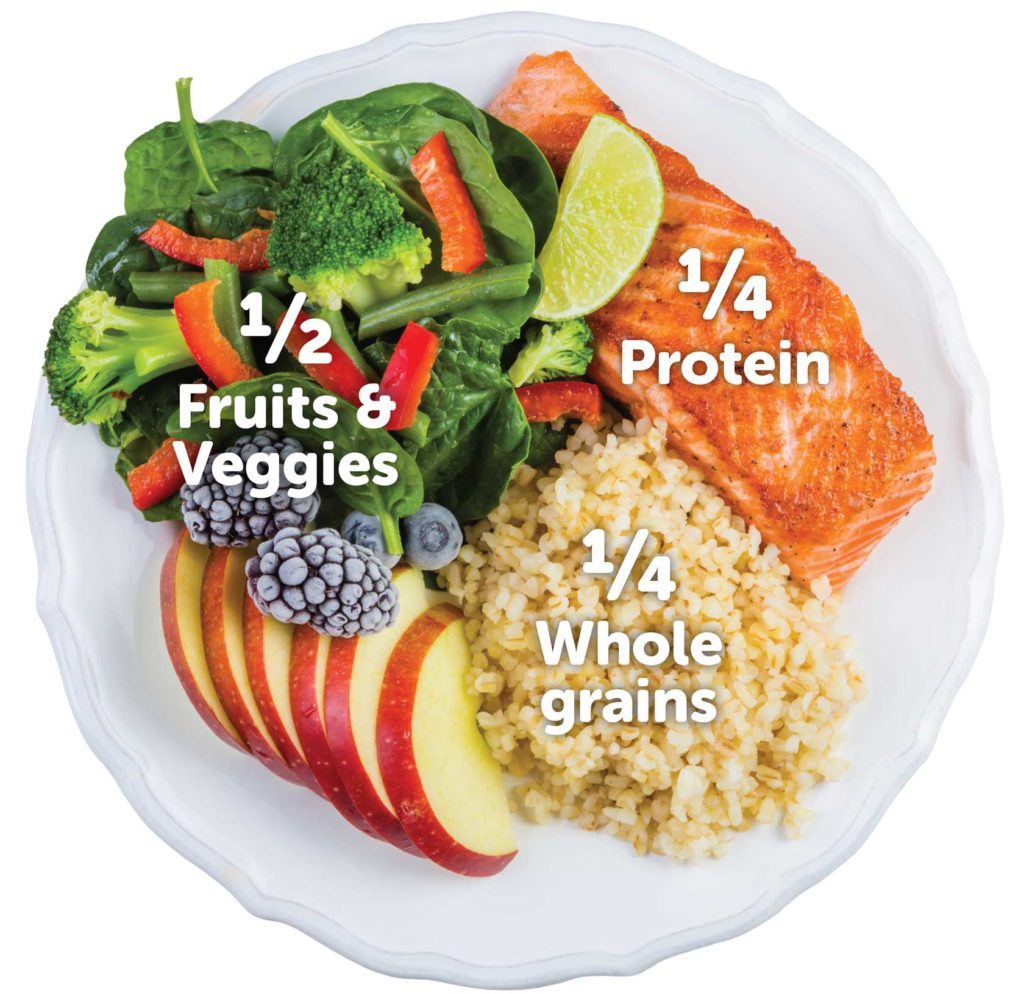
The ‘plate model’ is a helpful way to get the balance right.
Protein • Fish like salmon, mackerel, sardines. • Chicken and turkey are included but less frequently than fish. • Eggs • Lentils, chickpeas, and beans
Vegetables • Leafy Greens: Spinach, kale, and any lettuce • Other Vegetables: artichoke, asparagus, beetroot, broccoli, Brussel sprouts, carrots, celery, cabbage, courgette, cucumber, garlic, leeks, lettuce, mange tout, mushrooms, onion, peas, peppers, tomatoes
Fruits: ideally in their ‘whole’ form, rather than blended in a smoothie or drink • Berries: Strawberries, raspberries, and blackberries are lower in carbohydrate than many other fruits. • Other Fruits: any fruit is great, but just have one piece at a time
Carbohydrates: ideally wholegrain/wholemeal versions: • Sourdough bread, potatoes, rice, pasta, noodles, jumbo oats • Cooking and cooling potatoes, rice and pasta changes the structure of the carbohydrate to resistant starch, slowing how quickly the carbohydrate is absorbed
Healthy Fats • Oily fish: sardines, mackerel, salmon. These are also high in protein • Extra Virgin Olive Oil and Cold Pressed Rapeseed Oil: used for cooking and in dressings • Avocado • Nuts and Seeds: Almonds, walnuts, flaxseeds, and chia seeds
Dairy • Cheese: Feta, halloumi, and other cheeses • Yogurt: Greek yogurt, or any natural/plain yogurt • Milk
Flavour • Herbs • Spices • Vinegar – slows down how quickly carbohydrates are absorbed • Mustard • Soy sauce • Pesto
Drinks • Tea – black, green, herbal • Coffee – freshly filtered rather than instant • Water – still or carbonated • Water with lemon juice or a dash of cordial
Extra tips:
Avoid ‘white’ carbohydrates: These are ‘simple’ carbohydrates found in sweet foods and drinks, and refined grains such as white flour or white rice. They are quickly digested and absorbed into the bloodstream. This leads to a rapid increase in blood glucose levels.
Have complex carbohydrates in moderation. Examples include wholegrain rice/pasta, beans, lentils, and starchy vegetables such as carrots and parsnips. These have longer chains of glucose molecules and take longer to digest. As a result, they cause a slower and more gradual increase in blood glucose levels compared to simple carbohydrates. This results in a more gradual release of glucose into the bloodstream, which helps to stabilise blood sugar levels.
Reduce the amount of carbohydrates: reducing the amount of carbohydrate food you eat will reduce the amount of glucose in the blood stream e.g. have 1 slice of bread instead of 2, or ¼ plate of wholegrain rice instead of ½ a plate, a small handful of grapes. For a significant lowering of blood glucose levels, leave out high carbohydrate foods and replace with more vegetables, protein and healthy fats.
Have a portion of protein and healthy fat with each meal: Consuming carbohydrates together with fats or proteins can slow down their digestion and absorption. Including a source of healthy fats, such as avocados, nuts, or olive oil, or a source of lean protein, such as chicken, fish, or tofu, in a meal can help to slow down the rate at which carbohydrates are broken down and released into the bloodstream.
Food Form and Texture: Foods that are in their whole or minimally processed forms, such as whole fruits, vegetables, wholegrain rice generally have a slower absorption rate compared to foods that are in more processed forms, like juices or purees and white rice.
Have just have one piece of fruit at a time – eat whole rather than blended.
Smoothies or ready to drink ‘meals’: When you drink blended ingredients (no matter how wholesome or healthy), they are absorbed in to your blood stream relatively quickly. This causes high blood sugar and, if you are insulin resistant, fat storage. Have the same food but unblended e.g. a large handful of jumbo oats, a scoop of protein powder or peanut butter, and milk.
Cook and Cool: Certain cooking and cooling methods can impact certain foods. For example, allowing cooked pasta, potatoes or rice to cool and eating cold or reheating later can reduce its effect on blood glucose levels. This process changes the structure of the carbohydrate turning it in to ‘resistant starch’, making them slower to digest.
Vinegar: Studies have shown that having vinegar with carbohydrate foods can lower post-meal blood sugar levels. Add a splash of vinegar to salads or use in dressings.
Aim to have high omega 3 foods three times a week e.g. mackerel, sardines, salmon. These are potently anti-inflammatory. Tinned fish is convenient and cheap. If you don’t like these fish, then take an omega 3 supplement. See below for more detail on dose.
Example meals for insulin resistance:
Breakfasts Overnight oats made with jumbo oats, berries and milk 2 eggs with cheese and tomatoes 100g 5% or full fat Greek yogurt with an under ripe banana, nuts and honey Slice of flaxseed bread with ½ avocado, tuna/sardines/an egg
Lunches Baked beans, grated cheese on a slice of wholemeal toast Wholemeal pitta with humous, grated carrot and lettuce Tomato, Lentil and wholegrain rice soup Superfood salad: a base of lettuce leaves, topped with grated carrot, peas, pumpkin seeds, extra virgin olive oil, and a tin of sardines or mackerel
Dinners Grilled salmon with stir fried vegetables in olive oil Vegetable and bean chilli and rice Wholemeal pasta with half a jar of tomato sauce e.g. Dolmio and grated cheese Wholegrain rice with chicken and roasted vegetables
Snacks/desserts A piece of fruit A large piece of 70% Cocoa Dark chocolate 2 oat biscuits tea or coffee handful of nuts yogurt with berries
Supplements for insulin resistance:
Here are a few supplements that in research, have shown some promise. These can be used in combination with lifestyle changes (not instead of!):
Magnesium: Magnesium is involved in the process of insulin secretion and function. Some research suggests that magnesium supplementation can improve insulin sensitivity, especially in people who have a magnesium deficiency. Specifically, magnesium citrate and magnesium glycinate are well absorbed by the body. Magnesium glycinate is better for people with loose stools, while magnesium citrate can have the opposite effect and help with constipation. Magnesium can also help with muscle cramps or restless leg syndrome.
Omega-3 Fatty Acids: Omega-3 fatty acids, found in fish oil and algae, have anti-inflammatory properties and have been linked to improved insulin sensitivity in some studies. If you don’t like oily fish which is wonderfully high in omega 3s, take 1000mg of EPA/DHA per day.
Vitamin D: Some studies have suggested that Vitamin D deficiency might worsen insulin resistance, and correcting the deficiency could improve insulin sensitivity. Vitamin D deficiency is very common. The main source is sunlight. Take 1000iu per day, especially during the months from September to May.
Probiotics: to encourage your healthy microbiome, it is primarily important to eat foods which act as fertiliser for the healthy bacteria that already exist in your gut. Many of the foods listed above act in this way, they are called ‘prebiotics’. Probiotics are supplements that provide additional healthy bacteria, however, there is no clear research on which specific strains of probiotics are beneficial. Viomixx (previously called VSL #3) or Bio-kult, are good ‘broad spectrum’ probiotic supplements which contain a range of bacteria that may be helpful for insulin resistance.
Inositol: There is evidence that inositol helps with insulin resistance, particularly for those with PCOS and type 2 diabetes. The exact mechanisms by which inositol may help with insulin resistance aren’t entirely understood.
Please note that this is just a general guide and may need to be adjusted based on your personal medical, dietary needs and preferences. It’s always a good idea to consult with a healthcare provider or a registered dietitian before starting any new diet plan. They can provide personalised advice based on your individual health needs.
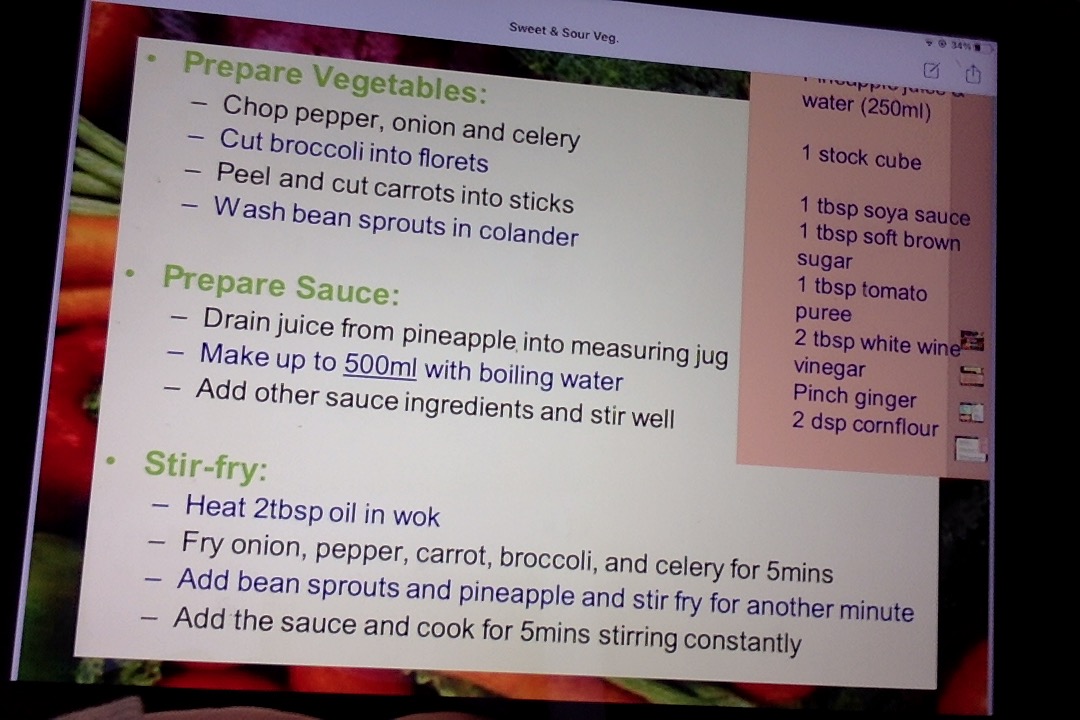
The great thing about this meal is the abundance of vegetables, and the sauce makes them taste interesting and adds a whole lot of oomph. There are extremely good reasons for eating a lot of veg (other than “they’re good for you”). Each different vegetable provides a range of phytonutrients, the more variety you have, the broader the range of these immensely beneficial plant nutrients. Ideally, we should be aiming for 30+ plants a week. This includes the ‘super six’: fruits, vegetables, whole grains, nuts/seeds, beans/lentils, herbs/spices. It sounds like a lot, but this one sweet n sour meal provides 10!
This recipe originally came from one of my daughter’s Home Economics homeworks during Covid lockdown. During that time she was difficult and fussy with food – in clinical practice we call ‘selective eating’. Amazingly, she gobbled it all up!
It is totally delicious and has become a household staple, so I thought it was about time that I share. The original recipe was for 2 people, so to serve 4 I’ve doubled the amount of veg but kept the quantity of sauce the same. I’ve also reduced the sugar by half. You can of course add in extra veg, or leave out what you don’t like. Depending on what I have in the fridge, I may add extra peppers, spinach or cauliflower.
Ingredients
Veg: 2 peppers, 2 carrots, 1 onion, 2 handfuls of broccoli, 2 handfuls of beansprouts, 2 sticks of celery, large tin of pineapple.
With the overwhelming threat of Corona Virus and self-isolation, most of us have a lot of time on our hands to think about ‘stuff’. In the last few weeks I’ve had a lot of clients anxiously contacting me to ask about what food they should be eating and what supplements they need to take to boost their immune system.
It is generally agreed in scientific and medical spheres that you have a better chance against Corona if your immune system is functioning well.
Rather than feeling like a sitting duck waiting for Corona to get you, here is a cheerily impressive collection of things that you can do for yourself and your family……
Social distancing and hand hygiene. Not my area of expertise, but these are the most important ones Government guidance
Food
There are many, many nutrients that are involved with the normal functioning of the immune system. There is no one super food or super vitamin that you need to max out on. I know it may be boring, but I maintain my consistent message that a healthy balanced diet is fundamental for your immune system to function well. Here’s a link to the Eat Well Guide. You will be doing very well if you can get these foundations of good, solid nutrition consistently in place.
There are some nutrients that you can make sure you are including that are specifically important for the immune system. I sympathise that supermarket and shop shelves can be sparse at the minute, so it doesn’t matter if these come from fresh, frozen, tinned or dried.
• Vitamin C – citrus fruit (lemons, oranges, grapefruit), kiwi, red pepper, broccoli, potatoes. • Zinc – meat, fish, nuts and seeds, lentils, eggs, dairy • Vitamin D – the main source is sunlight, with smaller amounts coming from food. Salmon, mackerel, sardines, egg yolks, mushrooms, fortified foods (breakfast cereals, milk & dairy). If you can’t get outside, then I recommend a vitamin D supplement 1000IU per day. • Beta-carotene/vitamin A – carrots, butternut squash, sweet potatoes, red and orange peppers • Folate – broccoli, spinach, breakfast cereal, frozen peas • Iron – breakfast cereal, red meat, dried fruit
Other important points: • Taking mega doses in the form of supplements doesn’t provide extra benefits, and in some case can be detrimental. If you are worried that you aren’t able to get these nutrients from food then you could take a Complete Multivitamin – I will elaborate on this in a future post. • Try not to become hyper focused, obsessive or overly worried about nutrition. Anxiety increases stress hormones in the body which negatively impact the immune system. • Under-eating or over-eating can negatively impact the immunity (aka being underweight or overweight). Try to keep within a healthy BMI weight range check your BMI
Microbiome – our gut bacteria are essential for a healthy immune system. The healthy gut bacteria are found in the last part of the digestive system (the colon). To feed your gut flora eat a varied diet with lots of high-fibre foods. The more plant foods you consume, the better, it really likes fruit, vegetables, oats, wholemeal bread, beans, lentils and yogurt.
Alcohol – I know, I know, I’ll try not to get all preachy about this – I enjoy a drink as much as the next person. The fact is that boozing through the coronavirus crisis isn’t a great idea, because drinking depletes our immune cells. Daily drinking can lead to a reduction of the lymphocytes, so if Corona virus gets into you, you’re not going to be as good at fighting it off. Alcohol also has a negative impact on your sleep (see point 6)
Move – exercise mobilises the white cells of the immune system by increasing your blood flow. The NHS says adults should be physically active in some way every day. If you are lucky enough to be in a country that is not in complete lock down (yet!) aim for about an hour outside – this has the added benefit of getting vitamin D from daylight. Exercise also releases happy hormones. Be careful not to over exercise, I regularly see elite athletes who over train and become very susceptible to coughs and colds. This is because too much intense exercise can produce stress hormones which are bad for your immune system. If your exercise leaves you feeling energised, then you’ve probably got it right, but if your exhausted and worn out, then you may be over doing it.
Sleep – Exercising and eating well will have the likely knock-on effect of helping you sleep better, which is a bonus because a tired body is more susceptible to bugs. Lack of sleep impaired the disease-fighting ability of lymphocytes.
Over the coming weeks and months I’ll elaborate on a lot of the points above. If there are any specific topics that you would like me to write about, leave me a comment below!
Well it looks like summer may finally be here! After 6 months of grim winter weather, the sun is making an appearance. OK, ‘summer’ may be pushing it………..but when living on the Irish coast, if the thermometer reads anything above 15 degrees C then the summer dresses and flip flops will be out. So quick! Before the sun disappears! I’ll be cookin a new suitably sunny Greek inspired wee recipe! (NB the word ‘wee’ in Northern Ireland is an affectionate term used for pretty much anything, for example a shop assistant may say: “Uck that is a lovely wee top, would you like a wee bag for it? Just pop your wee card in the wee machine there. OK you can put your wee PIN number in now. Would you like me to put your wee receipt in your wee bag?”)
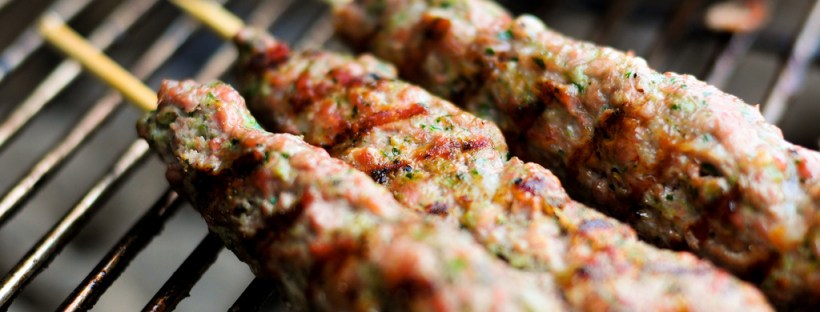
Here’s the wee recipe for flatttened lamb koftas……seriously, you’ll be totally scundered at how good these are 🙂
How to make them healthier:
Lamb is a high fat red meat, so try to buy the lean mince which has a reduced fat
Grill rather than fry
Add loads of crunchy salad in a pitta, tomatoes, humous etc
Ingredients:
400g lean lamb mince
2 tsp paprika
2 tsp cumin
2 cloves garlic crushed/finely chopped
pitta bread
lettuce, tomatoes, cucumber, greek yogurt or hummus
In a bowl, mix the mince, cinnamon, cumin and garlic. Get stuck in and use your hands!
Grab a handful, and mould in to a patty shape, about the same shape as a pitta bread but a bit smaller
Place on some kitchen foil and grill for a few minutes on each side
Put in a pitta (toast the pitta if you prefer), with some lettuce, tomatoes, cucumber and greek yogurt/hummus
Five years ago, not long after my youngest was born, I sat in the cafe at Virgin gym in Kingston chatting to one of the personal trainers about coming along to their Triathlon Club. But with three young kids, and later on two jobs, there was no way I could ever commit to the training.
One year ago, my circumstances changed massively. A move to my home town of Bangor, Northern Ireland in July 2016, somehow gave me the drive to focus on this ambition that had only grown since that initial conversation. I bought a road bike in August, and in September a turbo trainer was delivered to my door (a surprise present from my awesome sister!). This made it possible for me train on the bike every morning at 5am before the kids woke up. Running and swimming were fitted in around the school drop offs/pick ups and work, with longer weekend sessions made possible by my Mum and Dad (and their never ending patience with me and my looney 3!).
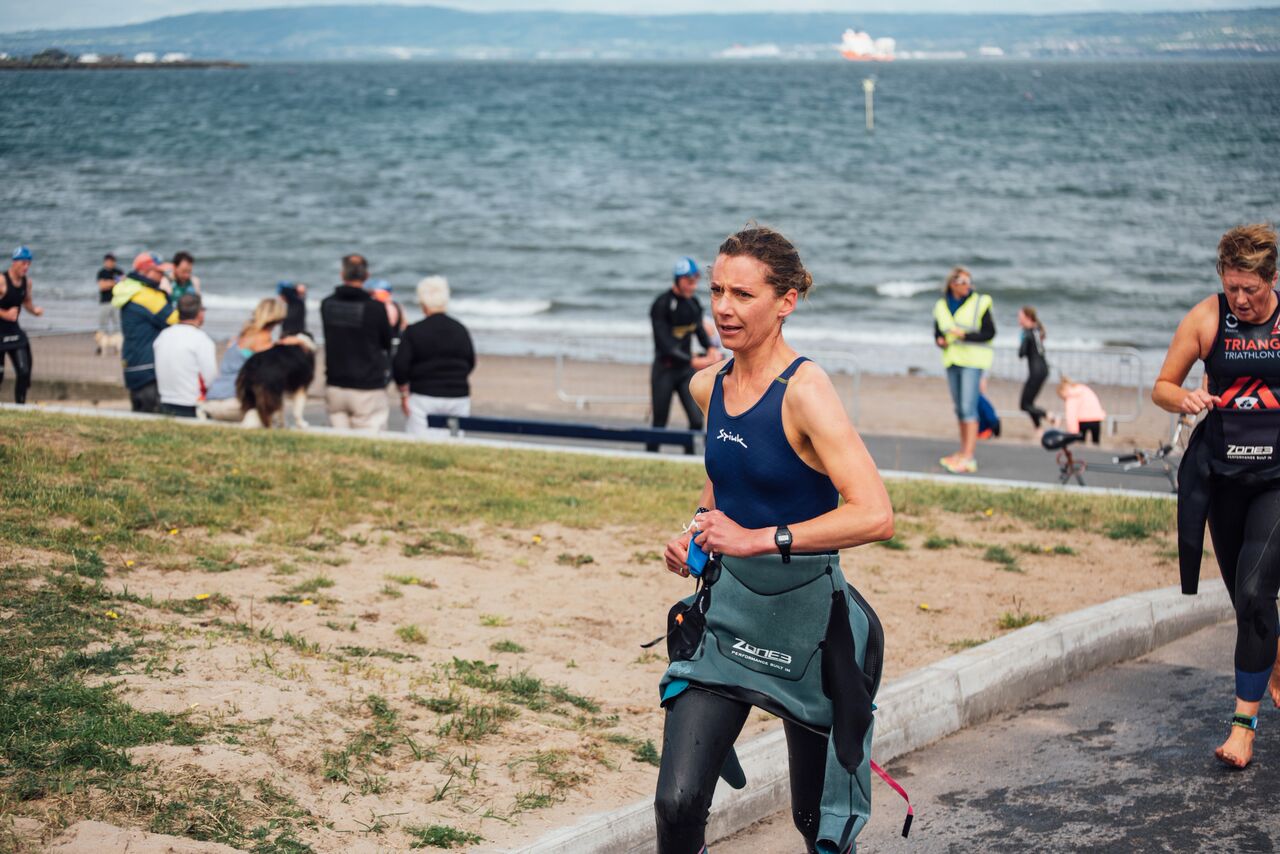
June 2017: I had no excuse for not entering the Peninsula Sprint Triathlon. Especially as it was from beach at the end of my road. My sis flew over to look after the children – thank you, and thank you for having them the night before so I could get my ‘race head’ on.
Here is an account of some of the things that were going through my head during the race. It is a VERY cleaned up version. If you can imagine in real life, every other word was very sweary. Very, very sweary.
The 750m Sea Swim “Booooof, aiooooo, elbow in my face…..I’m seeing stars! I’m fine, keep going, no problem.
I’m in there somewhere, mainly getting cracked on the head. Nutters.
Mmmmm, I can’t move my jaw, it hurts. Keep going you’re fine. All part of the experience! Just try not to get kicked in the head……that could be worse. What are all these people doing here??? Move out of my way! Not far now. Where’s the next buoy. Yellow, yellow, yellow, look for the yellow buoy. Over there, FFS it’s that way!”
Transition 1: Exiting the water to get on the bike. “Wwwwaooooo, the world is spinning. Waaaaooooo, don’t fall over. Smile at my 3 little people. High five, Mummy’s
Why is the world spinning??
feeling great, amazing!!! Waaoooo………focus, don’t fall over. Ok, you’ve got this! Oh jeez, I should be running to the bike!……..pick up your legs…….one two three four five six seven eight. Bike. Where’s my bike? Here you are! Ok, legs out of wetsuit. Why is everything still spinning…….find something to hold on to. You know how to peel a wetsuit off, you’ve done this a million times! Ok bike shoes on, good well done. I really shouldn’t be cycling in this state, I feel like I’m totally drunk. It will be fine. Helmet and glasses on. Run with the bike to the line, don’t slip over…….. clip shoes in, don’t fall off, for goodness sake don’t fall off!!!! High five Me, you didn’t fall off! Ahhhh my lovely bike and a smooth road. Sea swims are for nutters.
The 20 km Cycle: This is funnnnnnnn, hey there are police holding up the cars! Thank you! I love you!!! Oh s***, that guy’s come off his bike. He’s lying on the road. What am I doing?!!! Why am I here? Never mind, I sure he’ll be fine. This is fun again! Legs are feeling good, I’m catching that bike in front. What do I do?? Seems a bit rude to overtake. **** it, I’m going to it anyway. Next!! Oh there’s a girl to over take, BOOOOOM, go legs……..is it a girl? Top half looks like a bloke………….suspiciously smooth legs though. It’s a bloke! Ha ha, lovely hair free legs, must get some tips, tee heee!
Get off the bike and don’t fall over!
Marshalls in your yellow vests. I love you, you make me so happy when you clap and say I’m doing really well. I think we should be best friends, you are soooo lovely. You tell me I can do this and it’s not far now. Thank you!! They said it’s not far now! Hang on, that was 2 minutes ago, I’m still not at the end of the bike leg……you lied to me!! Waaaaaaaah! I’m dying here! Waaaaaaah!
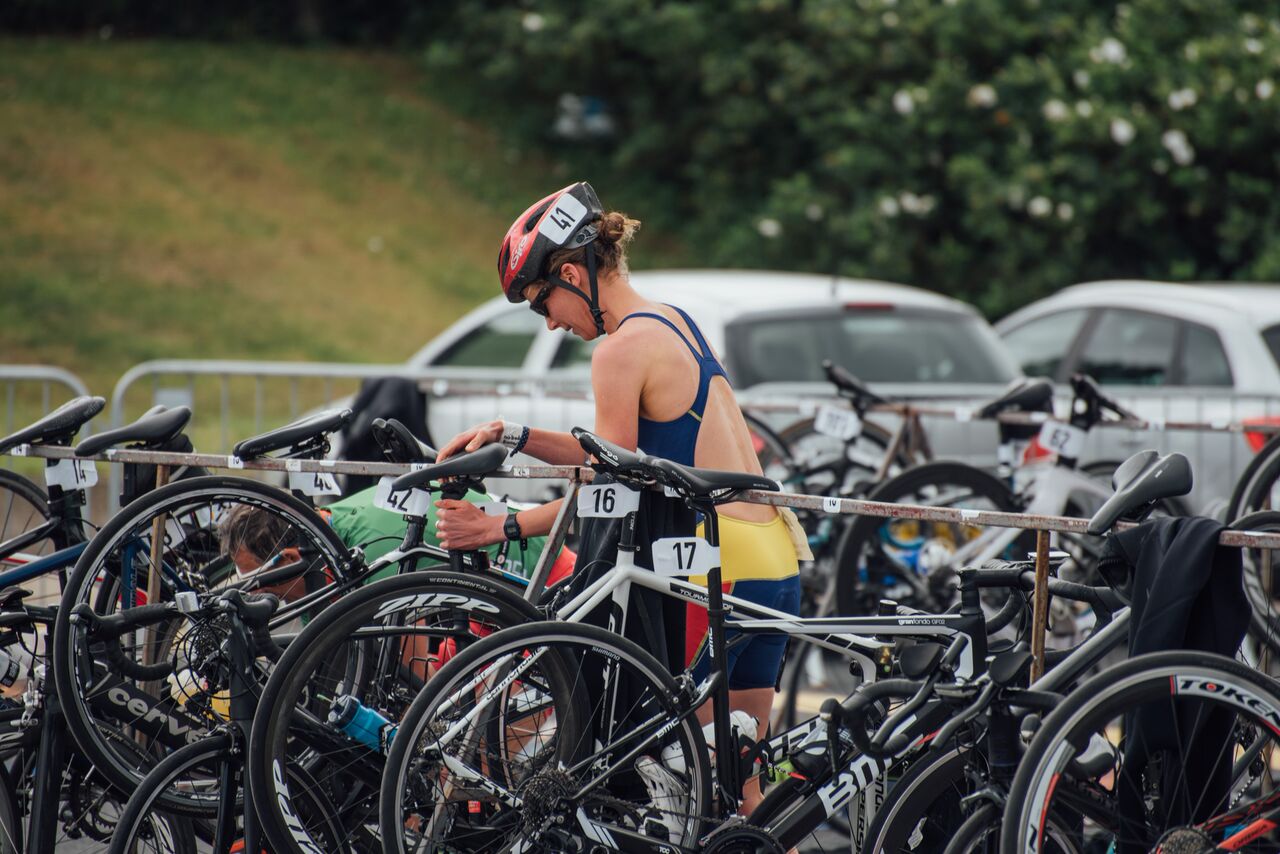
Transition 2 – the bike falls off the rack.
Transition 2: Bike to 5 km run: Yellow line!! Off the bike, run to the bike rack. DO NOT skite on your arse in these slippy shoes. Bike in to rack. Yikes!! How do I hook the bike on to the rack. Focus concentrate, quickly QUICKLY, you’ve rehersed this. There we go back of saddle over the bar. Nooooo!! *$!*!% The bike’s fallen off and taken the next one with it! I’m going to pass out, my eyes are all weird and my hands won’t work because. I’ve spent 37 minutes gripping the handle bars for dear life! Ok, focus. Front of saddle on the bar. Fix the other bike. Good, well done, you’ve got this. Shoe change, work hands work!! Mouth swill of Lucozade. Ha ha! The advantages of being a sports dietitan and knowing the carb mouth swill secret! Don’t swallow any, you know it will make you want to puke. Swill it around, spit it out. Ok where can a spit this gob full out. S***, there’s a photographer…………I can’t spit out now, that would be so disgusting to have that on camera! Abandon nutrition strategy! Swallow the Lucozade. Hope I don’t vom. Jesus my legs.
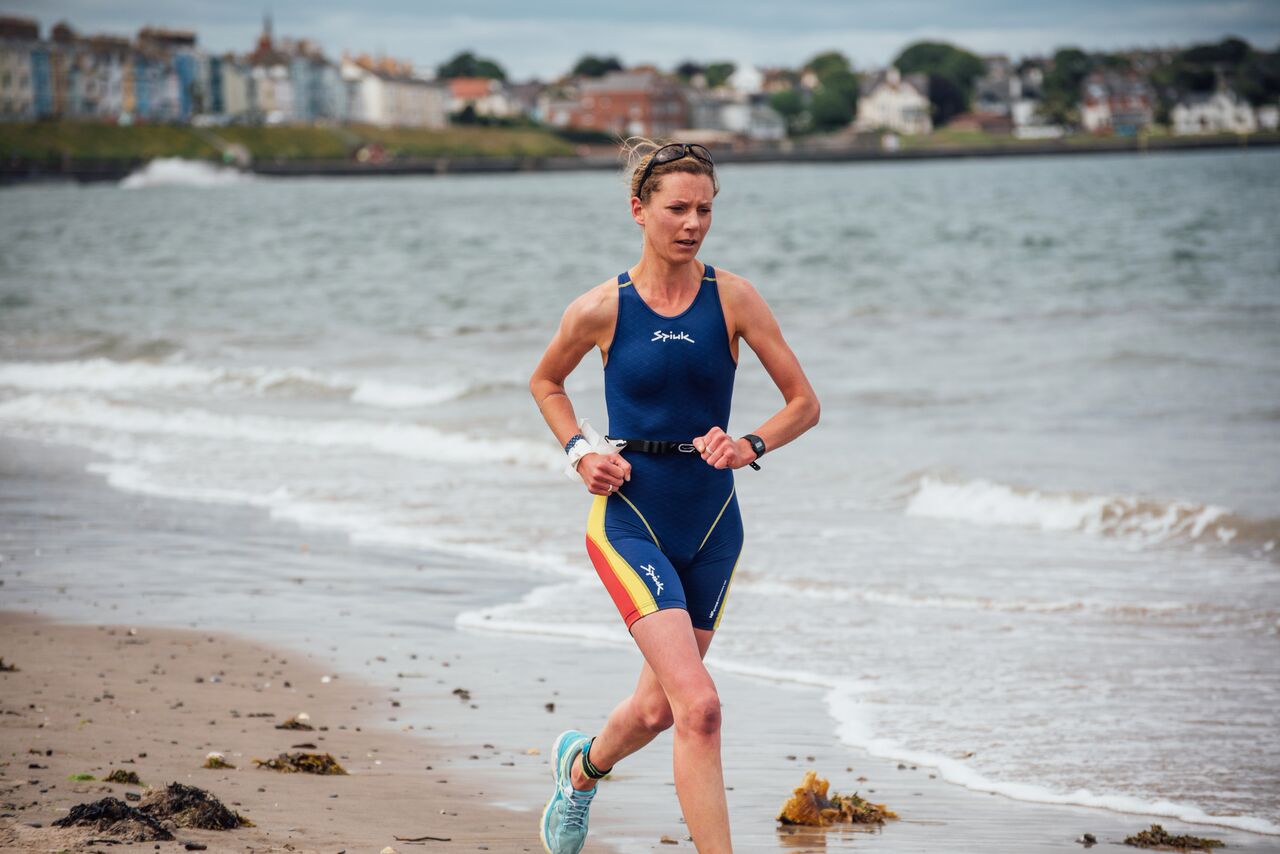
Final stretch of the 5km run to the finish. “Nearly done, just a few steps on the beach then
Nearly there. Don’t puke!
through the finish line. Hang on a minute, I’ve got to go to the end of the beach and back again? Jesus no.
I am actually going to puke. Walk 10 steps. Thank you marshall for cheering me on, I’m so sorry for not running, but I’m going to puke. Run again, toughen up, do not walk, it’s like the Marathon Des Sable, if those guys can run 250km over Sahara sand, I can do 500m of Ballyholme Beach! I can see the finish line!! OMG the sand has turned all soft and fluffy, this is cruel! The race briefing said this is a flat course, not a fluffy sandy flat course! Just look at the ground, 1 2 3 4 5 6 7 8, focus on the ground, 1 2 3 4 5 6 7 8. Up the ramp………I’m there! Finished! Sit down, heave, deep breaths, don’t throw up on your children.
10 minutes later: I could SO do that all over again. Olympic distance NO PROBLEM!!
24 hours later: my body feels like a sack of potatoes and my mind is somewhat catatonic. But in a good way 🙂










 cookin a new suitably sunny Greek inspired wee recipe! (NB the word ‘wee’ in Northern Ireland is an affectionate term used for pretty much anything, for example a shop assistant may say: “Uck that is a lovely wee top, would you like a wee bag for it? Just pop your wee card in the wee machine there. OK you can put your wee PIN number in now. Would you like me to put your wee receipt in your wee bag?”)


 sarahdietitian.com