Gluten Free – emerging evidence of intolerance

Gluten is a protein found in wheat, rye and barley. A gluten free diet is the treatment for Coeliac Disease, however in recent years, gluten free diets have become popular with people who do not have Coeliac Disease. Celebrities such as Andy Murray, Bill Clinton and Gwyneth Paltrow give endorsement to the gluten free way of eating.

There is emerging medical evidence and a growing number of clinicians acknowledging that up to 10% of the population may have a gluten intolerance despite testing negative for coeliac disease. Allergy tests will also be negative (as it is an intolerance, not an allergy), negative in gut biopsies (where a sample of the gut is looked at under a microscope), and negative in endoscopies (tiny camera looks at your gut).

The medical term is Non-Coeliac Gluten Intolerance – here is an interesting article from the British Medical Journal, with the personal experience of a biochemist with gluten intolerance, followed by the opinion of a clinician.

Despite symptoms seriously affecting quality of life, a medical diagnosis of non-coeliac gluten intolerance can be difficult as although prevalent, it is under-recognised by doctors.

Gluten intolerance can manifest in many ways:

  • digestive system
  • skin
  • nervous system
  • muscles and joints
  • sleep
  • mood

During my practice, I have seen many patients with a variety of these gastrointestinal and non-gastrointestinal symptoms, in which coeliac disease has been tested for and excluded, but symptoms only respond to a gluten free diet.

Improvement in quality of life can be profound: the 7 year old autistic boy, who could stop wearing nappies as his ‘intractable’ diarrhoea resolved; the 74 year old almost housebound lady with chronic abdominal pain who can now happily get out and about; the 5 year old girl whose mother described her as being, not just emotional, but depressed, who within days emerged a ‘happy child’.

My story – why I have jumped on the gluten free bandwagon

I have suffered with spots since I was 15 years old. I’m now 36. Not just a few zits, but sometimes so many that I couldn’t even count them. Over the years, GPs and dermatologists have prescribed every pill and potion from the long list in their BNF (the medical profession’s prescribing manual, look for it on your GP’s desk). From the basic benzyl peroxide cream to Roaccutane. Side effects of Roaccutane include peeling lips, nose bleeds, liver damage (you have to have regular blood tests to monitor liver function), and deformed foetus if you become pregnant. The Roaccutane worked for about a year, but the spots returned.

Every medic told me diet and acne were not related. This outdated opinion comes from a 1969 study looking at the effect of chocolate on acne, in which the inappropriate conclusion was drawn that as chocolate did not appear to affect acne, neither did any dietary factor. However, there is a growing evidence of recent studies supporting the relationship between diet and acne, although there are none as yet specifically on gluten.

To cut a long story short, two years ago, aged 33, I jumped on the gluten free bandwagon. Why did it take me so long? Because there is no evidence of a relationship between gluten and acne, and I experience zero gastrointestinal symptoms, so I didn’t make the link.

The theory is that for intolerant individuals, gluten can affect hormone levels and provoke an inflammatory response, both triggers for acne. I was by no means confident that it would make any difference, in fact I was extremely skeptical, and it’s certainly not something I broadcasted to dietetic colleagues. However, after a few months, I was spot free. After about 8 months, I tested the gluten exclusion on holiday in Morocco, with the bread-tastic breakfasts. About 5 days later I had a major outbreak which took a couple of months to clear up. In June this year, on holiday in Ireland, each day I had the odd bit of scone and pastry (it would have been rude to turn down my husband’s Nan’s food!). Once again, I had a flair up a week later that took many weeks to clear. Surprisingly, a food challenge is the ‘gold standard’ for confirming diagnosis of food allergies and intolerances, rather than reliance on laboratory testing.

Thankfully, gluten free is much easier to do these days, than even five years ago. Most supermarkets have a great range of gluten free foods that are getting better and better when compared to standard products. That is why I am more at ease in suggesting clients trial a period of gluten free if more serious conditions eg. coeliac disease have been excluded by their GP. Some people see major improvements on eliminating the major sources of gluten eg. pasta, bread, cakes, biscuits, pastry. Some may need to be more vigilant about gluten containing foods by examining food labels.

If you are considering a gluten free diet because you may be suffering from any of the above symptoms, please get the all clear to do so by your GP. Serious health conditions should be eliminated first. A gluten free diet may not help you lose weight (especially when using gluten free products), and there is no need for those who do not have Coeliac Disease or Non-Coeliac Gluten Sensitivity to limit their diet unnecessarily.
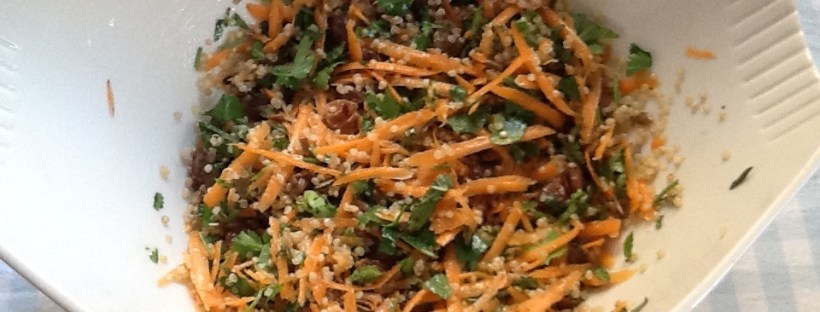
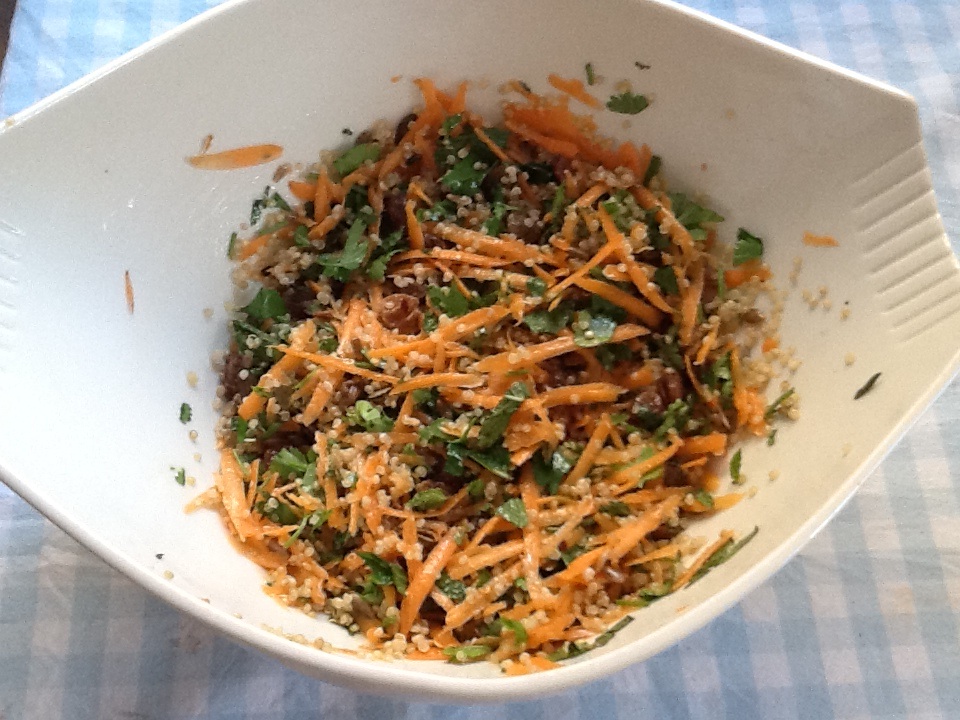
Happy Carrots

The name alone makes me love this. It’s also very easy to make which makes me happy.

Happy Carrots

Happy Carrots

Why it’s happy: protein from the quinoa and seeds; antioxidants from the carrots, mint and coriander; essential fatty acids from the pumpkin and sunflower seeds, and a little bit of sweetness from the sultanas.

Ingredients:

1 tablespoon sultanas (soak in hot water for 5 mins to plump up)

3 chopped spring onions

3 grated carrots

handful coriander leaves, chopped

small handful mint leaves, chopped

handful toasted pumpkin and sunflower seeds

a few tablespoons cooked quinoa/rice (optional)

dressing: 1 tablespoon lemon juice, 1 tablespoon olive oil, 1 chopped garlic cloves (or teaspoon of the garlic in a tube). Make more dressing, if you like it more dressingy.

Mix all the ingredients together in a bowl. Mix the dressing ingredients together and add when about to serve.

Healthy ice cream – high protein, low fat

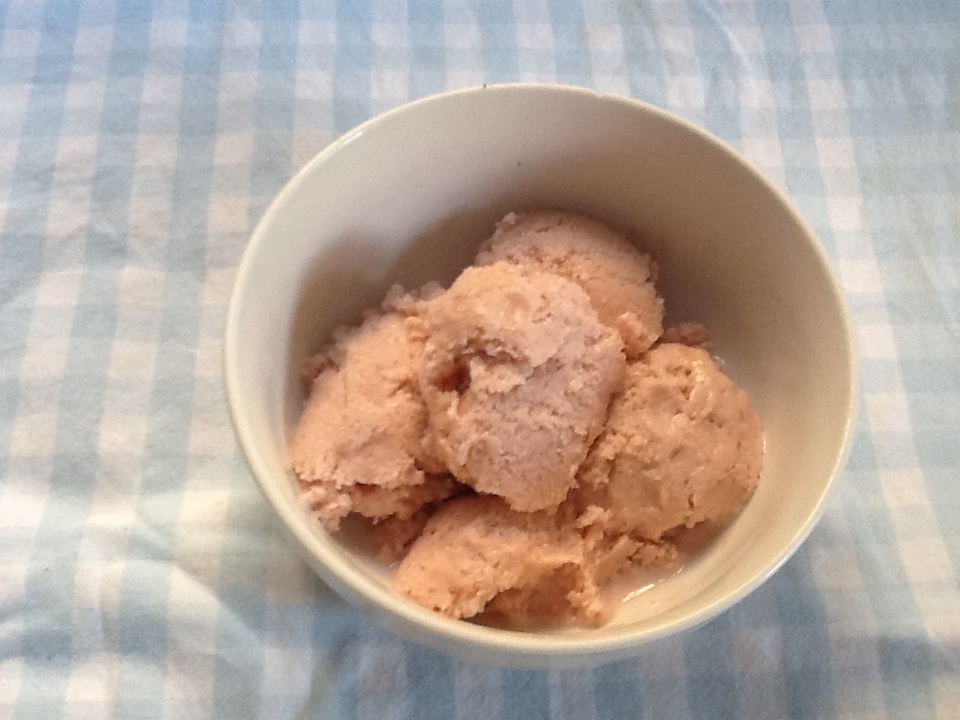
Here’s a recipe for ice cream made with protein powder. I used Kinetica Whey Protein Strawberry flavour. It is a much healthier version of standard ice cream, as it is low in fat, and high in protein, and has healthier carbs. Perfect as a post workout recovery snack, or just for something delicious on a hot day.

image

Per serving:

  • 208kcal, 18g protein, 25g carbohydrate, 4g fat
  • Normal ice cream per 100g (3/4 cup): 200kcal, 3.3g protein, 23g carbohydrate, 11g fat

Why it’s better than standard ice cream:

  • cream replaced with whey protein powder, yoghurt and milk.
  • higher in protein – for muscle repair and muscle building, makes you feel full up for longer.
  • lower in fat – 17% calories from fat, compared to 50% in standard ice cream
  • healthier carbs – banana and milk replace sugar. Carbs used for muscle repair and building (helps to shuttle protein in to muscle), replaces glycogen used up during exercise.
  • banana provides vitamins, minerals, antioxidants and soluble fibre.
  • you can have a larger portion size than standard ice cream as it is lower in kcal.

You can use any flavour of protein powder that you like, I used strawberry. I don’t have an ice cream maker, but I’m sure the results would be even better using one!

And the recipe…..(makes 2 servings):

30g any whey protein powder 

250ml semi skimmed milk

1 banana

2 tablespoons natural yoghurt

Whizz the ingredients in a blender, and pour in to a bowl. Place bowl in the freezer.

After about an hour, take out of freezer and stir using a whisk or fork. This is to break up the ice crystals. Try to get a smooth consistency.

Repeat this every 30 minutes/1 hour until the ice cream has been in the freezer for approximately 4 hours. If it is left longer than this, it can become quite solid, and will need to be left out of the freezer for a while to defrost a little before serving.

Enjoy!


Paleo Diet – a bad fad?

A nice chap on Twitter challenged my thoughts and opinions on the Paleo Diet. Am I a lover or a hater?

It could be considered standard practice for a health professional to dismiss the Paleo Diet as nothing but a fad, a diet that is BAD, and just a bit mad. However, I am of the opinion that most ‘diets’ have their pros and cons, work for some people and not for others. As I always say, what works for you and what you are happy with is your business. If you feel the need to change and want to change, that’s terrific too.

Here is a bullet point overview of the paleo diet. I could witter on forever about it, but I’ll try to keep it brief!

What is the Paleo Diet?

  • short for paleolithic, also known as hunter-gatherer or caveman diet.
  • consists mainly of fish, grass-fed pasture raised meats, eggs, vegetables, fruit and nuts
  • excludes grains (including wheat & rice), legumes, dairy products, potatoes, refined salt, refined sugar, and processed oils
  • based on the premise that humans have not evolved to digest and metabolise the excluded foods
  • seen as a lifestyle, rather than a ‘diet’ one ‘goes on’

Pros

  • based on wholesome, unprocessed foods, high in vitamins and minerals (except calcium), antioxidants, and essential fatty acids
  • elimination of processed foods
  • no specialist ‘diet foods’
  • eat when you’re hungry, don’t eat if you’re not
  • when strictly followed, will probably result in weight loss due to a reduction in calories
  • no calorie counting required – a massive plate of veg with a portion of meat should fill you up
  • many people do have a gluten/lactose intolerance, the diet can help identify these

Cons

  • restrictive, can result in feeling deprived leading to rebellion and over eating
  • requires careful planning and a lot of will power
  • eating out and as a guest at other people’s houses can be very difficult
  • expensive to buy pasture raised meat, wild fish (£10 per salmon fillet anyone?) etc.
  • there is the opinion that the whole philosophy is based on speculation about what our ancestors ate
  • humans have not stopped evolving, an example being the evolution of lactose tolerance in Europeans

What about for athletes?

Having witnessed first hand the implementation of the Paleo Diet with professional athletes, I’m more skeptical about it’s application for sports people. The leading expert on all things Paleo, Loren Cordain, followed his original book with one on the diet for athletes. Just one of the aspects which I find tricky is the use of carbohydrate. He fully acknowledges the need for adapting the diet for very active individuals, advocating that 50% calories should come from carbohydrate, including the introduction of potato, sweet potato, dried fruits and fruit juice. In the book ‘The Paleo Diet for Athletes’ he writes:

“of course, this carbohydrate should primarily come from fruit and vegetables, so calories aren’t wasted by eating food lacking micro nutrients”.

He follows with an example diet for a 10 stone athlete training 15 hours/week requiring 3000kcal/day. I analysed the nutrients…… Dr Cordain only managed to get 30% calories carbohydrate (fruit/veg), and this seemed to be mainly from fruit juice. I therefore question how athletes requiring large calorie intakes can realistically follow his regimen.

Due to the impossible task of getting 50% of calories from fruit and veg, I have witnessed first hand the reduction in training performance (feeling weak and dizzy), constant hunger, poorer body compostition, and difficulty in socialising (as a dinner guest or in restaurants).

My opinion:

For people who have a high intake of processed food, are over weight or who want to try to improve their health, a relaxed version of the Paleo Diet may be worth a try! There is no doubt that wholesome, unprocessed

include wholesome grains and dairy

include wholesome grains and dairy

foods: fish, meats, eggs, vegetables, fruit and nuts are of benefit. Adopt a common sense approach to including grains and dairy eg. swap Frosties for oats, chips for basmati/brown rice.

Athletes, be careful not to sacrifice your performance in training and in competition for an ideological diet that is not meeting your nutritional needs. The basic principles can be adapted to meet your training goals and to achieve optimal performance.

Final thoughts:

  • “You can’t out run your fork” for optimal health, diet is paramount
  • Eat wholesome real foods, eat food that goes off before it goes off!
  • Load your plate up with vegetables, a handful of grains and a portion of protein
  • Make small changes over a period of time so that it becomes a lifestyle, not a fad diet that you follow for a few weeks

Your thoughts?

I’d love to hear your thoughts, opinions and experiences! Comments gratefully received…….

Fiery Noodles

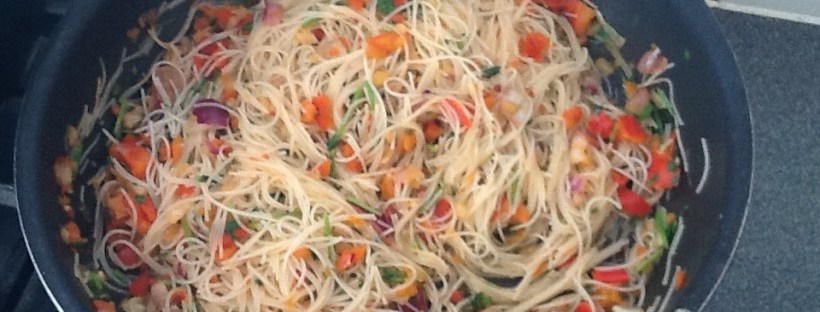
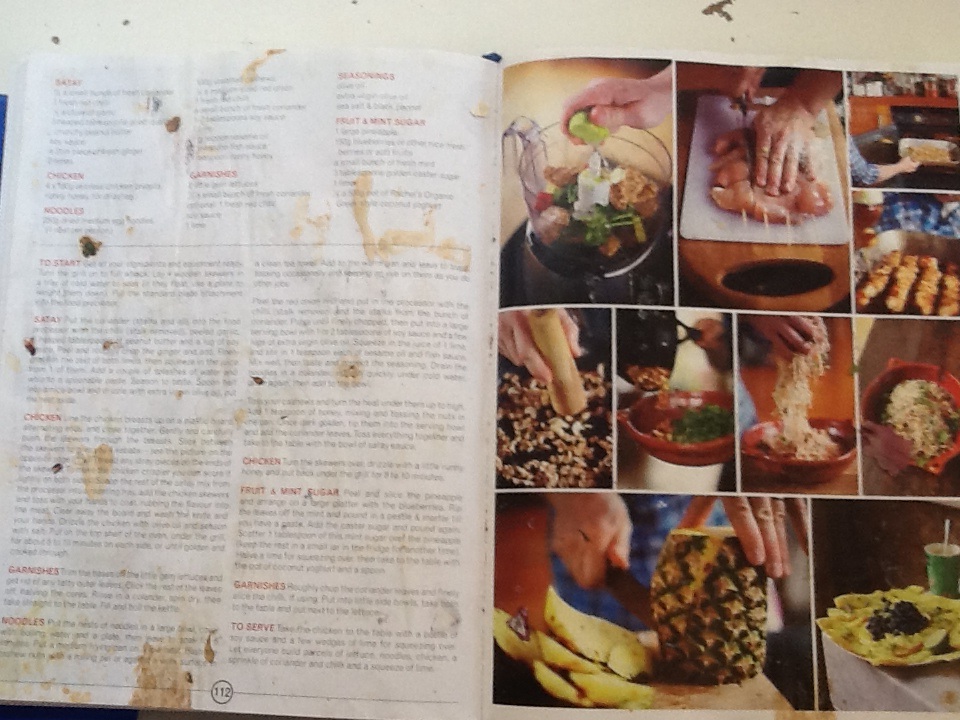
This recipe is adapted from Jaime Oliver’s 30 Minute Meals book. As you can see from the photo, this particular page is well used! This part of the recipe only takes about 10 minutes if you use the ready cooked noodles.image

 I use rice noodles instead of egg noodles (for a gluten free option), and leave out the faff of carmellising cashew nuts. If a recipe isn’t easy, or it has too many complicated ingredients or stages, then I don’t have the time or patience. Especially when our 1 year old is clutchingimage on to my leg while I’m trying to cook!

Ingredients: ready to use rice noodles, 1 red pepper, 1/2 red onion, chilli flakes, handful coriander, 2 tablespoons soy sauce, 1 lime, 1 teaspoon fish sauce, 1 teaspoon sesame oil.

  • Put the pepper, onion and coriander in a food processor and whizz up until chopped small. Or you can just chop everything up with a knife.
  • Make the dressing with the sesame oil, juice of the lime, soy sauce, fish sauce and chilli flakes (about 1/2 teaspoon, more or less depending on how fiery you like it!)
  • Mix dressing in to chopped pepper, onion and coriander.
  • Heat a frying pan, ideally non stick. If using a wok, add a little oil to imagestop noodles sticking.
  • Add the veg mixture to the pan.
  • Add the ready to use noodles.image
  • Heat through until noodles soft (about 3 minutes).
  • Eat immediately if you like it warm, or leave to cool for a cold salad.
  • Good served with chicken stir fried in a dash of soy sauce and honey. Or a salmon fillet flaked through it. Any other ideas welcomed!

Breakfast Omelette (sweet!)

Most of us have become used to having something sweet in the mornings, rather than savoury. Think breakfast cereal, porridge with raisins, muesli, toast and jam, fruit and yoghurt etc. All perfectly great breakfasts.

image

Omelettes usually fall in to the savoury category, so I thought I’d change ingredients to make it sweet. It sounds a bit odd, but bear with me, and give it a go. All you need are eggs, oats and some honey. Cinnamon if you are feeling adventurous!

Why this omelette is great!

Eggs:

  • contrary to popular belief, cholesterol in eggs does not raise blood cholesterol
  • nutrient dense superfood, choca-block with vitamin and minerals
  • high in choline (neurological benefits) and leucine (for muscle building – found in many sports protein drinks)
  • High protein – help you to feel full up for longer and for muscle building
  • cheap!

Oats:

  • low GI, for slow energy release
  • high soluble fibre and B vitamins
  • lowers cholesterol, prevents heart disease
  • also cheap!

Honey:

  • balance of fructose and glucose sugars (similar to sports carbohydrate gels, but without the additives)
  • easily absorbed by the body, increasing energy levels quickly

Here’s what you do:

1) whisk 2 eggs, add to hot non-stick omelette/frying pan

2) sprinkle in a small handful of oats, with cinnamon if you are using

3) give the pan a shake every so often and just a few times give a stir (stir too often and you’ll have scrambled eggs, equally delicious I’m sure)

4) drizzle some honey over the omelette

5) plate up! Add some extra honey if you wish.

Nutrition info: 320kcal, 16g protein, 30g carbohydrate

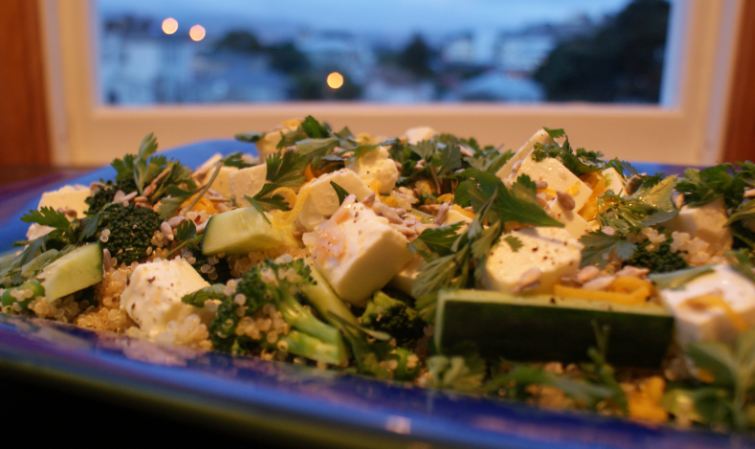
Super Food Salad

Super Food Salad

superfood salad

Photo doesn’t do it justice!

This recipe is adapted from the Leon restaurant recipe book. We have this every week, usually with salmon or sausages. I make a bit extra so there’s some in the fridge for lunch the next day.

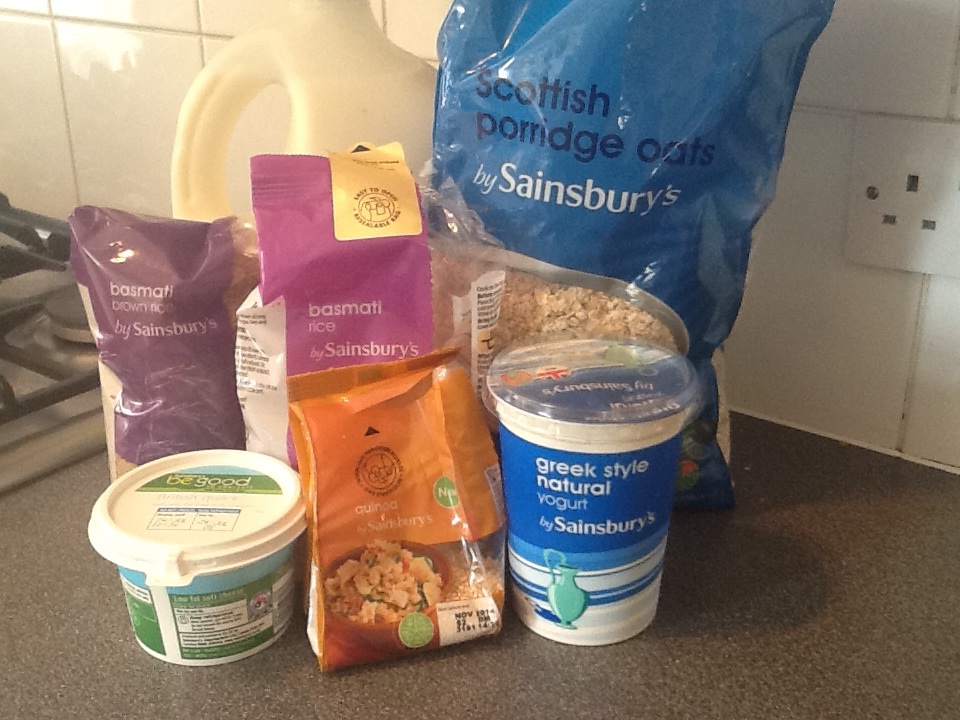
images

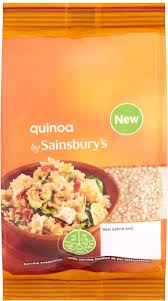
Dried Quinoa

Quinoa (pronounce keen-wah) is high in carbohydrate, and has a slightly nutty taste and makes a nice change to rice or cous cous. Unusually for a non-meat/dairy food it contains complete protein, which means it as all the amino acids, which are the building blocks of protein. It’s a myth that it’s high in protein. As a comparison, quinoa has about 8g/100g, while most meat has about 20-30g/100g.

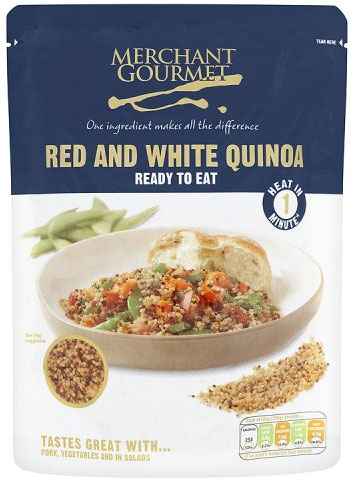
Ready to eat

Ready to eat

Quinoa can be bought in most supermarkets. ready to eat or dried. If you buy dried (much better value) then you need to cook it by putting in a saucepan with enough cold water to cover it, bring to boil, then simmer for about 20 minutes with the lid on, keeping on eye on it so it doesn’t dry out.

To reduce the calories:

Leave the feta out, and add extra veggies. It will lower the protein content of the recipe, but if you’re having it with a portion of fish/chicken/meat etc. this won’t matter. Oil has 100kcal per tablespoon, so you can either reduce the olive oil to 1-2 tbsp, or just use lemon juice on it’s own.

So here’s the recipe. Just toss the ingredients together and mix in the dressing!

100g cooked quinoa

100g cooked broccoli

100g frozen peas, thawed

100g feta cheese, crumbled

¼ cucumber, cut in to thin sticks

handful pumpkin and sunflower seeds (toasted in the grill)

handful chopped parsley

handful chopped mint

 Dressing:

2 tbsp lemon juice

4 tbsp olive oil