Pre season training – a day in the life……

7 weeks in to pre season training, and we’re starting to feel the physical strain. Pre season (June-August) is the time when fitness and strength training are pushed to the extreme in preparation for the playing season ahead. I say ‘we’re’ starting to feel the strain as having a husband in pre season training is like adding another child to the equation. His exhaustion at the end of the day renders him pretty much helpless!

This morning, Monday 22nd July, sees that start of ‘Over-load Week’, when the boys are pushed even more physically, with the reward of a week off from Sunday. As I sit here typing at 6am, Dec’s alarm is jolting him out of his comatose state. With the first training session at 7.15am, he needs to be up with enough time to fit in the first meal to allow it to digest. Here’s the schedule for today:

7.15am: 45 minutes weights (‘hypertrophy’ short, sharp and intense lifting, to increase muscle mass)

8am: breakfast

8.30am: stretching session

10am: 1 hour rugby training

11.30am: 1/2 hour conditioning (fitness/running)

12pm: lunch

2.30pm: Weights (legs)

4pm: afternoon meal

4.30pm: physio/massage

6ish +: return home

So it’s a long day of weights, rugby and fitness training. The forecast for today is 32 degrees C…………..so on top of food and snacks, fluid, fluid, fluid is as important to maintain hydration.

After the long day at the Sunbury training ground, Dec will return to (ahem) our tranquil home. Perhaps I will rephrase that. Dec will return home to the tears and tantrums lively and spirited debates between our two girls (6 and 3), and our 1 year old toddler, who is going through a clingy/moaning phase. All the poor man wants to do is just sit down and zone out (reminds me of that quote from Winnie the Pooh: “Sometimes I sits and thinks, sometimes I just sits).

With 3 kids entertain, shopping, cooking, cleaning etc. etc. an extra body sitting near comatose on the sofa can be, to be polite, frustrating. However, I have to remind myself that recovery and rest are a fundamental phase of training, as important as the physical sessions throughout the day.

The huge calorie intake needed to meet the requirements of the extra physical activity AND to promote weight gain, can be tricky to achieve. Even with a personal dietitian who also happens to be his wife at his disposal.

I always say that an athlete can meet their nutritional needs using real food, with supplements eg. protein/recovery drinks/bars, used to support the diet if necessary. Real food gives a multitude of vitamins, minerals, antioxidants, phytochemicals, fibre, fatty acids, as well as probably many other substances that science not discovered yet. A manufactured product simply cannot replace a meal for nutrition.

Dec, being Dec, has taken this on board, wanting most of his nutrition to come from food, with recovery/energy drinks used a few times during training. In theory, this is music to the ears of a dietitian. However, in practise this means 5 meals per day, which is tedious (shopping, cooking, cleaning up), not to mention expensive.

Rob, the Strength & Conditioning coach at London Irish, has the boys on strict diets to meet their various nutrition and training needs. Dec’s aim is to increase weight from 100kg to approximately 105kg, while maintaining body fat at 10%. He’s on target, having upped the weight to 102.5kg (that half kilo is VERY important!)

Meals yesterday: porridge; bagel & scrambled eggs; salt beef ciabatta; pasta with pesto, chicken, pepper & spring onion; salmon, rice, happy carrot salad; wrap with chicken & coleslaw.
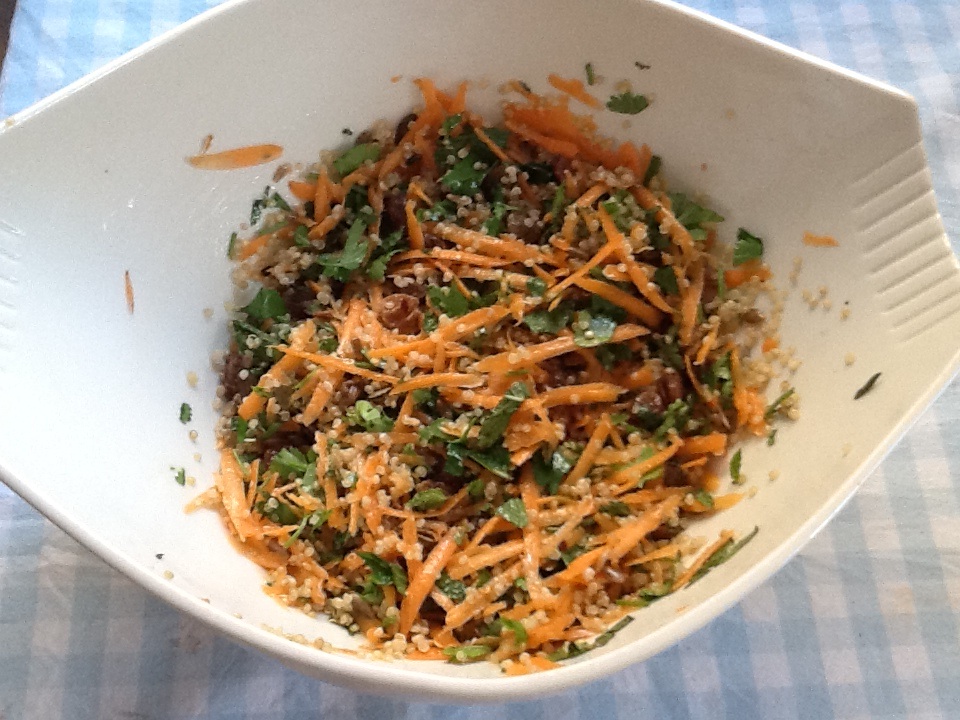
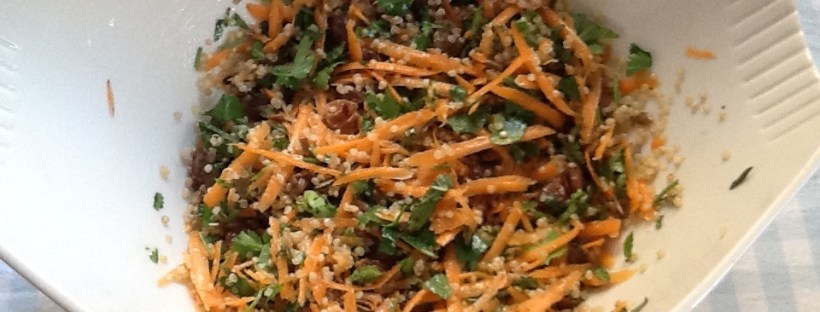
happy carrots

happy carrots

Snacks/training: apples, yoghurts, almonds, recovery drinks, energy drinks.

image

almonds, yoghurt, apple

Happy Carrots

The name alone makes me love this. It’s also very easy to make which makes me happy.

Happy Carrots

Happy Carrots

Why it’s happy: protein from the quinoa and seeds; antioxidants from the carrots, mint and coriander; essential fatty acids from the pumpkin and sunflower seeds, and a little bit of sweetness from the sultanas.

Ingredients:

1 tablespoon sultanas (soak in hot water for 5 mins to plump up)

3 chopped spring onions

3 grated carrots

handful coriander leaves, chopped

small handful mint leaves, chopped

handful toasted pumpkin and sunflower seeds

a few tablespoons cooked quinoa/rice (optional)

dressing: 1 tablespoon lemon juice, 1 tablespoon olive oil, 1 chopped garlic cloves (or teaspoon of the garlic in a tube). Make more dressing, if you like it more dressingy.

Mix all the ingredients together in a bowl. Mix the dressing ingredients together and add when about to serve.

Healthy ice cream – high protein, low fat

Here’s a recipe for ice cream made with protein powder. I used Kinetica Whey Protein Strawberry flavour. It is a much healthier version of standard ice cream, as it is low in fat, and high in protein, and has healthier carbs. Perfect as a post workout recovery snack, or just for something delicious on a hot day.

image

Per serving:

  • 208kcal, 18g protein, 25g carbohydrate, 4g fat
  • Normal ice cream per 100g (3/4 cup): 200kcal, 3.3g protein, 23g carbohydrate, 11g fat

Why it’s better than standard ice cream:

  • cream replaced with whey protein powder, yoghurt and milk.
  • higher in protein – for muscle repair and muscle building, makes you feel full up for longer.
  • lower in fat – 17% calories from fat, compared to 50% in standard ice cream
  • healthier carbs – banana and milk replace sugar. Carbs used for muscle repair and building (helps to shuttle protein in to muscle), replaces glycogen used up during exercise.
  • banana provides vitamins, minerals, antioxidants and soluble fibre.
  • you can have a larger portion size than standard ice cream as it is lower in kcal.

You can use any flavour of protein powder that you like, I used strawberry. I don’t have an ice cream maker, but I’m sure the results would be even better using one!

And the recipe…..(makes 2 servings):

30g any whey protein powder 

250ml semi skimmed milk

1 banana

2 tablespoons natural yoghurt

Whizz the ingredients in a blender, and pour in to a bowl. Place bowl in the freezer.

After about an hour, take out of freezer and stir using a whisk or fork. This is to break up the ice crystals. Try to get a smooth consistency.

Repeat this every 30 minutes/1 hour until the ice cream has been in the freezer for approximately 4 hours. If it is left longer than this, it can become quite solid, and will need to be left out of the freezer for a while to defrost a little before serving.

Enjoy!


Paleo Diet – a bad fad?

A nice chap on Twitter challenged my thoughts and opinions on the Paleo Diet. Am I a lover or a hater?

It could be considered standard practice for a health professional to dismiss the Paleo Diet as nothing but a fad, a diet that is BAD, and just a bit mad. However, I am of the opinion that most ‘diets’ have their pros and cons, work for some people and not for others. As I always say, what works for you and what you are happy with is your business. If you feel the need to change and want to change, that’s terrific too.

Here is a bullet point overview of the paleo diet. I could witter on forever about it, but I’ll try to keep it brief!

What is the Paleo Diet?

  • short for paleolithic, also known as hunter-gatherer or caveman diet.
  • consists mainly of fish, grass-fed pasture raised meats, eggs, vegetables, fruit and nuts
  • excludes grains (including wheat & rice), legumes, dairy products, potatoes, refined salt, refined sugar, and processed oils
  • based on the premise that humans have not evolved to digest and metabolise the excluded foods
  • seen as a lifestyle, rather than a ‘diet’ one ‘goes on’

Pros

  • based on wholesome, unprocessed foods, high in vitamins and minerals (except calcium), antioxidants, and essential fatty acids
  • elimination of processed foods
  • no specialist ‘diet foods’
  • eat when you’re hungry, don’t eat if you’re not
  • when strictly followed, will probably result in weight loss due to a reduction in calories
  • no calorie counting required – a massive plate of veg with a portion of meat should fill you up
  • many people do have a gluten/lactose intolerance, the diet can help identify these

Cons

  • restrictive, can result in feeling deprived leading to rebellion and over eating
  • requires careful planning and a lot of will power
  • eating out and as a guest at other people’s houses can be very difficult
  • expensive to buy pasture raised meat, wild fish (£10 per salmon fillet anyone?) etc.
  • there is the opinion that the whole philosophy is based on speculation about what our ancestors ate
  • humans have not stopped evolving, an example being the evolution of lactose tolerance in Europeans

What about for athletes?

Having witnessed first hand the implementation of the Paleo Diet with professional athletes, I’m more skeptical about it’s application for sports people. The leading expert on all things Paleo, Loren Cordain, followed his original book with one on the diet for athletes. Just one of the aspects which I find tricky is the use of carbohydrate. He fully acknowledges the need for adapting the diet for very active individuals, advocating that 50% calories should come from carbohydrate, including the introduction of potato, sweet potato, dried fruits and fruit juice. In the book ‘The Paleo Diet for Athletes’ he writes:

“of course, this carbohydrate should primarily come from fruit and vegetables, so calories aren’t wasted by eating food lacking micro nutrients”.

He follows with an example diet for a 10 stone athlete training 15 hours/week requiring 3000kcal/day. I analysed the nutrients…… Dr Cordain only managed to get 30% calories carbohydrate (fruit/veg), and this seemed to be mainly from fruit juice. I therefore question how athletes requiring large calorie intakes can realistically follow his regimen.

Due to the impossible task of getting 50% of calories from fruit and veg, I have witnessed first hand the reduction in training performance (feeling weak and dizzy), constant hunger, poorer body compostition, and difficulty in socialising (as a dinner guest or in restaurants).

My opinion:

For people who have a high intake of processed food, are over weight or who want to try to improve their health, a relaxed version of the Paleo Diet may be worth a try! There is no doubt that wholesome, unprocessed

include wholesome grains and dairy

include wholesome grains and dairy

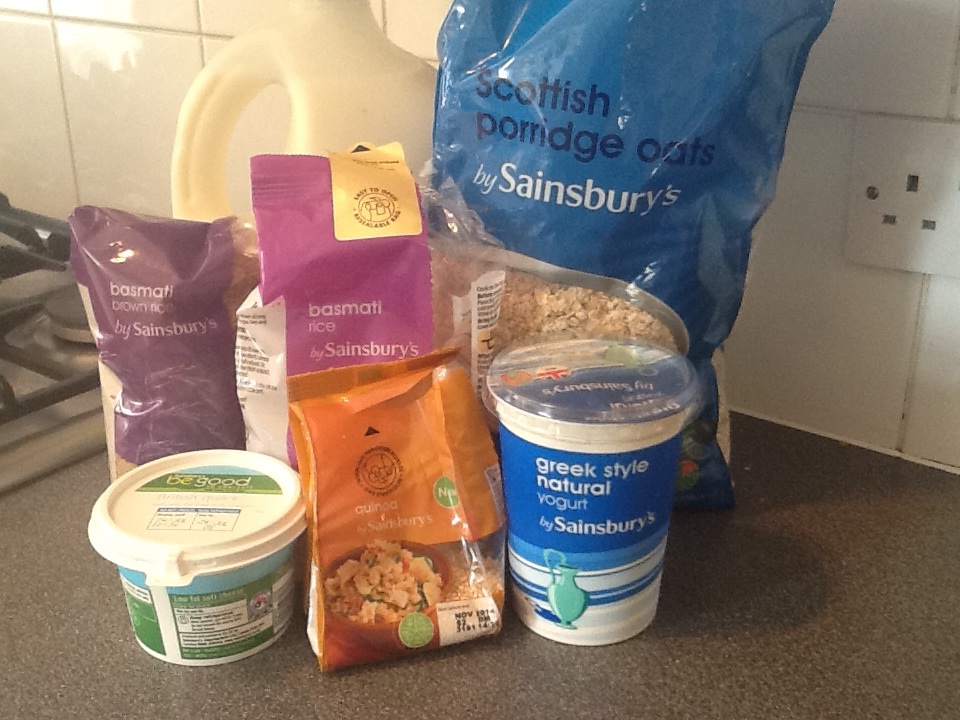
foods: fish, meats, eggs, vegetables, fruit and nuts are of benefit. Adopt a common sense approach to including grains and dairy eg. swap Frosties for oats, chips for basmati/brown rice.

Athletes, be careful not to sacrifice your performance in training and in competition for an ideological diet that is not meeting your nutritional needs. The basic principles can be adapted to meet your training goals and to achieve optimal performance.

Final thoughts:

  • “You can’t out run your fork” for optimal health, diet is paramount
  • Eat wholesome real foods, eat food that goes off before it goes off!
  • Load your plate up with vegetables, a handful of grains and a portion of protein
  • Make small changes over a period of time so that it becomes a lifestyle, not a fad diet that you follow for a few weeks

Your thoughts?

I’d love to hear your thoughts, opinions and experiences! Comments gratefully received…….

Fiery Noodles

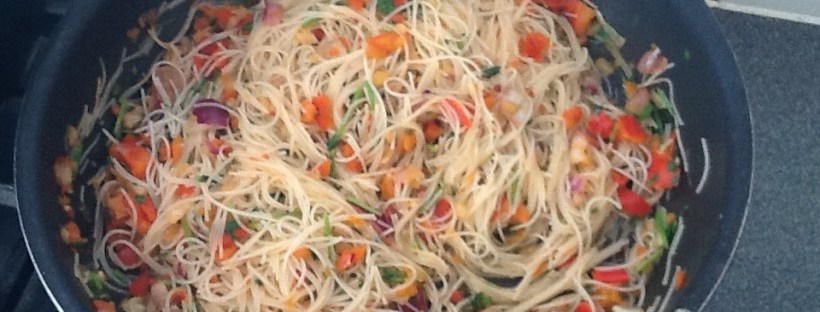
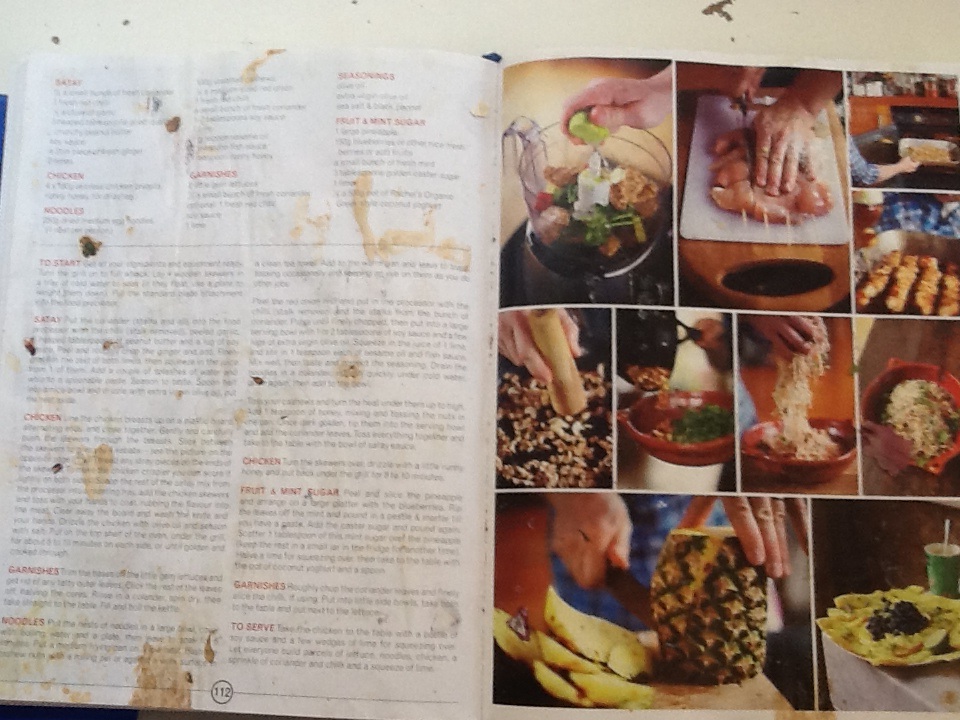
This recipe is adapted from Jaime Oliver’s 30 Minute Meals book. As you can see from the photo, this particular page is well used! This part of the recipe only takes about 10 minutes if you use the ready cooked noodles.image

 I use rice noodles instead of egg noodles (for a gluten free option), and leave out the faff of carmellising cashew nuts. If a recipe isn’t easy, or it has too many complicated ingredients or stages, then I don’t have the time or patience. Especially when our 1 year old is clutchingimage on to my leg while I’m trying to cook!

Ingredients: ready to use rice noodles, 1 red pepper, 1/2 red onion, chilli flakes, handful coriander, 2 tablespoons soy sauce, 1 lime, 1 teaspoon fish sauce, 1 teaspoon sesame oil.

  • Put the pepper, onion and coriander in a food processor and whizz up until chopped small. Or you can just chop everything up with a knife.
  • Make the dressing with the sesame oil, juice of the lime, soy sauce, fish sauce and chilli flakes (about 1/2 teaspoon, more or less depending on how fiery you like it!)
  • Mix dressing in to chopped pepper, onion and coriander.
  • Heat a frying pan, ideally non stick. If using a wok, add a little oil to imagestop noodles sticking.
  • Add the veg mixture to the pan.
  • Add the ready to use noodles.image
  • Heat through until noodles soft (about 3 minutes).
  • Eat immediately if you like it warm, or leave to cool for a cold salad.
  • Good served with chicken stir fried in a dash of soy sauce and honey. Or a salmon fillet flaked through it. Any other ideas welcomed!

Breakfast Omelette (sweet!)

Most of us have become used to having something sweet in the mornings, rather than savoury. Think breakfast cereal, porridge with raisins, muesli, toast and jam, fruit and yoghurt etc. All perfectly great breakfasts.

image

Omelettes usually fall in to the savoury category, so I thought I’d change ingredients to make it sweet. It sounds a bit odd, but bear with me, and give it a go. All you need are eggs, oats and some honey. Cinnamon if you are feeling adventurous!

Why this omelette is great!

Eggs:

  • contrary to popular belief, cholesterol in eggs does not raise blood cholesterol
  • nutrient dense superfood, choca-block with vitamin and minerals
  • high in choline (neurological benefits) and leucine (for muscle building – found in many sports protein drinks)
  • High protein – help you to feel full up for longer and for muscle building
  • cheap!

Oats:

  • low GI, for slow energy release
  • high soluble fibre and B vitamins
  • lowers cholesterol, prevents heart disease
  • also cheap!

Honey:

  • balance of fructose and glucose sugars (similar to sports carbohydrate gels, but without the additives)
  • easily absorbed by the body, increasing energy levels quickly

Here’s what you do:

1) whisk 2 eggs, add to hot non-stick omelette/frying pan

2) sprinkle in a small handful of oats, with cinnamon if you are using

3) give the pan a shake every so often and just a few times give a stir (stir too often and you’ll have scrambled eggs, equally delicious I’m sure)

4) drizzle some honey over the omelette

5) plate up! Add some extra honey if you wish.

Nutrition info: 320kcal, 16g protein, 30g carbohydrate

Man Versus Food: the trials and tribulations 4000 kcals

1 month ago Dec’s body fat was 13% (reduced from 16% over the three week holiday) and his weight was 101kg. His aim was to increase weight slowly over the next few months for the start of the rugby season. To achieve this:

  • intensive weight lifting schedule, 1-2 sessions/day
  • reduction in running (aerobic) training – burned too many calories, calories needed to build the muscle
  • increase in food calories, aiming for 3600kcal/day

So what do the most recent figures say?

Weight has remained static at 101kg, while fat mass has decreased to 10%, sorry 9.8% (down 3%). This indicates that approximately 3kg of fat has been lost and 3kg of muscle gained. Brilliant, if he was going to pose on the beach all day, however, the men in the driving seat at London Irish, Robbie and Adi, want the weight up! A month ago, using nutrition calculations, his target calorie intake was set at 3600kcal to achieve this weight increase.

Dec’s case illustrates how the ‘textbook’ theory does not always translate in to practise. There are a number of reasons weight has not been increasing. Here are some important points:

  • Weight is static indicating, his body is using up the same calories that he is eating/drinking.
  • Fat is being catabolised (broken down), while weight training is building the muscle. Any extra calories in the body have been used to increase muscle.
  • It is a VERY common phenomenon for food diaries/diet histories to be inaccurate due to misreporting or people changing what they eat either subconsciously/consciously (not necessarily with malicious intent, it’s just human nature). I can verify that Dec has in fact been having 3600kcal (to the point that he is a bit OCD about it).

So in a nutshell, Dec needs to increase his calories even further to gain weight. Adi suggested that Dec increased ‘macros’. Macros is short for macronutrients, a fancy name for carbohydrates, protein and fat. So he just needs to eat more food, about 400kcal more per day. Simple right?

The reality of consuming such a hugh amount of food can be difficult both physically and mentally, not to mention expensive.

Psychologically, it can be very tough for someone who, in the past, has always had to fight hunger for fear of putting on too much weight.

There needs to be a balance between eating ridiculously healthily, and including the less nutritious or ‘treat’ foods in the diet. Unfortunately, as with many other professional sports people, Dec has an ‘all or nothing’ mentality. In the past, if he wanted a chocolate bar, he would go to the shop and return with a Yorkie, a packet of Rolos, a Turkish Delight and a Magnum ice cream. And eat them ALL within an hour. Since improving the quality of his diet, there has been a significant change, for the better, in body composition. In the last 2 months, the apparent healthiness of his diet could also be his downfall, in that it may be preventing him from achieving the desired increase in weight. Dec’s fear is that if he relaxes his diet, he’ll fall back in to the negative behaviour of devouring a whole packet of peanuts or tub of Haagen Dazs. All or nothing.

Despite being a sports dietitian, and obviously ready to give my opinion, and advice, I am wary of being too ‘food police’.  What a nightmare that would be for him (and me), if I was constantly eyeballing what he was eating, and remarking on every morsel. Of course if he wants to we discuss best options, timings, quantities etc. and I help a lot with calculating his intake, but generally I try to back off with my input.

Physically, the shear volume of food/high calorie drinks needs to be fitted in around very intensive training. This morning Dec had fitness testing at 11am, which involved extremely high intensity bursts of running. He cannot have a substantial amount of food sitting in his stomach for this. So he had large breakfast 3-4 hours before to allow time for it to digest, a snack 1-2 hours before, and an easily digestible carbohydrate drink 30 minutes before. Followed by a meal afterwards. The constant need for nutrition is tedious, though something that comes with the job.

So here are some practical solutions for increasing calories in an already food overloaded regimen. Dec came up with most of these himself, most are tweaks to what he already does.

Practical solutions for increasing nutritious calories:

  • thick layer of peanut butter instead of egg with bagel
  • more high calorie snacks, more frequently, so the stomach isn’t too full
  • 2 handfuls of almonds instead of 1 handful
  • banana instead of an apple
  • fruit juice instead of water
  • full fat yoghurt instead of low fat
  • grated cheese on meals
  • tablespoon olive oil in food
  • more regular use a weight gain supplement eg. Kinetica Oat Gain – 2 scoops = 315kcal. Oat Gain Cookies

Here we go again, it’s 3 hours since his last meal. As I sit at the kitchen table typing, he’s here to prepare another 600kcal meal: burger, wrap  and coleslaw. Then it’s off to Sainsbury’s restock the fridge.