Supplements in Sport – which ones work?

Unknown-1The use of supplements by athletes is almost universal, and used correctly and appropriately, can help to achieve optimum performance.

However, clever marketing by supplement companies often exaggerates or invents nutrition claims. The use of pseudo science is common, using seemingly impressive words and phrases.

Unfortunately, many professional and recreational athletes rely on information from unreliable websites, or are advised by unqualified and inexperienced nutritionists (there are some fabulous nutritionists out there, however, anyone can call themselves a nutritionist as it is an unregulated title). Without the correct training, it is easy to misinterpret and misquote published scientific evidence and come to the wrong conclusions.

It is common for athletes to be motivated by celebrity endorsements, a big selling point for a product, “If x uses it it then it must work!”. Additionally, there is the fear that colleagues or competitors are taking a supplement, and if they do not, then they will be losing out on having ‘the edge’.

All this results in money being wasted on products that simply do not work, and at worst can cause physical harm. Importantly, supplements are a distraction from the factors that can really enhance health, recovery and performance.

It may not seem exciting or cutting edge, but the sound foundations of good nutrition need to be
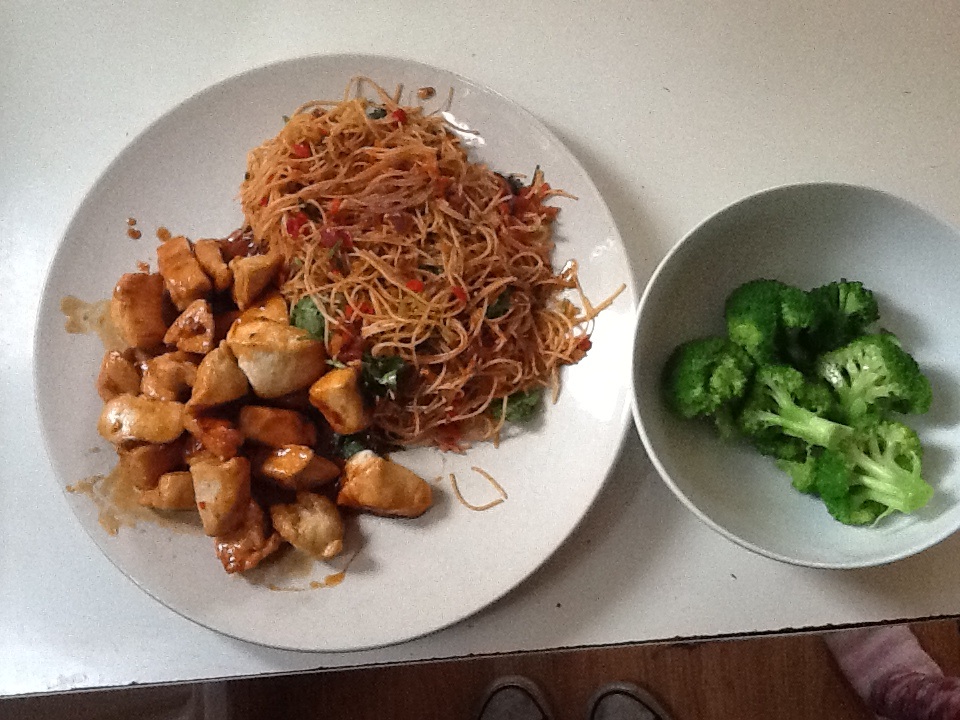
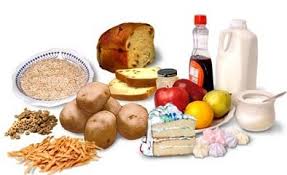
Balanced meals with protein, vegetables and whole grains

Real food with protein, vegetables, healthy fats and whole grains

firmly in place (focusing on real food and getting quality nutrients from carbs, protein and healthy fats). These, coupled with optimum timings of nutrient intake is the basis for ultimately achieving the best performance in training and competition.

There are a select few supplements, however, that have a good amount of evidence behind their effectiveness:

  • Recovery shakes – Carbohydrate & Protein powders for use after exercise. Carbs allow glycogen replenishment of the muscles and help to shuttle protein in to the muscle for repair and growth. Although carbs and protein can be sourced from food or milk, sometimes it is more convenient to take as a supplement (20-30g protein, approx 60-90g carbs). For higher protein needs of resistance training, whey protein is quickly absorbed and can be a more convenient and often cheaper way to achieve requirements than from solely high protein food (up to a total of 1.7g/kg/day of protein from food and supplements)
  • Caffeine – Sound evidence exists that caffeine enhances endurance and provides a small but worthwhile enhancement of performance over a range of exercise protocols. Caffeine also improves mental sharpness. Avoid if it gives you the jitters, and for many people it acts as a gut stimulant causing diarrhoea (70-200mg taken before and during exercise. A cup of instant coffee has approx 70mg, one ProPlus tablet 50mg)
  • Creatine – for about 80% of people, creatine can increase muscle mass, strength and high intensity exercise performance. Effective for sports involving short periods of maximal intensity and repeated bouts with intermittent rest periods. The quickest way to “creatine load” is to take large doses (20-30 g per day) for around 5-7 days. Typically, these doses are split over the day e.g. 5g, four to five times each day. Eating a large amount of carbohydrate (about 70-100 g) with each dose increases creatine uptake via the stimulatory effects of insulin.
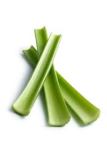
  • Nitrates –  Dietary nitrate has become increasingly popular as an ergogeimages-3nic aid, with a $T2eC16dHJGoFFvPOJJ3UBR0ZfTsjj!~~60_35number of recent studies finding benefits to sports performance. Nitrates increase blood flow by causing blood vessels to dilate. High nitrate foods include beetroot, beetroot juice, celery, spinach, lettuce, rocket, leeks and parsley (preferably non-organic).
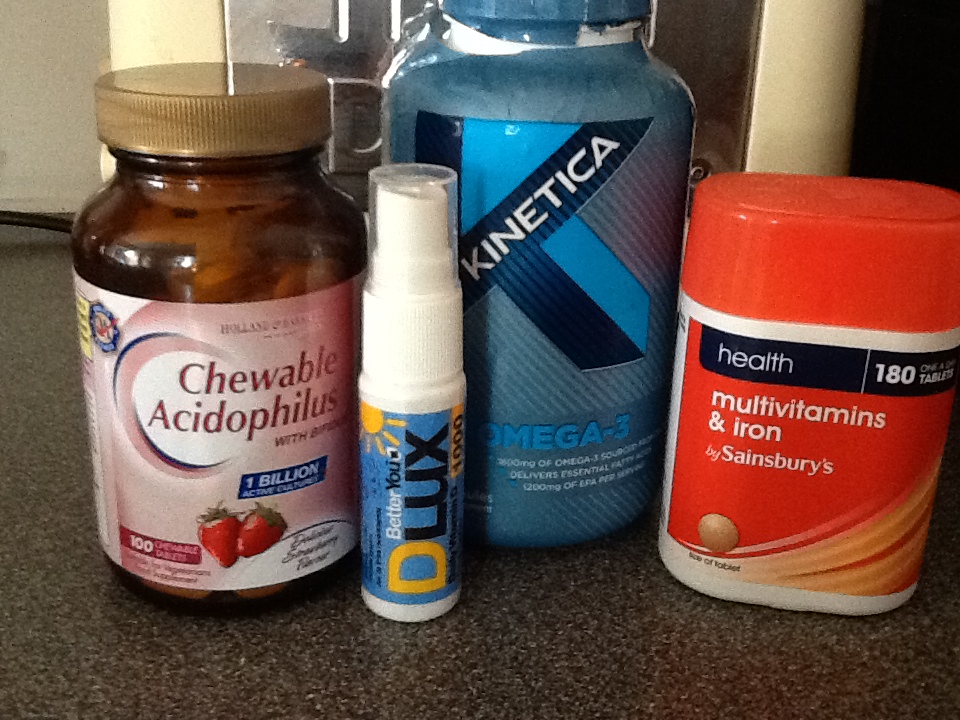
  • Vitamin D – there is a direct relationship between vitamin D levels in the body and muscle power, force and velocity. Vitamin D deficiency increases risk of muscle injury. In a recent study (2014) one third of American college athletes were deficient in vitamin D. There aren’t many good food sources of vitamin D, therefore for those who are deficient, supplementing with 1000IU is advisable. Severely deficiencies may require higher doses.

    A selection of supplements.......

    A selection of supplements…….

  • Omega 3s – anti-inflammatory, also protects against heart attacks and strokes, may also benefit memory and general mental performance. If no oily fish is eaten, then 500-1000mg daily of EPA & DHA is a good amount to take.
  • Probiotics – maintains gut function and health, preventing the immunosuppressive effects of intense exercise, and reducing susceptibility to illness. Also appropriate to take if travelling abroad for competition to avoid traveller’s diarrhoea. The specific strain of probiotic supplement needs to be carefully selected.
  • Multivitamins – when you can’t guarantee that your diet is always a healthy and balanced one.
A dietitian can carry out an assessment and advise on the most appropriate supplements to take (if any), dose and timings*. Advice is tailored to take in to account factors such as specific sport, training goals and food intake.

*Dietitians do not sell nutritional supplements and do not have a commercial interest in promoting them.

 

Diabetes – taking control

Unknown

Diabetes medication

Once a month, I hold a Diabetes Clinic with a GP and Diabetes Nurse at one of the local surgeries in Kingston. There is a constant stream of patients looking for help with what they are eating to help to control their blood sugar levels or to lose weight. I hope I make a difference for them, using the most up to date scientific evidence combined with 13 years of practical experience.

Type 2 Diabetes does not have to be a disease that gets worse over time. It is possible to keep your blood sugar under control by eating the right things. It is possible to reduce diabetes medication.

Contrary to the outdated advice that many UK health professionals are giving, a diabetes diet is not the same as a healthy eating or weight loss diet. The problem for diabetics is that the body has difficulty keeping blood sugar levels down. Sugar in the blood comes from the food that we eat. The foods that turn into different types of sugar as soon as they reach the stomach are called carbohydrates. This means sugar (as in sugary drinks, fruit juice, sweets) and starch (as in bread, pasta, rice and potatoes). The science shows that avoiding these foods can improve blood sugar levels and halt the progression of diabetes.

Unknown copy 14

All carbohydrate foods will increase blood sugar levels

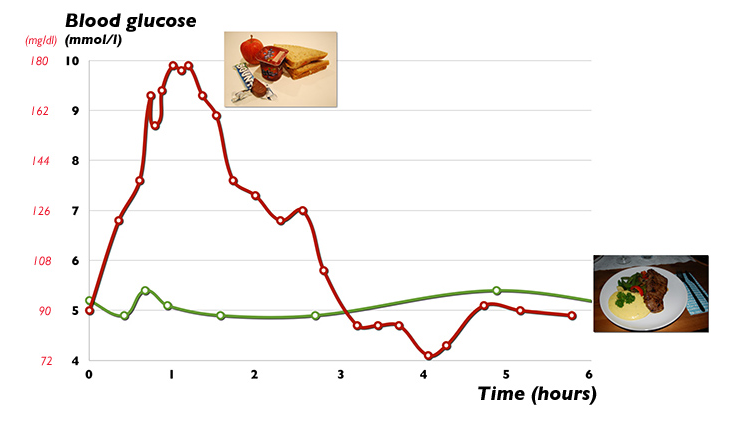
The more carbohydrates we eat in a meal, the more sugar is absorbed into the blood stream. The more sugar that’s absorbed into the blood stream, the higher the blood sugar will be. Here is an example of how a high carbohydrate meal (sandwich, fruit and flavoured yogurt) affects the blood sugar levels compared to a low carbohydrate meal (beef, vegetables and a creamy sauce):

Screen Shot 2014-07-16 at 18.18.36

High carbohydrate meal (red) Low carbohydrate meal (green)

Outside of the UK e.g. in Sweden and America, the medical community is recognising the benefits of reducing carbohydrates. The American Diabetic Association has approved lowering carbohydrates since 2008. Unfortunately, in the UK, official dietary advice has been slow to catch up! Advice from health professionals continues to be ‘a balanced healthy diet’ including plenty of carbohydrate foods. Unfortunately, for people with diabetes, carbohydrate foods are not healthy! There are however, lots of delicious foods that you can eat Are you confused and don’t know what to think?

Try it yourself for a few weeks and monitor the effect. Here are some examples of what you can expect:

  • Improved blood sugar levels from when you reduce the carbohydrate foods
  • Increased feelings of fullness and weight loss
  • Reduced sugar cravings
  • Many people with bloating experience considerable improvements

Note for diabetics

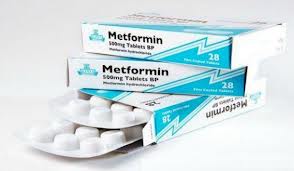
Avoiding the carbohydrates that raise your blood sugar decreases your need for medication to lower it. Taking the same pre-low-carb diet dose of insulin might result in hypoglycemia (low blood sugar). You need to test your blood sugar frequently when starting this diet and adapt (lower) your medication. This should ideally be done with the assistance of your doctor or diabetes nurse. If you’re healthy or a diabetic treated either by diet alone or just with Metformin there is no risk of hypoglycemia.

If you would like some help and guidance with controlling blood sugar levels with your diet, then contact me on 07758 100727, or use a contact form.


Coleslaw

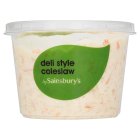
We all know that we need to be upping our veg intake, ideally aiming for about half of your plate. If time isn’t on your side, it can seem easier to grab a ready prepared ‘salad’ from the shops e.g. Coleslaw. Here’s one from my local supermarket that is mostly cabbage and oil, with only 14% carrot.

Ingredients0000001173413_L

Cabbage (47%), Rapeseed Oil, Carrot (14%), Water, Double Cream (Cows’ Milk) (3%), Sugar, Onion (2%), Pasteurised Barn Egg, Spirit Vinegar, White Wine Vinegar, Salt, Stabilisers: Guar Gum, Xanthan Gum; Acidity Regulator: Sodium Acetate; Mustard Seed.


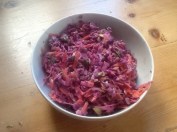
Having grown up on my granny’s homemade coleslaw (usually served with lasagne and garlic bread!) to me, the shop bought stuff is massively inferior with an overrepresentation of cabbage. These days, I’ve adapted The Granny’s recipe to make it a bit healthier…………..the dressing is made with light mayonnaise or humous, natural yoghurt and a splash of vinegar.

When I need something incredibly quick, this is an easy way to get a super serving of veg. I’ll have it with some pumpkin/sunflower seeds (good fats) and for protein I add a few spoonfuls of left over chilli, or a tin of tuna.

Here’s the recipe, it literally takes about 2 minutes:

about 1/4 white or red cabbage grated

image

Coleslaw – lovely colours!

2 grated carrots

1 tablespoon light mayonnaise/humus

1 tablespoon natural yogurt

1 teaspoon white wine vinegar (optional)

No nonsense. Just mix it all together.

Veggie Spaghetti – with £3.29 gadget!

Julieene Peeler, £3.99 Lakeland

Julieene Peeler, £3.29 Lakeland

Do you struggle to eat more vegetables?

Need fresh and inspiring ideas?

Are you watching your weight, or need to lose a few pounds?

Unknown-3

Spiraliser (£30 Amazon)

I very rarely recommend a gadget, but yesterday I was inspired by an article and recipe in this month’s Red Magazine, which used a gadget called a ‘spiraliser’ (£30 from Amazon).  It allows you to transform a healthy, low-calorie, low-carb vegetable into a giant bowl of pasta! Nutritious, filling and very, very easy. After a bit of online research, I was able to come up with a cheaper alternative to the Amazon Spiriliser…….a julienne peeler (£3.29 from Lakeland). We are lucky enough to have a Lakeland store here in Kingston, so after dropping the eldest two children at school this morning, the Little Man and I high tailed it to purchase the peeler.

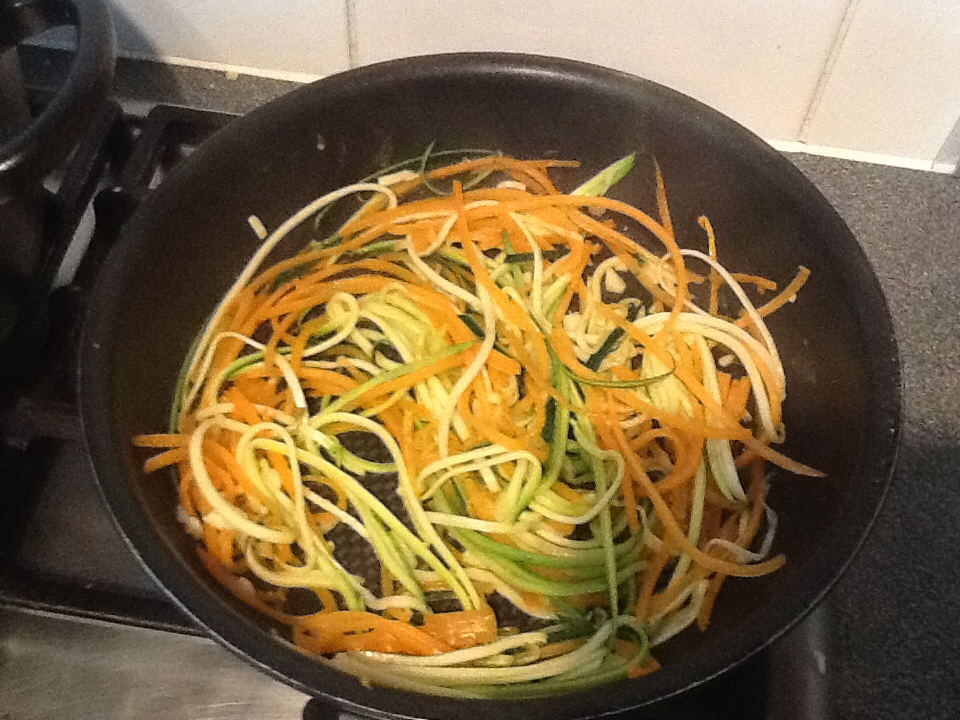
Courgette, carrot and garlic

Courgette, carrot and garlic

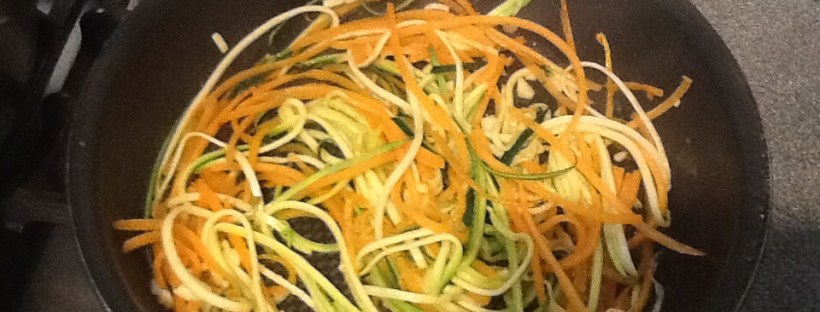
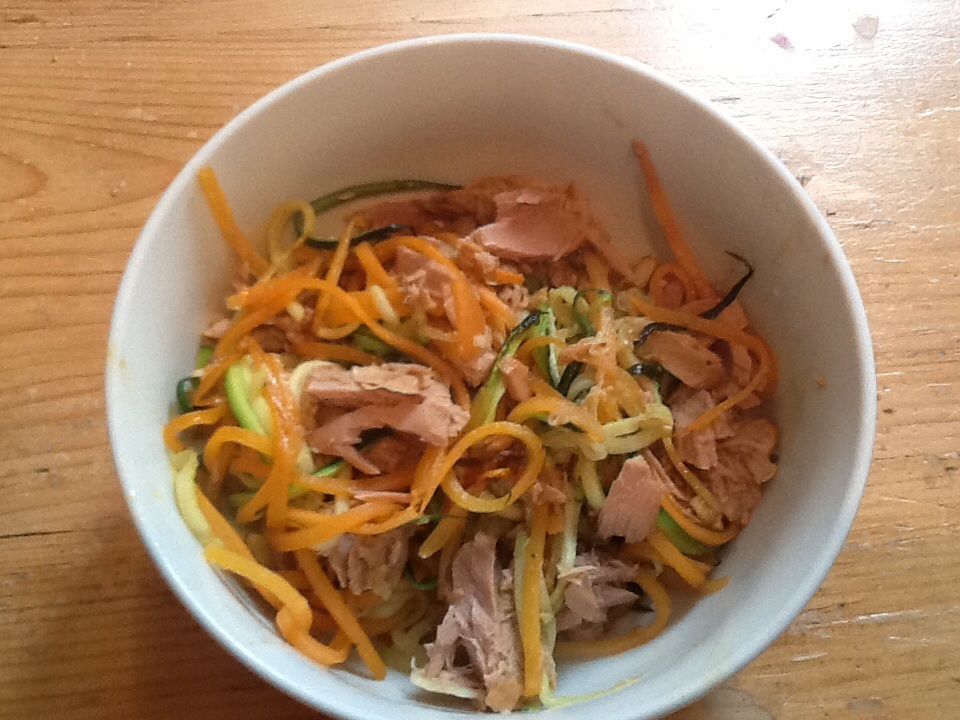
Lunchtime saw a quick experiment with the new gadget. To be honest, I was a bit skeptical that the veggies would taste any different to simply chopping or grating. Just a few minutes of ‘julienning’ a carrot and a courgette, tossed in a pan with olive oil, some garlic and a tin of tuna produced a most awesomely delicious lunch for the two of us (I added some left over rice to Little Man’s to bump up the carbs and cals for him). The carrot and courgette had the most fabulous texture, a little al dente and juicy!

Result! in just 5 minutes

Result! in just 5 minutes

For anyone in to calorie counting, here is a comparison. One courgette julienned producing a big bowl of courgette noodles: 30 kcal. One bowl of spaghetti: 220kcal! And I can honestly say that, to me, it tastes miles better than standard pasta or noodles.

I’ll be testing the new spaghetti veg on the girls this evening. I predict it will be a big hit with them too!

A big hit with Little Man

Slurping up the courgette spaghetti!


After School Snacks for Kids

Untitled

Our posh tent – with real beds & sofa

It’s the first day back to school after the half term holidays, so I can breathe a sigh of relief that the teachers can entertain my children for a few hours each day! Over the holidays we spent 4 days camping on the Isle of Wight (not ‘real’ camping, we were Glamping/posh camping).

Four. Long. Rainy. Muddy. Days. I grew up spending summer holidays camping in France, Spain and Portugal, and being Irish, I’m used to wet weather. However, the combination of camping and terrible weather, with 3 small children and a husband thrown in, proved somewhat ‘tricky’. ‘Nuff said.

So back to school today! Yay! I’ve had a few Mums at school asking about healthy things they can feed their kids after school. I think the issue these days is that there is so much ‘children’s food’ available from the supermarkets, and often it’s high in sugar and refined carbohydrates. So what can you bring to fill up the tummies, reinstate emotional calmness, and provide them with something tasty and nutritious?

Here’s a list of healthy kid friendly snacks that can be eaten on the go:

  • fruit: keeping it simple……apple, banana, grapes etc. If necessary, tell them to eat the really good stuff first, then they can have a biscuit.
  • smoothie: before you leave for the school pick up, blend 150ml milk, a handful of frozen berries and a ripe banana. Add a dollop of honey for extra sweetness. Put in a children’s drinking bottle. The blended frozen berries will keep it cool until you get to school.

    popcorn

    DIY popcorn

  • Homemade popcorn: buy the corn kernels, they take about 5 minutes to make in to popcorn (just heat some butter or oil in a saucepan, add the corn kernels, allow to pop, sprinkle with cinnamon/some teaspoon of caster sugar). Put in to bags for the kids (and yourself!)
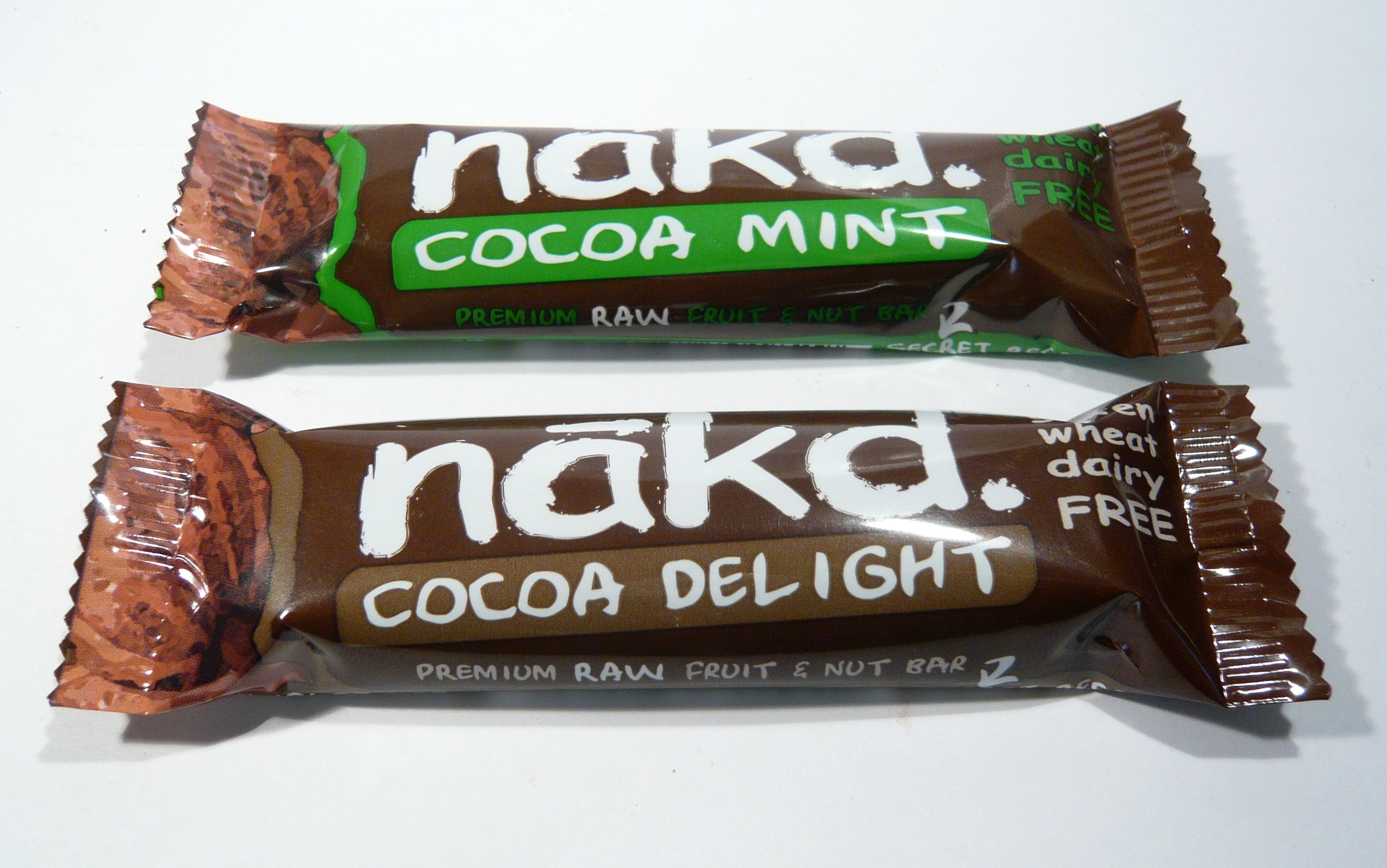
  • Cocoa Bars: these homemade ones are really chocolately, and my kids feel like they are getting a special nakd-raw-chocolate-1chocolate treat. They don’t know that they are made with ground almonds, chopped dates, chopped raisins and cocoa powder. If they new this they wouldn’t touch them! The recipe is based on the Nakd Bars, so these are an alternative if you don’t have the time or inclination to make your own.
  • Banana Bread – call it ‘cake’ and they will be delighted.
  • Rice cakes sandwiched with peanut butter & jam
  • Yo Yo – these are basically fruit. Expensive for what they are (cheapest I have found is 50p Unknown-1Unknownfor a packet), but convenient and healthy.
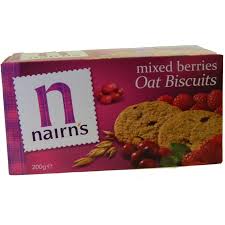
  • Nairn’s Oat Biscuits – I discovered these recently discovery in Waitrose. They are oatcakes that come in a variety of flavours e.g. fruit & spice, berry. Some sugar has been added, so they are sweet enough to be a biscuit rather than a blander oatcake (1.9g sugar per biscuit, which is less than half a teaspoon, limit to a couple of biscuits).
  • A sandwich: wholemeal bread/pitta/wrap filled with tuna mayo/ham/cheese & carrot

If you are concerned about filling their tummies up too much before dinner, try choosing less filling options e.g. rice or corn cakes, apples, pears, popcorn and water. Today I’m bringing some grapes and the Nairn’s Oat Biscuits…….I’ve been sitting here typing for too long so haven’t had time to make the banana bread that I had planned!

Food combos that work! New research.

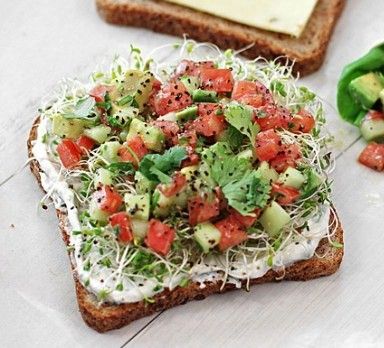
avocado for healthy fats & lettuce, herbs and tomatoes for vitamins

avocado for healthy fats & lettuce, herbs and tomatoes for vitamins

Researchers at King’s College London and the University of California have recently concluded that when olive oil and vegetables are eaten together, they form nitro fatty acids that help lower blood pressure – a risk factor for heart disease. Professor Philip Eaton, describes the chemical reaction of oil and vegetable as one of “nature’s protective mechanisms”.

This study helps us to understand why The Mediterranean Diet – a diet rich in vegetables, fruits, beans, whole grains, olive oil and fish – has long been associated with improved heart health.

3 more top food combinations:

Olive oil in a stir fry – Fat is necessary for the absorption of fat soluble vitamins A, D, E and K. The healthy fats from the olive oil, combined with the vitamins in veg provide is perfect for the absorption of these nutrients. If you’re confused about what oils and fats are healthy, look here. Other recipes that have these combos include granolaSuper Boost Salad and Cocoa Bars

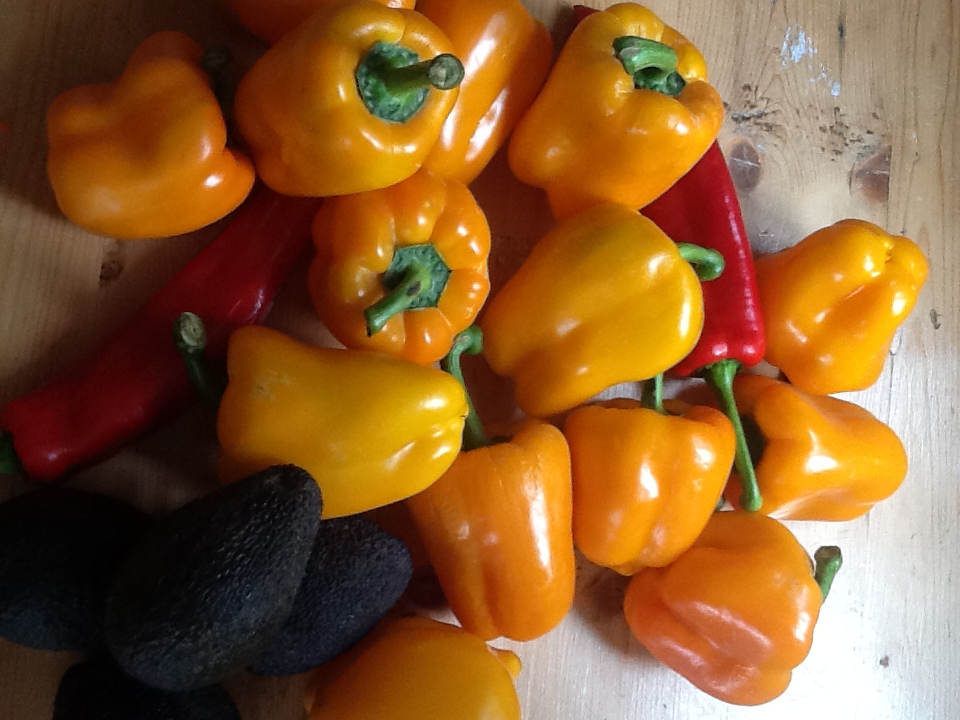
16 peppers for a £1!

1 pepper has 300% your daily vitamin C

Red peppers in bolognaise: red peppers are high in vitamin C (as are tomatoes) helping your body to absorb the iron from beef. One pepper gives you 300% of your daily vitamin C needs!


A smoothie in the sun: Vitamin D is essential for your body to use

Strawberry milk

Strawberry milk

calcium from food to build strong bones, teeth and for muscles to work properly. The best source of vitamin D is the sun……get your arms in the suns rays for half an hour a day (with no sunscreen!), and combine with a dose of calcium from a smoothie made with milk (cow’s or a rice/almond milk fortified with calcium).

4 brilliant reasons to meal plan

I spotted this nifty little tear off meal planner pad in John Lewis today. It has space for writing2014-05-08 10.15.34 copy your meals from each day of the week, with separate spaces for breakfast, lunch and snacks. Another fabulous idea from JL. For those not in the UK, John Lewis is the most delightful department store imaginable. One day when I am rich, I will decorate my entire home from there, and fill my cupboards with the clothes and crockery. I will also go there for coffee and cake for a rest from my shopping sprees.  (Dear John Lewis, I swoon at 99% of your products, and will graciously accept a sponsorship deal should you offer one).

So back to the meal planner………4 reasons why planning your meals is a winner!

  1. You will eat more healthily – if you plan what you are going to eat when you are in a sensible frame of mind, you will choose more logically, plan better more balanced meals and snacks, and have the ingredients in the fridge/freezer/cupboard. No dashes through McDonald’s Drive Thru’ or a desperate online order to Domino’s (and no stuffing half a loaf of bread and butter in your gob because your blood sugar levels are so low you might pass out). By having healthy snacks for the week sorted, you are less likely to resort to crisps/chocolate/cake/biscuits etc. which will just make you feel bleurghhhh, lethargic and guilty. 
  2. You will save money – if you have your list of meals and snacks and know the ingredients, you can make a shopping list. There will be no need to fling ‘just in case’ purchases in to your shopping trolley, and there is less likely to be waste. When you know what ingredients you need (and you have the time) you can even use a website such as Mysupermarket to compare prices across the supermarkets to get the cheapest deal.
  3. You will eat more variety – find yourself trying to think of something imaginative to do with pasta three nights on the trot? By planning your meals, you will be more conscious of how often you are having things and make more effort to change things up. e.g. Monday chilli & rice, Tuesday potatoes & salmon, Wednesday tuna pasta, Thursday quinoa Superfood Salad, Friday pizza, Saturday chicken fajita wraps, Sunday eggs & toast. All with a great big serving of veggies or salad of course!!
  4. You will be less stressed – trying to decide what to make for a meal at the last minute can be stressful when you are rushing frantically home from work and hungry. To add to the pressure, you may have children squabbling because they’re famished too (mine are irritable little monsters when they are hungry, as am I). If you have a plan in place, an immense amount of pressure is removed. For the extra busy days, you could even prepare a meal in advance e.g. chilli and rice, that just needs to be reheated in the microwave.

So I am going to put my money where my mouth is, and get planning. As well as the John Lewis paper version, there are lots of menu planners online. This is a good from Tesco if you need meal inspiration……it even gives you the shopping list!