Veggie Spaghetti – with £3.29 gadget!

Julieene Peeler, £3.99 Lakeland

Julieene Peeler, £3.29 Lakeland

Do you struggle to eat more vegetables?

Need fresh and inspiring ideas?

Are you watching your weight, or need to lose a few pounds?

Unknown-3

Spiraliser (£30 Amazon)

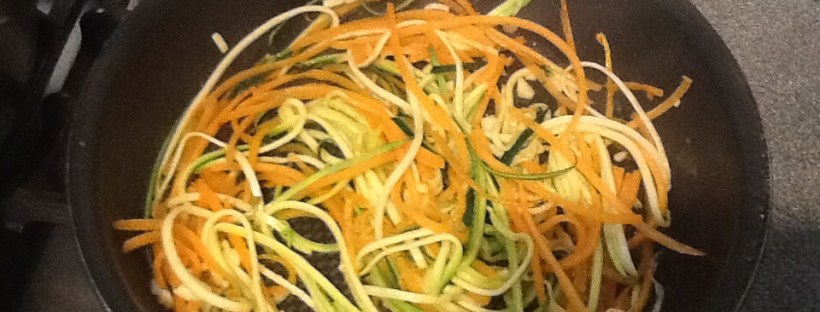
I very rarely recommend a gadget, but yesterday I was inspired by an article and recipe in this month’s Red Magazine, which used a gadget called a ‘spiraliser’ (£30 from Amazon).  It allows you to transform a healthy, low-calorie, low-carb vegetable into a giant bowl of pasta! Nutritious, filling and very, very easy. After a bit of online research, I was able to come up with a cheaper alternative to the Amazon Spiriliser…….a julienne peeler (£3.29 from Lakeland). We are lucky enough to have a Lakeland store here in Kingston, so after dropping the eldest two children at school this morning, the Little Man and I high tailed it to purchase the peeler.

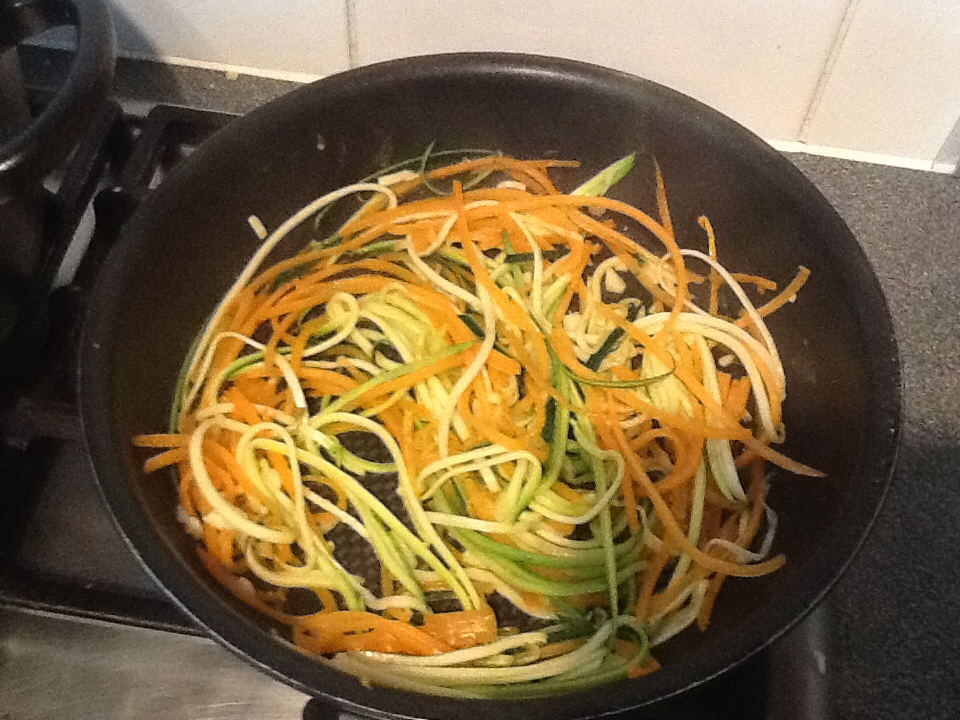
Courgette, carrot and garlic

Courgette, carrot and garlic

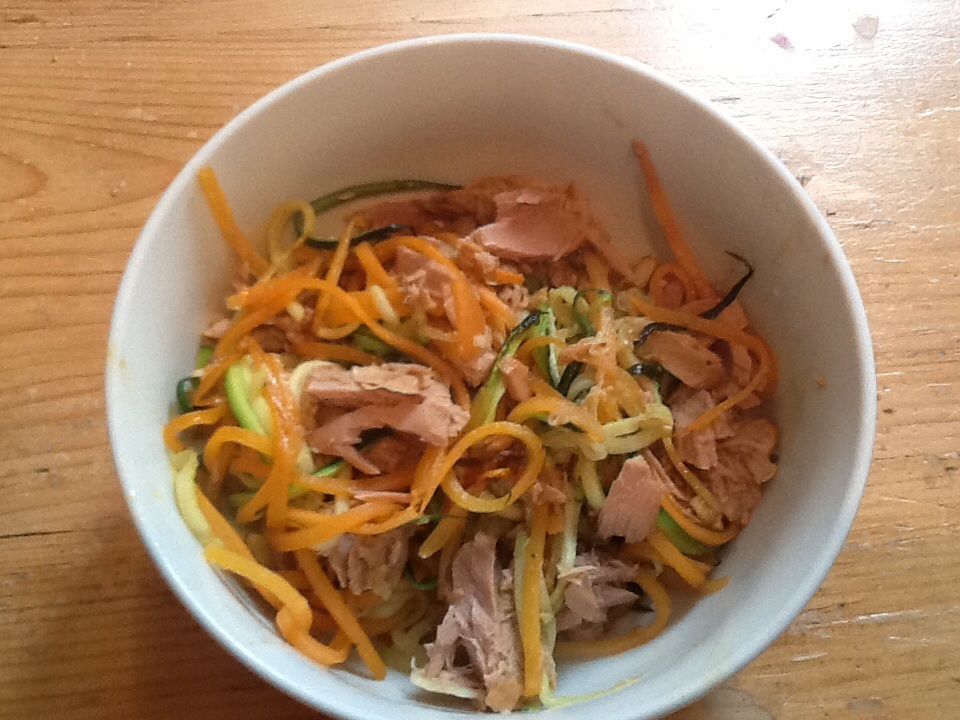
Lunchtime saw a quick experiment with the new gadget. To be honest, I was a bit skeptical that the veggies would taste any different to simply chopping or grating. Just a few minutes of ‘julienning’ a carrot and a courgette, tossed in a pan with olive oil, some garlic and a tin of tuna produced a most awesomely delicious lunch for the two of us (I added some left over rice to Little Man’s to bump up the carbs and cals for him). The carrot and courgette had the most fabulous texture, a little al dente and juicy!

Result! in just 5 minutes

Result! in just 5 minutes

For anyone in to calorie counting, here is a comparison. One courgette julienned producing a big bowl of courgette noodles: 30 kcal. One bowl of spaghetti: 220kcal! And I can honestly say that, to me, it tastes miles better than standard pasta or noodles.

I’ll be testing the new spaghetti veg on the girls this evening. I predict it will be a big hit with them too!

A big hit with Little Man

Slurping up the courgette spaghetti!


10 top foods for recovery

You may feel that you have worked out to the max during your sessions burning 100s of calories, so does it really matter if you have some crisps, chocolate, a danish pastry or chips? Time and time again, research shows that the answer is “yes”. Replacing calories isn’t the only objective of recovery.

Between each workout, game or race the body needs to adapt to the physiological stress that has just been applied, so that it can recover and become fitter, stronger and faster. Whether you are a triathlete, a gym addict, or your child is playing in a weekend rugby tournament, optimum recovery nutrition can help you to perform better in the short and long term.

There are many ‘recovery drinks’ and powders marketed for refuelling after exercise. While

Real Food

Real Food

these have their place, they are not necessarily the best option. It can be argued that real food is the best fuel for recovery, providing everything that a recovery drink can, as well as all the vitamins, minerals, antioxidants, phytochemicals etc that simply cannot be bottled or made in to a powder.

What’s happening during recovery?

  • refuelling of muscle and carbohydrate stores
  • replacing fluids and electrolytes lost in sweat
  • manufacturing new muscle protein and blood cells
  • allowing immune system to manage damage caused by exercise


What are the recovery ‘rules’?

  • multiple daily exercise sessions – if less than 24 hours until next session e.g. professional athletes, weekend rugby tournament, compulsive gym exercisers: recovery nutrition after your session ASAP, ideally within an hour. If next session starts within an hour, recovery drinks or anything low fibre and low fat to help with faster digestion (lasagne not a good option!)
  • more than 24 hours between exercise sessions – generally no need to eat soon after exercise, try to have your next usual meal. consisting of some protein and carbohydrate. If trying to gain muscle, then you can add a recovery snack to fuel this catabolic process. If trying to lose weight and hungry after training, be careful not to increase overall daily calorie intake. Have something light to eat e.g. yogurt.


Why carbs & protein are important

Immediately post exercise, good recovery nutrition will consist of protein & carbohydrate. Aim for 1g carbohydrate per kg of body weight, and approximately 25g protein (a chicken breast is about 25-30g, a mug full of rice is about 70g carbohydrate). Unfortunately, eating lots of extra protein does not make bigger muscles.

Carbs and protein work together: carbs help to shuttle protein in to the muscles, and protein helps to stimulate faster muscle glycogen replacement. Low fat helps the food to be absorbed more quickly, as does low fibre (so don’t be too concerned about choosing ‘healthy’ whole grain carbs like whole wheat bread). Fruit & veg can be included in the next meal to provide antioxidants.

If you don’t feel like eating food or don’t have the time or facilities, then recovery drinks or shop bought milkshakes can be useful. Here is a more in-depth look at some of the most popular commercial recovery drinks. If you are trying to lose weight, then watch the calories……..don’t increase overall calories through the day.


10 snack foods for fast recovery:

330ml Milkshake – e.g. Yazoo, Frijj, For Goodness Shakes

Homemade recovery smoothie

Post exercise shakes have their place, but watch the extra calories!Large skinny latte & handful of nuts

Unknown-12

Bagel with peanut butter

Milk: perfect recovery protein & carbs

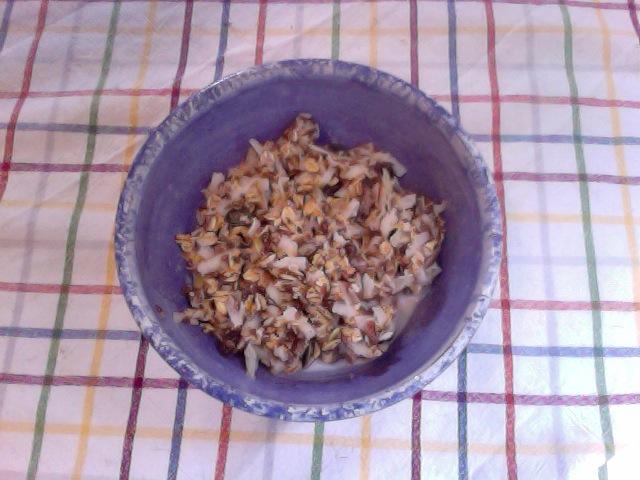
Breakfast cereal with milk e.g Cornflakes, Rice Krispies, Cheerios

2 Eggs on 2 white toast

Sandwich/roll/wrap/pitta: filled with chicken, fish or eggs

Jacket potato with cottage cheese/tin of tuna/Baked Beans

Banana or yogurt

Yogurt & Banana

Homemade Seriously Healthy Flapjacks

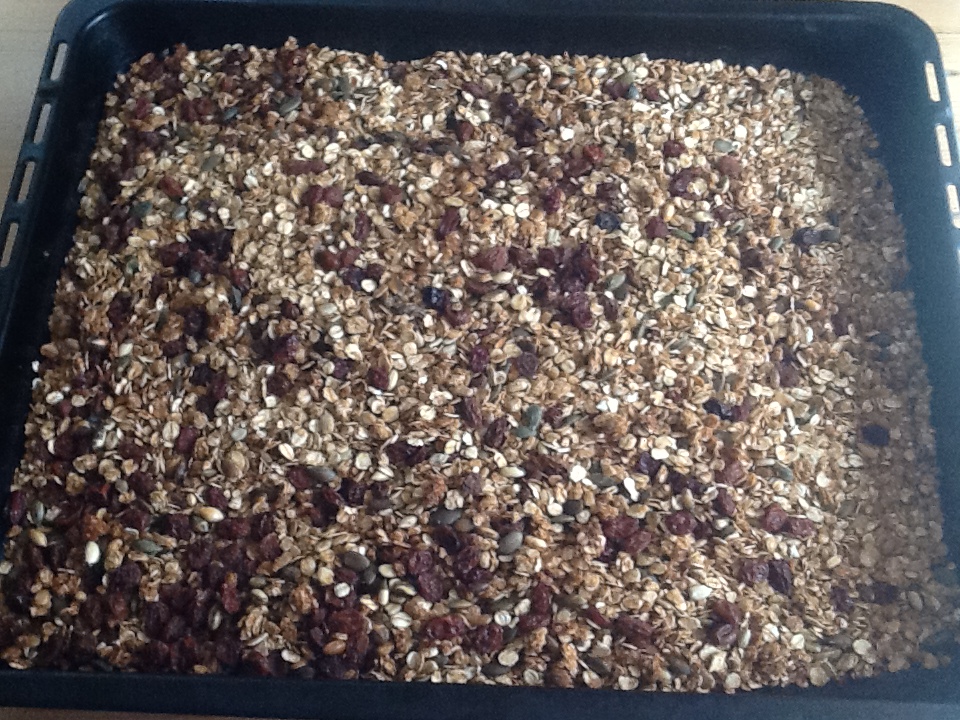
Awesome Granola

I’ve been making this everyday for about 6 months now, and it is still a massive hit with me, my husband, and our two year old boy (the girls, 4 and 7, are stuck on Rice Krispies). I’ve passed the recipe on to countless friends and relatives who are equally smitten.

It’s so easy to make……..5 minutes to mix the ingredients together, and 30 minutes in the oven. It smells AMAZING when it starts to brown in the oven (a sign that it is ready if you forget to time it, like I always do)

Dietitian bit – why it’s good for you:

  • high fibre carbohydrate from oats – chunky oats are filling and full of soluble fibre, energy
  • protein – from the milk, seeds and and a little bit from the oats, muscle maintenance & building
  • fruit – raisins, chocca block with antioxidants and fibre
  • healthy fats – vegetable oil and seeds, help to keep you full up, good fats are essential, but in moderation. If you are watching your weight, then please keep the portions of granola small (about 1/3 to 1/2 a mugful).

And here’s something I’ll tell you for free, from my MSc research on antioxidants in oats: toasting oats produces something called the Maillard Reaction which increases the ‘antioxidant capacity’ (antioxidants are good for you). During the summer of 2001 I spent unhealthy lengths of time in a lab at the University of Ulster with a lot of oats, an oven, a blender and a large expensive machine to come up with that gem!

Granola Recipe:

300g oats (or about 6 handfuls) – I mix 200g chunky with 100g finer oats

2 tablespoons vegetable oil (you can use melted coconut oil, but it doesn’t produce the same ‘crunch’)

securedownload

Just out of the oven

3 tablespoons honey

1-2 handfuls pumpkin/sunflower seeds

handful raisins or sultanas

generous sprinkle of cinnamon (about a 2 teaspoons)

IDShot_90x90-1

chunky oats

IDShot_90x90-2

finer oats

Method: mix the oil and honey together in a bowl. Add the oats, cinnamon and seeds, stir throughly ensuring the oats are coated. Spread on to baking sheet and put in the oven at 150c for 30 minutes. Half way through cooking time (after 15 minutes), add the raisins/sultanas. Remove from oven and allow to cool.


Oats: 10 ways to add oomph!

Oats are a staple in this house with 4 out of five of us having them for breakfast, and daily batches of Seriously Healthy Flapjacks and Oaty Biscuits.

What’s so good about oats?

Oats are very filling, high in soluble fibre, provide slow release energy, keep the blood sugar levels steady for concentration at school/work, calcium and protein from the milk, and fibre and antioxidants from the raisins/berries/banana. And for those of us getting on a bit, oats contain ‘beta glucan’ which is clinically proven to be one of the great cholesterol lowering foods. If you want a low Glycaemic Index oat, go for the chunky ones, as the finely ground ‘instant’ oats e.g. Oats So Simple are actually digested quite quickly, giving you less of the longer term sustained energy release.

Jazzing it up!

Unknown-7

Please sir can I’ve some more? Yak, no thanks!!

Porridge can be a bit, well, dull and have a bit of a ‘gruel’ image. My clients sometimes pull a yuck face if I suggest oats for breakfast. But keep an open mind and try something new! There are a million and one ways to jazz up your breakfast oats to make them tasty and delicious…..

It’s an alchemy of three parts:

  1. the oats: There is a wide variety of oat chunkiness. Finely ground e.g. Ready Brek for ultra IDShot_90x90-1smooth, to jumbo and chewy like Flahavins. Slow cook them in a saucepan on the stove, zapp in the microwave in 90 seconds, or just add a smidge of hot water to the chunkies (how I like it).
  2. Water or milk? The debate is on among porridge devotees on the perfect ratio of milk to water. Each to their own………I’m a water only fan, my husband is 50:50 milk to water, youngest daughter Evie likes the oats cooked in water only, with cold milk added (?!) You don’t have to stick to cow’s milk, try almond, rice, oat, soy, or Koko for a change. All of these have added calcium and vitamin D, so you’re not missing out on these essential vitamins!
  3. The Fun Part: jazz your bowl up with a menagerie of ingredients which can be combined to provide endless possibilities! Peanut or cashew nut butter, raisins, coconut, cinnamon, banana puree, honey, maple syrup, grated apple, toasted pumpkin or sunflower seeds, cashew nuts, berries, yogurt. The list is endless……….

10 ways to add OOOMPH to oats:

  1. Power Smoothie – blend a handful of oats, 200ml milk, dollop of yogurt*, frozen berries and honey

    Smoothie

    Smoothie

  2. Puree banana – roughly mash a ripe banana, put in a cup with enough water to almost cover the banana, microwave for 90 seconds, and voila, a lovely smooth puree to add to you porridge. The more ripe the banana the smoother and sweeter!
  3. Berries – fresh berries can be expensive, so I use supermarket frozen basics range (£1.20for a bag that lasts about a week). Quickly defrost a cup full in the microwave and add to chunky oats with a big dollop of Total yogurt.
  4. Summer Oats – this is soooo good and a refreshing alternative to hot oats. Prepare the night before so that all the lovely flavours develop and are soaked up by the oats. Good for taking to work if you’ve no time first thing in the morning to eat breakfast.
  5. add a dollop of high protein yogurt* to bump up the protein, keeping you full up for longer, and to make it really creamy!
  6. Homemade Flapjacks – eat them as the are, or one of my clients takes two to work, Photo on 01-02-2014 at 07.15 #4crumbles them in a cup with hot milk for a warming breakfast at her desk.
  7. smooth (Ready Brek) – for the non-chunky lovers out there, Ready Brek can be good as it is made from oats, and has the added benefit of vitamins and mineral e.g. lots of iron
  8. Vary the milk – there is such a wide variety these days…..almond, rice, Koko. All have added calcium and vitamin D, so you’re not losing out!
  9. Honey/maple syrup/agave nectar – there’s nothing wrong with adding a bit of sweetness, especially if it means kids gobbling up a bowl of oats.
  10. Dollop of peanut butter – adding good fats and protein, add a tablespoon before cooking so that it melts and you can stir it through.
Homemade muesli

Summer Oats

Benefits of greek yogurt! – double the protein of other yogurts (10g/100g) e.g. Total, Danone, Liberte (not greek ‘style’)

6 tips for portion control

I have written a lot about the types of foods to include for improving health and well being, but if you are watching your weight, how much you eat can be just as important as what you eat. Even if you have eat the healthiest foods ever, over do portion sizes, and you may see this in an inability to lose weight, and even weight gain. Below is a diagram of ideal proportions, but this could be a tiny or a massive plate!

Ideal proportions, but how much is a 'portion'?

Ideal proportions, but how much is a ‘portion’?

So what does a portion actually look like?

Fish or meat: size of the palm of your hand, or about 5-6 meatballs

pasta, rice, potato: a clenched fist

bread: one slice

cheese: a small matchbox

vegetables: about a cup

nuts: a small handful, or about 8 almonds

Some foods come ready prepared in their portion size eg. 2 eggs, a banana, an apple, or 2 satsumas

6 tips for portion control:

  1. Don’t cook more than you need of carbohydrate and protein foods. Even if you have been controlled with your first portion, if there are leftovers, you will be tempted by seconds. By all means, cook extra vegetables. If you are still hungry, have more veg!

    image

    Cook lots of veg!

  2. Use whole grain carbohydrates eg. brown rice, oats, whole meal pasta – these are higher in fibre which should help you to feel full up for longer, so you will feel more satisfied with a smaller portion. They also keep your blood sugar levels steady, so a) preventing cravings for sugary snacks later on, and b) blunting insulin release (insulin promotes fat storage).
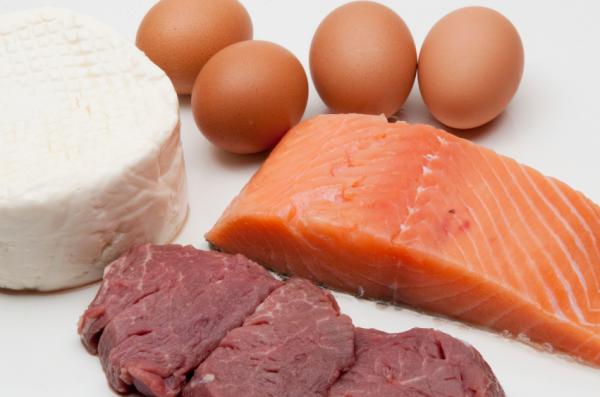
  3. Make sure that you have a portion of protein with each meal eg. tuna, chicken, salmon, beef, eggs, lentils – protein induces a feeling of fullness, so making you less likely to feel the need to snack later on. Your body also uses up more energy processing protein foods.

    Protein with each meal

    Protein with each meal

  4. Use a smaller plate – this will make the amount of food you are having appear to be more
  5. Don’t eat straight out of a carton or packet – this makes it almost impossible to keep to one portion. Take a handful of nuts from a bag and then put the bag out of sight.
  6. Focus on what you are eating – try not to eat in front of your computer or television. This can result in you unconsciously eating more than you intend to.

For those without weight worries, or with high calorie needs, you can stick to the same principles of proportions (1/4 carbs, 1/4 protein, 1/2 veg) but in larger portions sizes…..

For high calorie needs, bigger portions.

For high calorie needs, bigger portions.

10 Meals for Kids

You know how it goes, in the morning you think to yourself, “What will I give them for their tea tonight”, but ignore the situation because you’ve all day to come up with some inspiration. Before you know it, it’s 2 o’clock, the school run is in an hour, and you’ve got to get to the shops before you pick them up.

So I’m darting through Sainsbury’s mentally checking off the daily things we need……milk, fruit, veg, oats, bread etc. But what for dinner?? If I was a proper mother I would have a meal plan for the week, and order everything on line for a scheduled home delivery. It think that’s what a successful mum does? I KNOW that I should, but I just can. not. do. it.

What you feed your family doesn’t have to be exotic or exciting. I think that we convince ourselves that to be a good parent, we’ve got to produce amazing meals ‘designed’ by celebrity chefs.

You know what? I don’t have the time or the energy to play ‘hunt the ingredient’ from the imagelocal Thai supermarket, and certainly don’t have the funds to make Wholefoods my local. Chia seeds are all very well, but excruciatingly expensive (£20/kg), and wholegrain rice is almost as nutritious (£1/kg). The scientific evidence shows, that what you feed your children has a fundamental effect on their development and health. However, I can achieve this from my local supermarket, with a shopping list that I won’t have to remortgage the house for.

As long as you use the basic equation of carbohydrate, protein and veg for a meal, you can’t go far wrong. If you can tick the boxes for wholegrain carbs, calcium, iron and omega 3s you’re doing a stirling job.

Here’s my list of the meals that I give my children (9, 6 and 3). All three of them have their own quirks and ‘challenges’ when it comes to mealtimes and food preferences. I pretty much ignore them, the less drama the better (that’s a whole other post!)

Carbohydrates: Pasta, rice, potatoes, fajita wraps, breadimage

Protein: chicken, beef mince, cheese, eggs, fish fingers, sausages, lentils, baked beans, turkey

Veg: carrots, peppers, onions, peas, broccoli, baked beans. I also use my basic tomato sauce/soup recipe about 3 times a week for bolognaise, in shepherds pie and with meatballs.

  • meatballs & pasta
  • spaghetti bolognaise

    Meatballs

    Meatballs

  • shepherd’s pie
  • fish fingers, mash potato, carrots
  • sausages, jacket potato, baked beans
  • jacket potato, beans, cheese
  • jacket potato, tuna & sweetcorn mayo, red pepper slices
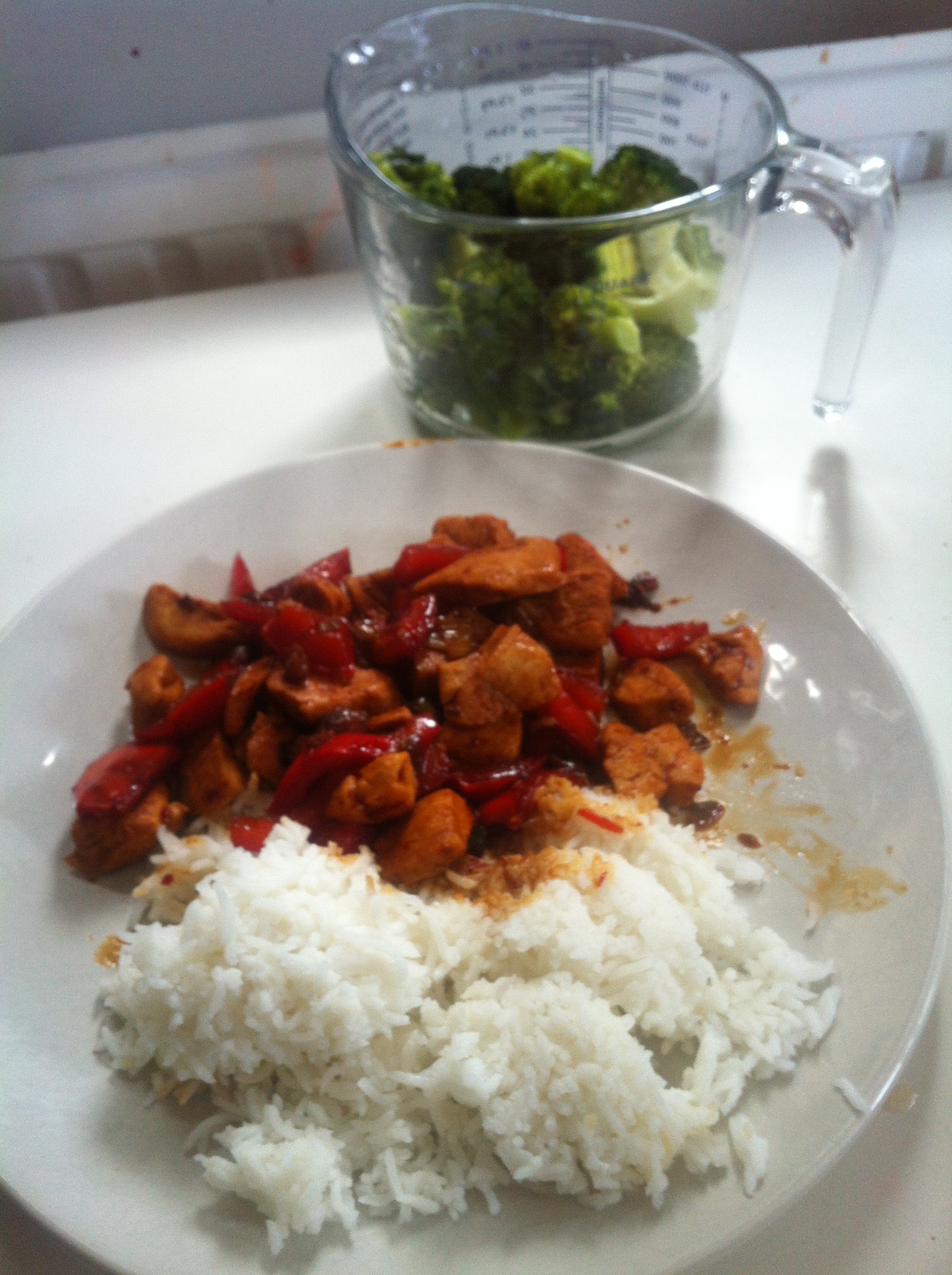
  • rice, broccoli, chicken (slow cooked), gravy
  • Pasta & sausage bake: pasta, tomato sauce, chopped up sausages
  • Chicken Fajitas – chicken breasts, onion, red peppers, fajita mix and wraps

Sometimes I will literally throw together anything from the basic equation of carbs, protein and veg, eg. left over rice from the fridge, a tin of baked beans and grated cheese (I was a little surprised that they ate this quite happily, they must have been VERY hungry!) If ‘incentives’ are required for making a good effort to eat the meal, stickers may be offered. If one of them claims to be full up when I know that they probably aren’t, I just say, “oh well, you’ll have no room for custard then.” That usually does the trick (that or a little dollop of tomato ketchup).

If I’m feeling like Top Mom, we’ll chat about how runner beans make you run fast, carrots help you to see in the dark, and cheese gives you strong bones and healthy teeth for tBVeKHQ8IIAA8KIg.jpg-thumbhe tooth fairy. And the Incredible Hulk just LOVES broccoli, don’t you know? I never make them clear their plate, I’m happy if they have made a decent effort, and aren’t messing about at the table.

Pudding is usually natural yogurt or custard with stewed apple/frozen berries, or frozen
banana whizzed up in the blender with yogurt.

I’m not saying this will work for every family and child. It is what works for me, and hopefully for them.

Game Day – food & family logistics

For an 80 minute game of rugby, there is an awful lot of palaver that goes on before and after (also during, with all that throwing a ball around and wot not)

Yesterday’s kick off was 2pm, but from 10am until we return home at 6.30pm we are rugby, rugby, rugby. We live in Kingston (London suburban heaven/hell), so Sunday traffic to the stadium in Reading along the M3 and M4 can be horrendous. Particularly if there are roadworks, especially enraging when there is nobody actually working on them. Thousands of cones on a perfectly good road, thousands of cars, and no PEOPLE WORKING!!images

Our aim is to get Dec to the game on time and in a calm state, so we always leave a lot of extra time to get there. Yesterday we left at 11am, and got to the Mad Stad at 12.15. The London Irish squad had a team meeting at 12.30, followed by their warm up on the pitch. Myself, Beth (6), Evie (4) and Conor (1), have to find entertainment for the 2 hours until kick off, so thank goodness for the Digger Club……..there is face painting (amazing!), bouncy castling, and hugs Unknownfrom Digger, the club mascot. Digger is an 8 foot hairy dog dressed in London Irish kit, who kids either love or are completely freaked out by. Conor is of the latter. There’s also live diddly dee music, and when I can avoid the moans children’s requests for food no longer, we head upstairs to the room reserved for players’ families. This is brilliant as the children are ‘confined’ and can tear about the place and eat their packed lunch with out bothering other supporters.

I’ve learnt that I should always go prepared with plenty of food and snacks for the afternoon. It’s a long day from leaving the house, to getting home at  6.30pm, so I seem to spend most of the morning on food preparation. Rather than depending on McDonalds on the way home, I made lentil & tomato sauce (the soup recipe with less stock) and added it to some pasta tubes with some cheese sprinkled on top. I’ll fire that in the microwave for two minutes for dinner when we get through the door after the game.

For Dec, match day food before a game should focus on easily digestible carbohydrate which will fuel the muscles. He starts the morning with a bowl of porridge with banana puree, milk and sugar, a few hours later it’s a bagel with peanut butter and jam, and just before we leave he has a bowl of pasta with a smidge of carbonara sauce. As the game gets closer, high fibre and high fat foods should be kept to a minimum as theses take longer to digest. White foods (pasta, bread, bagels etc.) are perfect for loading up the muscles with carbohydrate to fuel the warm up and game ahead. Here’s some more info on pre-match food

For me and the kids, food for during the game is typical packed lunch fodder.

  • sandwiches: wholemeal bread, tuna & sweetcorn or peanut butter & jam
  • bananas, apples, pears
  • homemade Seriously Healthy Flapjacks
  • yogurts (and spoons, remember the spoons!!)
  • mini packs of Smarties from the Trick or Treat sweetie stash

For the children, the actual rugby game is pretty dull, so they are more than happy to play with their friends and hide under the tables stuffing biscuits from the tea and coffee table in to their gobs (they think I don’t notice, but I do….Mummy sees EVERYTHING). I’m delighted if I can have a cup of coffee with Conor quietly sitting on my lap, but he’s usually intent on trying to fling himself over the seating boundary on to the concrete below. This is probably why I am not the person to ask for any sort of match analysis as I rarely get the chance to focus on the game (that’s my excuse for still being clueless).

securedownload

Conor: England, Ireland or Arsenal????

We have a fair bit of waiting around after the game. A major part of the recovery process is refuelling and repairing the muscles within an hour of finishing, so the boys sit down to a good balanced meal. Here’s more info on why and how nutrition is used for recovery of the body, ready for the next week of training.

Unfortunately, we lost the game against Northampton 14-19, but it is always fab to catch up with friends and family (2 engagements, 2 pregnancies, and 1 new baby). Bob and Shauna Casey’s little man Ollie came to his first game…….will he be declaring for England or Ireland in twenty years time I wonder? Dec is having this very dilemma with our wee Conor: England, Ireland or the Mighty Arsenal????