Veggie Spaghetti – with £3.29 gadget!

Julieene Peeler, £3.99 Lakeland

Julieene Peeler, £3.29 Lakeland

Do you struggle to eat more vegetables?

Need fresh and inspiring ideas?

Are you watching your weight, or need to lose a few pounds?

Unknown-3

Spiraliser (£30 Amazon)

I very rarely recommend a gadget, but yesterday I was inspired by an article and recipe in this month’s Red Magazine, which used a gadget called a ‘spiraliser’ (£30 from Amazon).  It allows you to transform a healthy, low-calorie, low-carb vegetable into a giant bowl of pasta! Nutritious, filling and very, very easy. After a bit of online research, I was able to come up with a cheaper alternative to the Amazon Spiriliser…….a julienne peeler (£3.29 from Lakeland). We are lucky enough to have a Lakeland store here in Kingston, so after dropping the eldest two children at school this morning, the Little Man and I high tailed it to purchase the peeler.
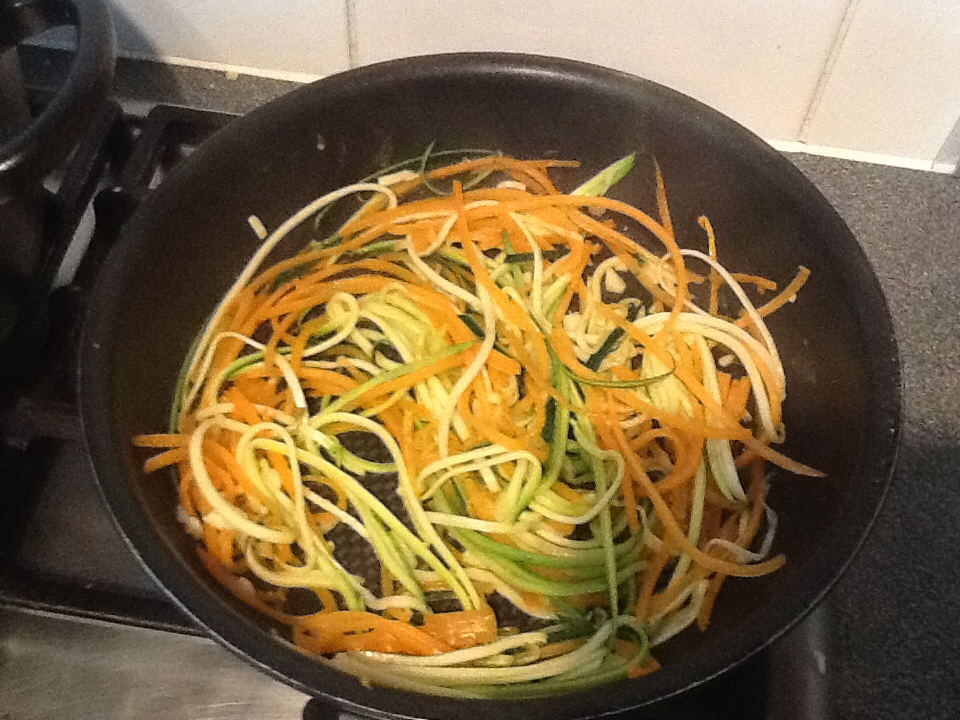
Courgette, carrot and garlic

Courgette, carrot and garlic

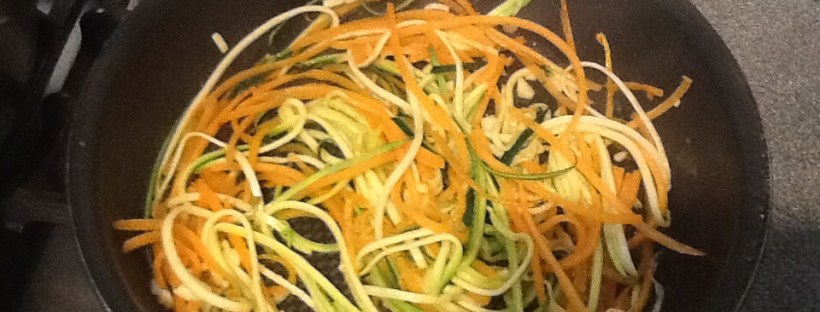
Lunchtime saw a quick experiment with the new gadget. To be honest, I was a bit skeptical that the veggies would taste any different to simply chopping or grating. Just a few minutes of ‘julienning’ a carrot and a courgette, tossed in a pan with olive oil, some garlic and a tin of tuna produced a most awesomely delicious lunch for the two of us (I added some left over rice to Little Man’s to bump up the carbs and cals for him). The carrot and courgette had the most fabulous texture, a little al dente and juicy!
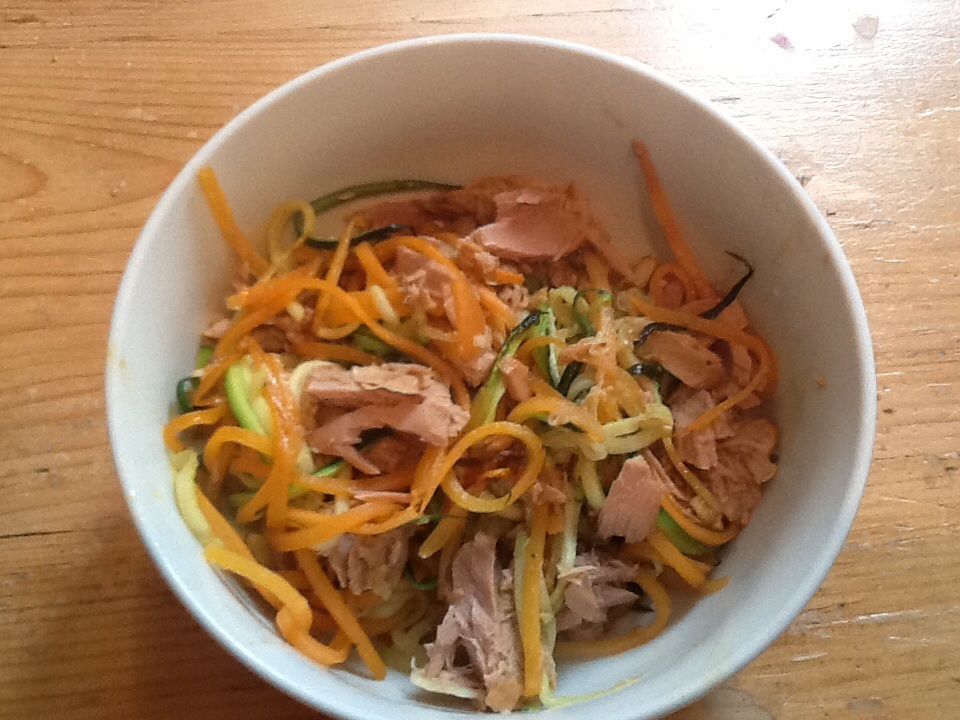
Result! in just 5 minutes

Result! in just 5 minutes

For anyone in to calorie counting, here is a comparison. One courgette julienned producing a big bowl of courgette noodles: 30 kcal. One bowl of spaghetti: 220kcal! And I can honestly say that, to me, it tastes miles better than standard pasta or noodles.

I’ll be testing the new spaghetti veg on the girls this evening. I predict it will be a big hit with them too!

A big hit with Little Man

Slurping up the courgette spaghetti!


10 Things to do with Peppers

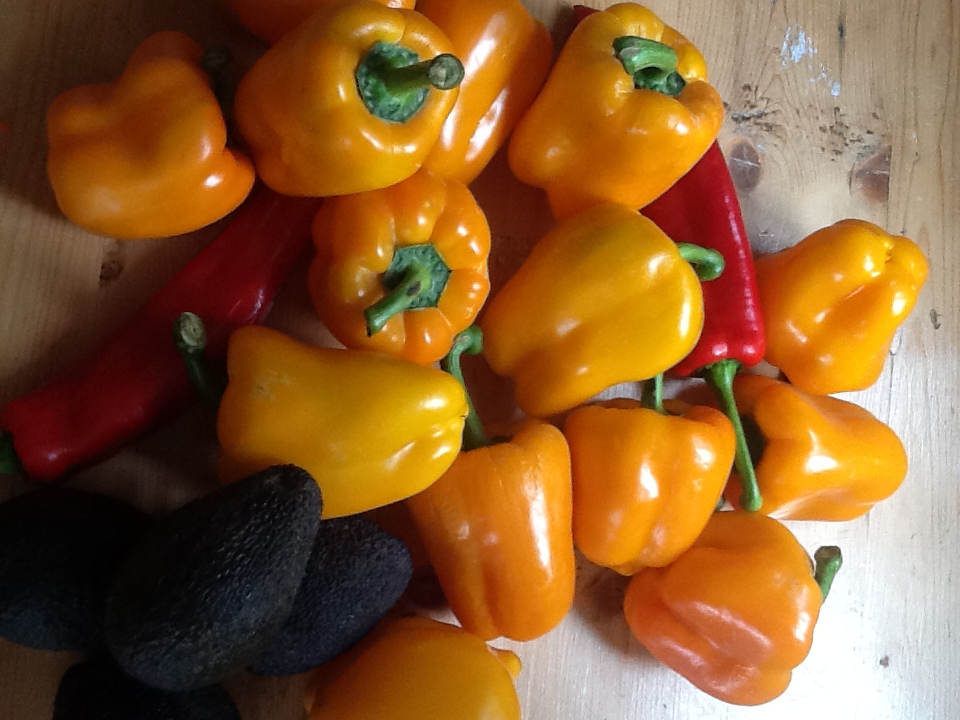
Today I picked up a massive haul of lovely yellow and red peppers from my local market for £1.

16 peppers for a £1!

16 peppers for a £1!

16 of the lovely things! I love a bargain, but how can I use them all before they need relagated to the compost bin?!

Here’s 10 things to do with a pepper:

(for some of these I could easily use two peppers – use lots as they are highly nutritious and very low calorie!):

  1. Eaten as they are, as you would eat an apple (my 2 year old Conor does this in his buggy, we get some odd looks!)
  2. Sliced up and dunked in to humus or salsa
  3. Use large chunks to scoop up cottage cheese as a low fat, high protein snack
  4. Diced and added to bolognaise or chilli
  5. Strips in stir fry
  6. Roasted in the oven at 180c for about 20minutes
  7. Diced in an omlette
  8. Diced in mini pastry-less quiches: beat 3 eggs, add pepper, grated cheese and tuna/ham. Pour in to silicone muffin cases, bake in oven for about 10-15 minutes at 180c.
  9. Stuffed with other ingredients.
  10. Smoothie – red pepper in a smoothie??!! I haven’t tried this one yet, but it looks interesting!

Oats: 10 ways to add oomph!

Oats are a staple in this house with 4 out of five of us having them for breakfast, and daily batches of Seriously Healthy Flapjacks and Oaty Biscuits.

What’s so good about oats?

Oats are very filling, high in soluble fibre, provide slow release energy, keep the blood sugar levels steady for concentration at school/work, calcium and protein from the milk, and fibre and antioxidants from the raisins/berries/banana. And for those of us getting on a bit, oats contain ‘beta glucan’ which is clinically proven to be one of the great cholesterol lowering foods. If you want a low Glycaemic Index oat, go for the chunky ones, as the finely ground ‘instant’ oats e.g. Oats So Simple are actually digested quite quickly, giving you less of the longer term sustained energy release.

Jazzing it up!

Unknown-7

Please sir can I’ve some more? Yak, no thanks!!

Porridge can be a bit, well, dull and have a bit of a ‘gruel’ image. My clients sometimes pull a yuck face if I suggest oats for breakfast. But keep an open mind and try something new! There are a million and one ways to jazz up your breakfast oats to make them tasty and delicious…..

It’s an alchemy of three parts:

  1. the oats: There is a wide variety of oat chunkiness. Finely ground e.g. Ready Brek for ultra IDShot_90x90-1smooth, to jumbo and chewy like Flahavins. Slow cook them in a saucepan on the stove, zapp in the microwave in 90 seconds, or just add a smidge of hot water to the chunkies (how I like it).
  2. Water or milk? The debate is on among porridge devotees on the perfect ratio of milk to water. Each to their own………I’m a water only fan, my husband is 50:50 milk to water, youngest daughter Evie likes the oats cooked in water only, with cold milk added (?!) You don’t have to stick to cow’s milk, try almond, rice, oat, soy, or Koko for a change. All of these have added calcium and vitamin D, so you’re not missing out on these essential vitamins!
  3. The Fun Part: jazz your bowl up with a menagerie of ingredients which can be combined to provide endless possibilities! Peanut or cashew nut butter, raisins, coconut, cinnamon, banana puree, honey, maple syrup, grated apple, toasted pumpkin or sunflower seeds, cashew nuts, berries, yogurt. The list is endless……….

10 ways to add OOOMPH to oats:

  1. Power Smoothie – blend a handful of oats, 200ml milk, dollop of yogurt*, frozen berries and honey

    Smoothie

    Smoothie

  2. Puree banana – roughly mash a ripe banana, put in a cup with enough water to almost cover the banana, microwave for 90 seconds, and voila, a lovely smooth puree to add to you porridge. The more ripe the banana the smoother and sweeter!
  3. Berries – fresh berries can be expensive, so I use supermarket frozen basics range (£1.20for a bag that lasts about a week). Quickly defrost a cup full in the microwave and add to chunky oats with a big dollop of Total yogurt.
  4. Summer Oats – this is soooo good and a refreshing alternative to hot oats. Prepare the night before so that all the lovely flavours develop and are soaked up by the oats. Good for taking to work if you’ve no time first thing in the morning to eat breakfast.
  5. add a dollop of high protein yogurt* to bump up the protein, keeping you full up for longer, and to make it really creamy!
  6. Homemade Flapjacks – eat them as the are, or one of my clients takes two to work, Photo on 01-02-2014 at 07.15 #4crumbles them in a cup with hot milk for a warming breakfast at her desk.
  7. smooth (Ready Brek) – for the non-chunky lovers out there, Ready Brek can be good as it is made from oats, and has the added benefit of vitamins and mineral e.g. lots of iron
  8. Vary the milk – there is such a wide variety these days…..almond, rice, Koko. All have added calcium and vitamin D, so you’re not losing out!
  9. Honey/maple syrup/agave nectar – there’s nothing wrong with adding a bit of sweetness, especially if it means kids gobbling up a bowl of oats.
  10. Dollop of peanut butter – adding good fats and protein, add a tablespoon before cooking so that it melts and you can stir it through.
Homemade muesli

Summer Oats

Benefits of greek yogurt! – double the protein of other yogurts (10g/100g) e.g. Total, Danone, Liberte (not greek ‘style’)

Super Boost Salad

I love this recipe because it is a simple list of ingredients that you can get in your local supermarket. It is ready in minutes………. just chop everything up and toss in to a bowl. I tend to roast the pumpkin and sunflower seeds as I much prefer the flavour and texture to raw (just grill for a few minutes until they start to turn brown). The zingy ginger dressing is delicious. I cheat make a sensible short cut by using ginger in a tube.

The intense colour of the red cabbage gives away it’s superb antioxidants, the humble carrot contains a fascinating combination of phytonutrients, carotenoids, anthocyanins and are a very good source of biotin, vitamin K, potassium, vitamin B6, and vitamin C. Apples are full of polyphenols, fibre and vitamin C. Seeds, a fabulous combo of healthy fats, fibre and protein. Ginger has anti inflammatory properties. The amazing medley of nutrients in this recipe truly make it a super food.

If you feel sleepy and lethargic after your usual lunch of a bagel, sandwich or jacket potato, try a big bowl of this instead! Add some protein from fish or chicken, and this can help you to feel full up, bright and alert for the rest of the afternoon. If you are very active or are an athlete in training, add some wholegrain rice or quinoa to boost the healthy carbs.

Make a big batch, and you’ll have enough for the next day too!

  • 350g red cabbage grated/shredded
  • 3 carrots grated
  • 20g pack parsley, roughly chopped
  • 2 Cox’s apples (or any red apple), quartered, cored and sliced
  • handful of radishes or 2 celery sticks, sliced
  • 1 tbsp pumpkin seeds
  • 2 tbsp each sunflower seeds

For the dressing

  • 2 tsp grated root ginger
  • 1 tsp clear honey
  • 2 tbsp lemon juice
  • 4 tbsp light olive oil

6 tips for portion control

I have written a lot about the types of foods to include for improving health and well being, but if you are watching your weight, how much you eat can be just as important as what you eat. Even if you have eat the healthiest foods ever, over do portion sizes, and you may see this in an inability to lose weight, and even weight gain. Below is a diagram of ideal proportions, but this could be a tiny or a massive plate!

Ideal proportions, but how much is a 'portion'?

Ideal proportions, but how much is a ‘portion’?

So what does a portion actually look like?

Fish or meat: size of the palm of your hand, or about 5-6 meatballs

pasta, rice, potato: a clenched fist

bread: one slice

cheese: a small matchbox

vegetables: about a cup

nuts: a small handful, or about 8 almonds

Some foods come ready prepared in their portion size eg. 2 eggs, a banana, an apple, or 2 satsumas

6 tips for portion control:

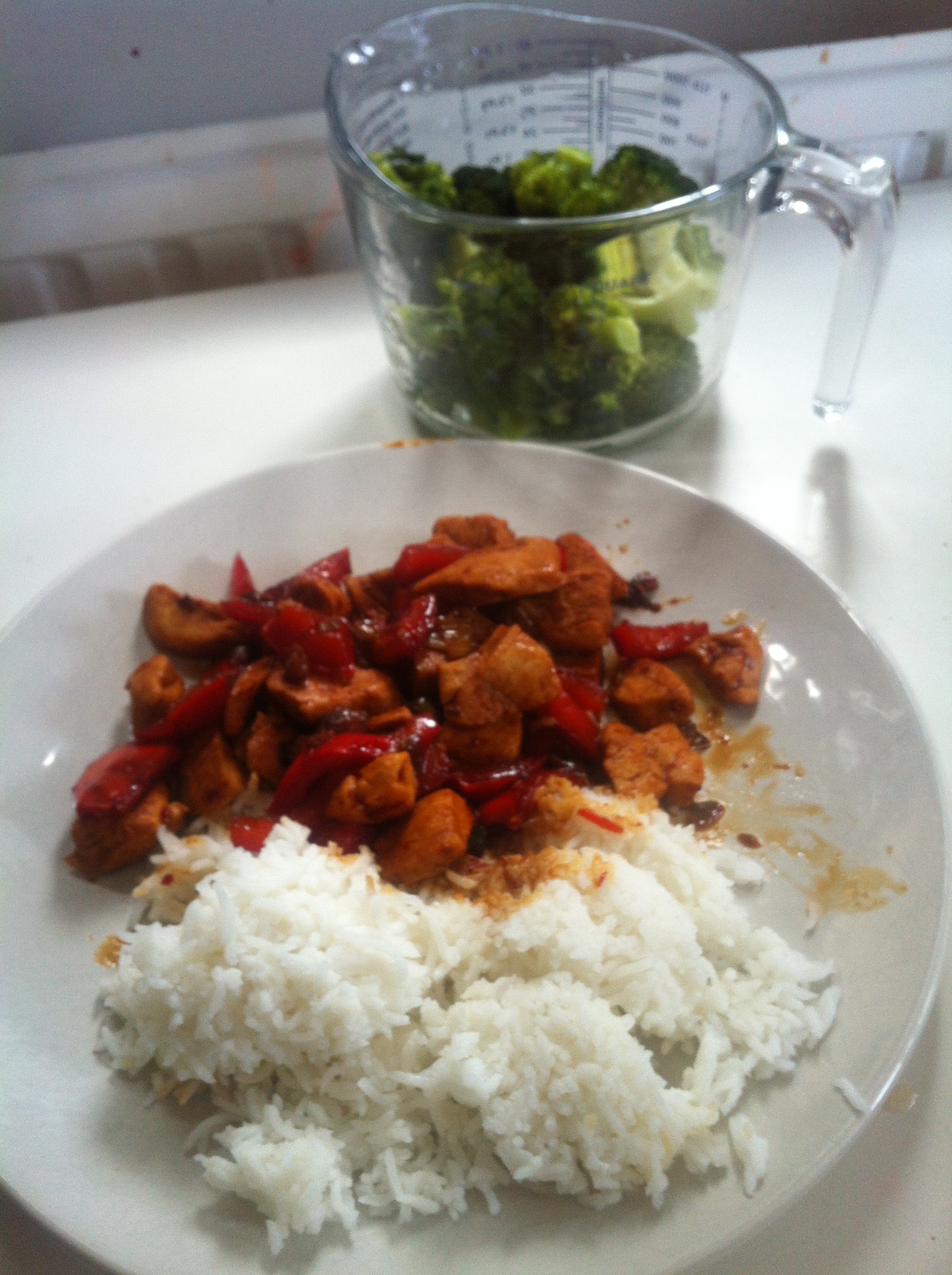
  1. Don’t cook more than you need of carbohydrate and protein foods. Even if you have been controlled with your first portion, if there are leftovers, you will be tempted by seconds. By all means, cook extra vegetables. If you are still hungry, have more veg!

    image

    Cook lots of veg!

  2. Use whole grain carbohydrates eg. brown rice, oats, whole meal pasta – these are higher in fibre which should help you to feel full up for longer, so you will feel more satisfied with a smaller portion. They also keep your blood sugar levels steady, so a) preventing cravings for sugary snacks later on, and b) blunting insulin release (insulin promotes fat storage).
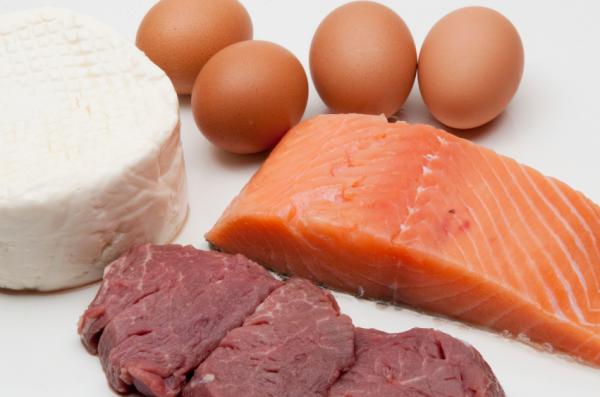
  3. Make sure that you have a portion of protein with each meal eg. tuna, chicken, salmon, beef, eggs, lentils – protein induces a feeling of fullness, so making you less likely to feel the need to snack later on. Your body also uses up more energy processing protein foods.

    Protein with each meal

    Protein with each meal

  4. Use a smaller plate – this will make the amount of food you are having appear to be more
  5. Don’t eat straight out of a carton or packet – this makes it almost impossible to keep to one portion. Take a handful of nuts from a bag and then put the bag out of sight.
  6. Focus on what you are eating – try not to eat in front of your computer or television. This can result in you unconsciously eating more than you intend to.

For those without weight worries, or with high calorie needs, you can stick to the same principles of proportions (1/4 carbs, 1/4 protein, 1/2 veg) but in larger portions sizes…..

For high calorie needs, bigger portions.

For high calorie needs, bigger portions.

Healthy Snacks – eat more!

Research shows that people who eat healthy snacks between meals consume fewer calories overall. This may be because they prevent themselves becoming ravenously hungry, therefore are less likely to overeat. When you feel like you are starving, you are also more likely to go for the unhealthy stuff.

Choosing snacks wisely helps you to nourish your body, maintain concentration, mood & energy levels, keep your metabolic rate up, and eliminate sugar cravings. The key is to be prepared. Have the ingredients in your cupboard or fridge, and if you are out and about, whether at work, shopping or at the park, prepare before hand and bring with you! Don’t be caught out with nothing but chocolate bars, sweets and crisps to choose from at the corner shop.

Here are some top snacks. The ideal combination is some carbs, protein and healthy fats. These are also good for post workout recovery:

  • Apple & handful almond, not a whole bag2013-04-01-15-58-55
  • 2 Rice cakes with hummus
  • High protein fruit yoghurt eg. Danio (Danone), Total (Fage)

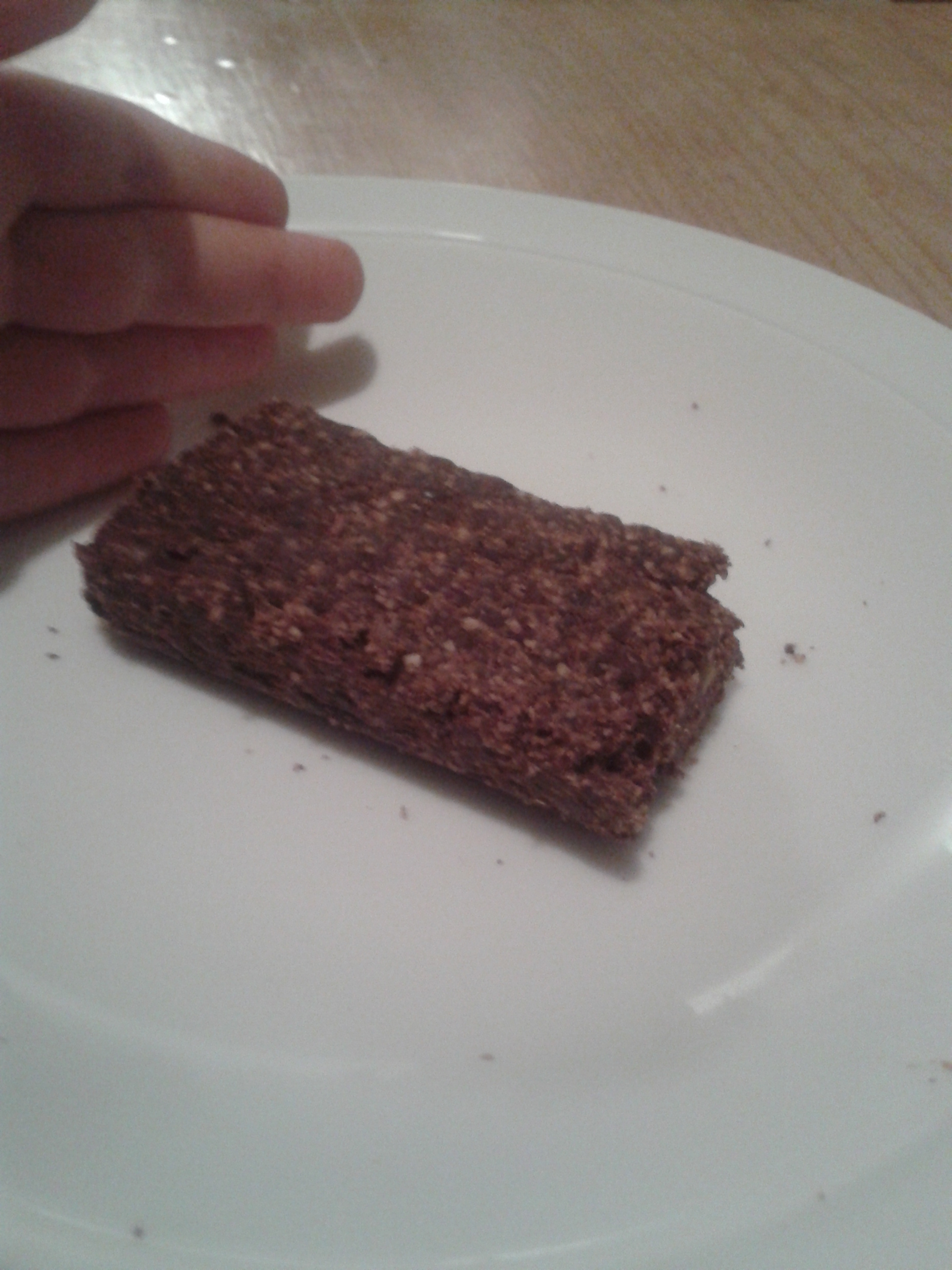
    Homemade Cocoa Bars

    Homemade Cocoa Bars

  • Hummus with carrot sticks
  • Skinny latte
  • ½ wholemeal pitta with ham and tomato
  • Homemade cocoa bar
  • small bar of chocolate e.g. Green & Black and cup of milky coffee
  • 4 apricots, spread with peanut butter, dunked in to toasted pumpkin seeds
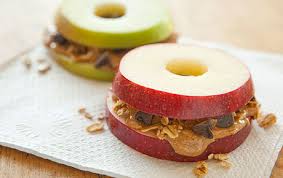
  • slices of apple spread with low fat cream cheese/peanut butter & raisinsimages-3
  • piece of fruit with cheese strings
  • Homemade Seriously Healthy Flapjack

True or false? – 3 Food Myths

Working with clients and patients over the years, I have heard many misconceptions about ‘good’ and ‘bad’ foods. It’s my job to set you straight!

Here are the top 3 that I hear most regularly:

  1. Carbohydrates are bad and make you put on weight – False! Carbs are not bad, what makes you put on weight is too many calories. However, not all carbs are created equal. We have ‘refined carbs’ that provide few nutrients e.g. white bread, white rice, cake,When training, carbs are your friend! biscuits etc. and wholesome carbs that are more nourishing e.g. vegetables, fruit, oats, wholewheat bread, brown rice. The wholesome carbs are much higher in fibre making you feel full up for longer, thus curbing hunger and cravings for the refined carbs. They also have more vitamins and minerals. For the average adult, a portion of carbs is about 1/4 of your plate. Yes, 1/4, not 1/2! So the wholesome carbs can actually help you to control your weight.
  2. Sugar makes kids hyper – not true! I have parents who swear that after a birthday partyimages with all the sugary snacks, their children turn in to raving loonies. Scientific studies have shown that as an ingredient, sugar does not cause a change in behaviour. Think about the party environment…….the excitement, the noise, the fun food & drinks! Enough to hype up any child. Any food involvement is likely to come from reactions to food additives or caffeine in fizzy drinks.
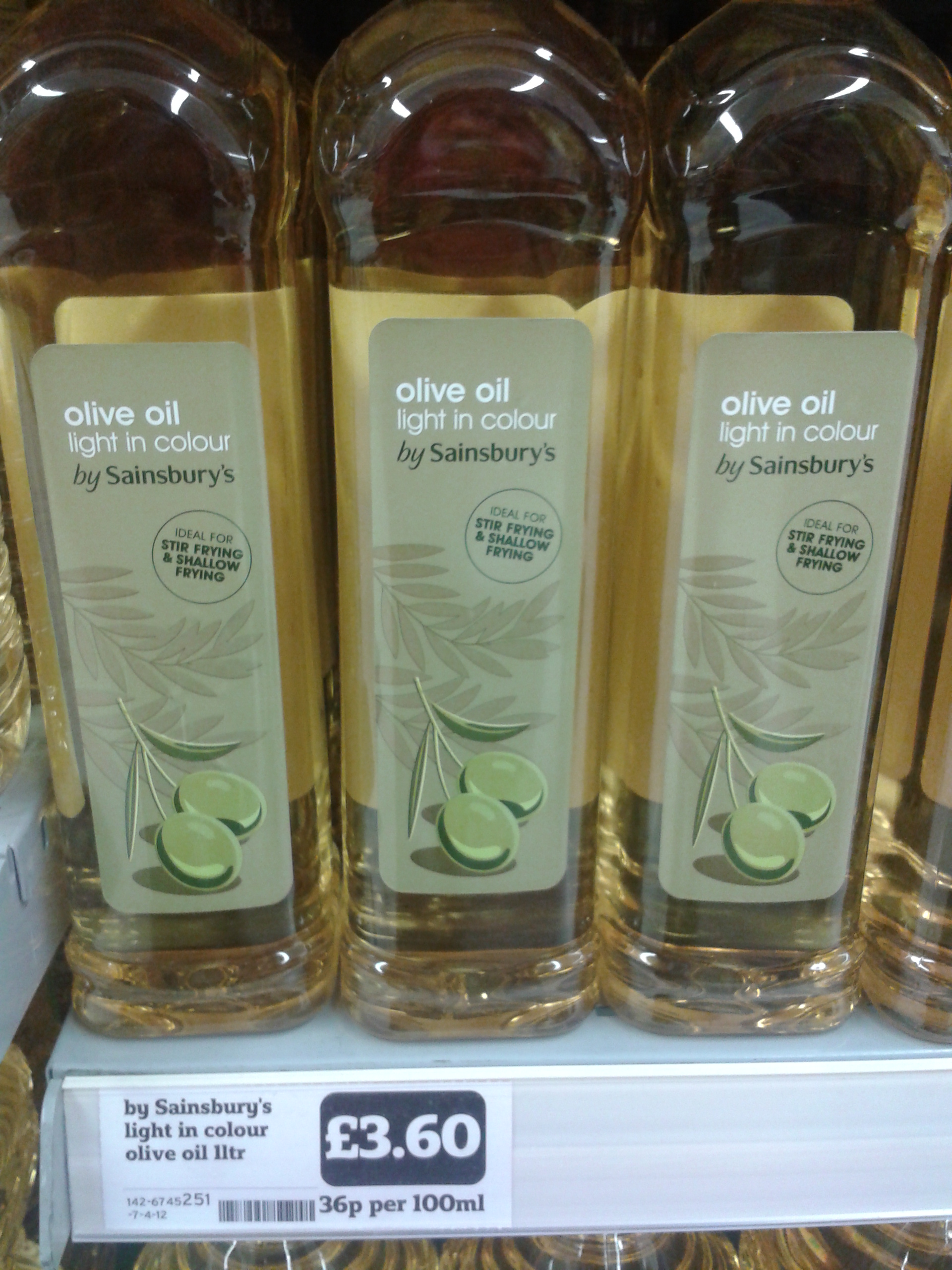
  3. Olive oil helps you to lose weight – not true! This applies to all oils, even the super 2013-09-11 11.50.38expensive extra virgin olive oil, avocado, flaxseed etc. Per tablespoon, all of these oils have 125kcal. They are a healthier type of oil to choose over butter or lard, as they contain essential fatty acids that are anti inflammatory and are good for cholesterol levels. However, if you are watching your weight, be aware that they are extremely high in calories, so don’t use liberally!